
Lost in translation, part two: four stories from the road
Learning a language is one thing. Learning its jokes, its shortcuts and its false friends is another, and the mistakes tend to arrive at the worst possible moment. That is probably why stories of misunderstanding are so easy to collect: almost every traveller has one.
Two weeks before I put this post together, Stefanie of Free in Paris wrote a guest piece here about visiting Paris without French. In it she mentioned a news story about a tourist who was trapped inside a city office overnight. She had read hôtel de ville as "town hall hotel" rather than "town hall", and while she was in the toilet the officials finished their meeting and locked the building for the night.
That prompted a second collection. My first batch, Stories from foreign lands, appeared about two months ago, and the replies it drew convinced me there was more to gather. Four bloggers agreed to tell their stories below.

Alba: one verb, twenty countries
Alba, who writes at Alba Luna, points out that you do not need two languages to misunderstand each other. As a native Spanish speaker she has had plenty of confusing, funny and downright strange conversations with fellow speakers from Latin America. Spanish is spoken in 20 countries, which makes it wonderfully varied and occasionally treacherous.
When a Mexican friend visited her in Madrid and brought her sister along, the sister asked how to reach the centre of the city. Alba told her to take the metro and then bus number 26. The sister stopped dead: "To take? What do you mean?" The friend stepped in to explain that in Spain coger means to take or grab something, while in much of Latin America it carries a sexual meaning. To Latin American ears, Alba says, Spaniards sound like people who have sex with buses, objects and animals. Awareness of the difference is growing, but this remains the commonest kind of confusion. On her first trip to Latin America she simply avoided the word and copied the local vocabulary instead. Find her on Facebook and Twitter.

Tiffany: wet trousers and a word that travels badly
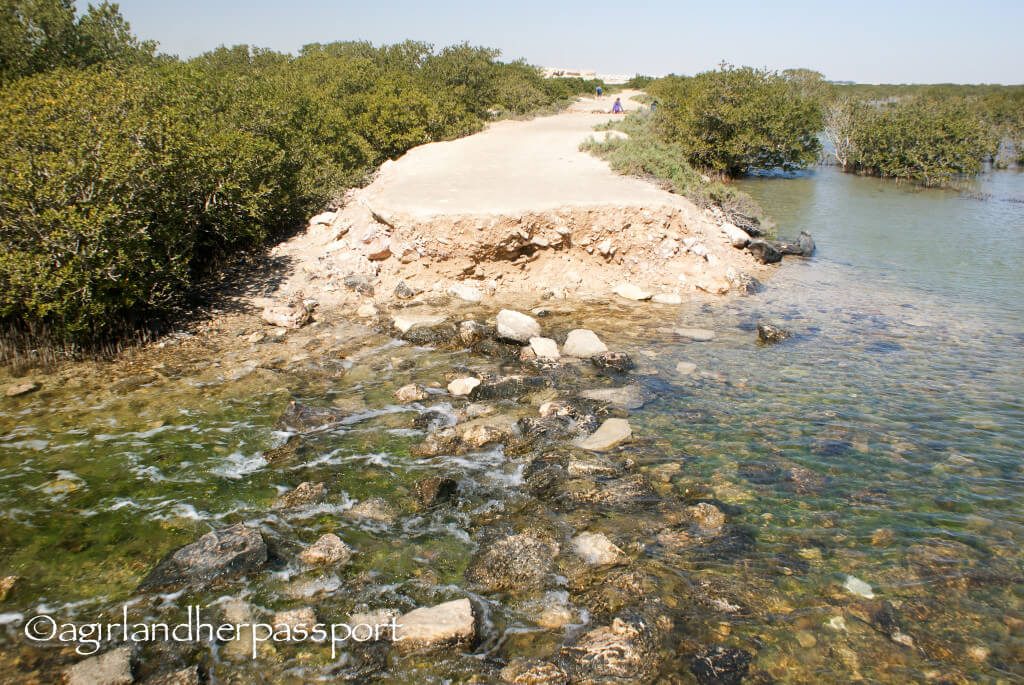
Tiffany of A Girl and her Passport was working in Qatar, where expats outnumber locals and most friendships cross nationalities. English is the shared language, but shared words do not always mean the same thing.
She was out with a Scottish man for the second time. They had gone to an island that could only be reached by wading, and he crossed first to help her through. Afterwards she told him her pants were wet. He waited until later to explain that in Britain "pants" means underwear, and that he had spent the intervening hours wondering why she had raised the subject so early in the relationship. She turned bright red. You can follow her on Facebook and Twitter.
Kenton: a parliament that looked like a hotel
Kenton of KentonDeJong found Quebec far easier than Paris. The province works in both English and French, so ordering food is simple: say bonjour and the answer comes in French, say hello and it comes in English. He treats French as remixed English with extra accents, which usually carries him through.
Even so, the Hôtel du Parlement fooled him. Quebec City was once the capital of Canada, and it wears that history openly, so a sign reading "Hôtel du Parlement" looked to him like the Parlement Hotel. Only when he walked past the masonry and the towering spire did he realise it was the parliament building — and that he could have gone inside for a tour.
The metro gave him more trouble, because announcements were in French only and he counted stations to keep his bearings. He miscounted once, got off, and found he had been travelling in the opposite direction. A similar thing happened in Paris, except that he left the city altogether and ended up 45 minutes outside it.

His second lesson came on a bus in Kyoto. Two girls in kimonos got on, and Kenton leaned towards his tour leader to say how gorgeous one of them was. The girl turned round and thanked him. He was floored — and, by his own account, deep red — while the rest of the group laughed and the guide whispered that in Japan you never know who speaks English. Kenton is on Facebook and Twitter.
Tara: the word for pregnant
Tara of Gypsy Shutterbug fell in love with Spanish through its cognates: artist is artista, tourist turista, university universidad, family familia. It felt effortless. When a word escaped her she simply anglicised it, adding an o or an a and hoping for the best.
The technique collapsed at a dinner party given by her new Spanish boyfriend's parents. Already anxious about meeting them, she knocked a glass of red wine over his mother's white dress. Desperate to apologise and explain her embarrassment, she announced to the whole table that she was "embarazada". The word means pregnant. That is how she learned about false friends, and how to say the word she actually needed.
If you are learning Spanish, her post on the false friends to watch for is worth saving. Tara is on Facebook and Twitter.

My thanks to Alba, Tiffany, Kenton and Tara for lending me their stories. Their blogs are linked above, and each one is worth a long read. If a word has ever betrayed you abroad, the comments are open.
Discover more from Europe Diaries
Subscribe to get the latest posts sent to your email.
Alba Marie
I used to be an English teacher at a preschool in Poland. My kids were tiny–just 3 years old! And not at all wanting to study English; playing on the couch was more fun! So in frustration, I attempted in Polish, “Nie siedzieć na kanapka!” (thinking I said, “don’t sit on the couch!). The kids stopped jumping (which is what I wanted…). They looked confused. They looked from the couch to the table where we had our snack, back to the couch. “Kanapka?” one of them asked. “Tak (yes)”, I said, thinking I was finally getting through to them. “Kanapka?” she asked again, pointing to the table. She walked over to the table…”Kanaka?” she said pointing to the plate of sandwiches on the table. Turning back to the couch, she said in tiny (snooty) voice, “kanap-a! (no ‘k’).” It was then I realised my error. I had, effectively, told my students “don’t to sit on the sandwich.” Whoops.
Until the end of the the semester, they NEVER let me live that one down!
reflectiveponderer
Gosh!Must have been hilarious for them and a bit embarrassing for you!Haha…for how long were you in Poland though?
Kerridwen
Funny, I live in the UK and mostly use the word “pants”. Underwear is “underpants” for me. I would understand either 😀
Kendra S
Haha! These are fun. I did/do the same thing with Spanish! I couldn’t understand why no one understood that I had an allergy to “puerco”. I finally learned that “cerdo” is the actual word for pork!
reflectiveponderer
Ah! They must have been confused!
gemmajaneadventures
Great post! I’m from the UK and even though I’ve been away for 18months, I still find it amusing when people say ‘pants’ for ‘trousers’
I also used ‘Spanglish’ when learning Spanish in Central America, but I think I generally got away with it. my friend however, mispronounced the Spanish for ‘it was worth the pain’ after we hiked a volcano. Instead she said ‘worth the Penis!’ Ooops!
reflectiveponderer
Haha..that must have been hillarious! It’s funny how the same word can mean different things!