

Seven Spanish Legends, from the Boogeyman to the Giants of Catalonia
The stories here reached me mostly through locals, and hearing them changed the way I looked at the souvenir racks. I did not buy a single one of the bullfighting figurines on sale at the airport. They did not match the country I was being shown, and I did not want to carry home something I could not connect to the place.
What follows is seven stories, sorted by the kind of tale each one is. Some are meant to frighten children into bed, some explain why a city has the name it does, and at least one is still acted out in the street every spring.
Stories told to children
El Coco
Nearly everywhere, parents invent a figure who will come for a child who will not behave. In Spain that figure is El Coco, a monstrous thing that eats or abducts a child who disobeys or makes trouble. He turns up in rhymes and lullabies, and the one I heard most goes: Duérmete niño, duérmete ya, que viene el coco y te comerá — sleep, child, sleep now, or the Coco will come and eat you.
The backstory is far darker than the rhyme. According to a Spanish legend reported by Remezcla, Francisco Ortega, known as el Moruno, was a man with tuberculosis at the beginning of the twentieth century. Looking desperately for a cure, he went to a curandera, who told him that drinking the blood of children and rubbing his fat on his chest would heal him. El Moruno kidnapped a seven-year-old boy called Bernardo, put him in a cloth bag and cut his underarm to drink. El Cuco is said to walk the streets at night with a black bag, hunting for children who are out late or misbehaving.
What strikes me is how a story meant to keep a child in bed can carry a real crime inside it. The lullaby is gentle, almost teasing; the origin story is the kind of thing you would not tell a child at all.
Ratoncito Pérez
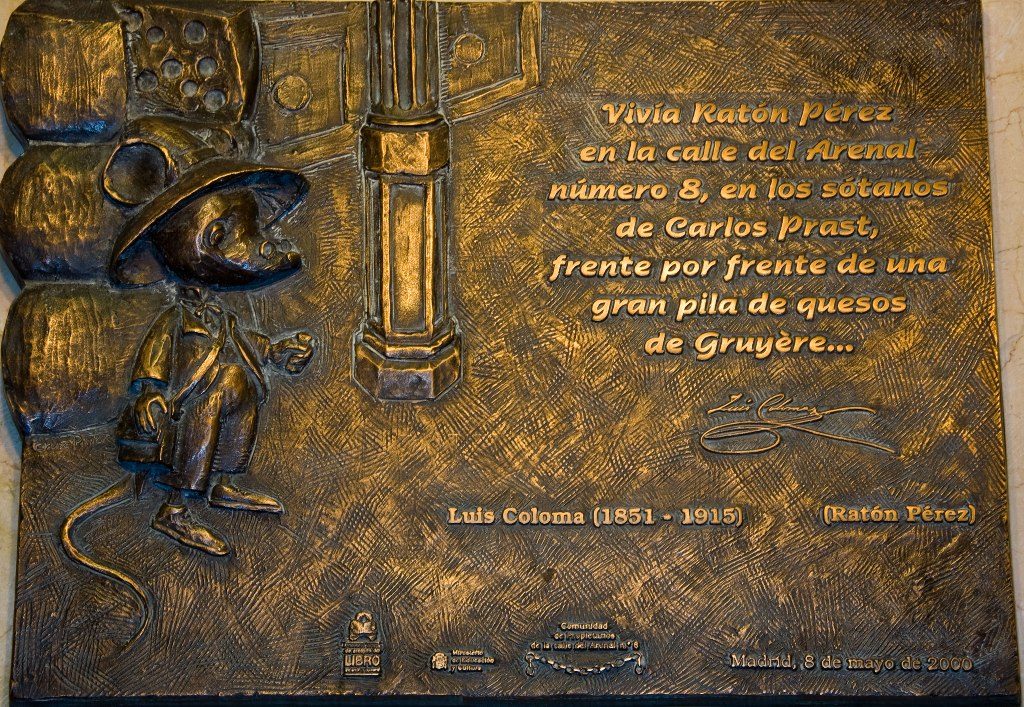
In 1894 Luis Coloma was asked to write a story for the young King Alfonso XIII, who had just lost a tooth. Coloma borrowed a mouse called Ratón Pérez from a story published a few years earlier and produced Ratoncito Pérez, a mouse who lived in a biscuit box in Madrid with his family and ran through the pipes to reach the bedrooms of children who had lost a tooth. He is the Spanish tooth fairy, and the tale was later adapted into a film and more books.
Madrid city council honoured him with a plaque that reads: "Here lived, in a box of cookies, Ratoncito Pérez, according to the story that the father Coloma wrote for the young King Alfonso XIII." It was the first time the council had paid tribute to a fictional character.
Stories a city tells about itself
The founding of Barcelona
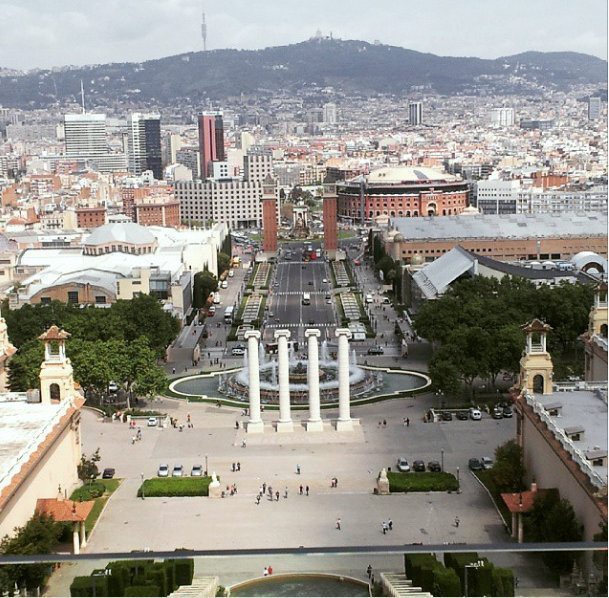
Several foundation legends circulate. One, collected by Another BCN, has Hercules setting out with nine ships. The ships were separated, and only eight could be traced. The crews went looking for the ninth and found it at the bottom of the hill of Montjuïc. They fell in love with the place and named the city after Barca, boat, and Nona, ninth. Hercules is also said to have loved a girl called Pyrene; the two could not stay together for more than a few months, and the Pyrenees carry her name.
The other version gives the city to the Carthaginians: Hamilcar Barca, Hannibal's father, arrived, founded it and left it his surname. There is no evidence for either story. Two rival foundation myths, one Greek and one Carthaginian, is a very Barcelona situation: the city has always been happy to hold more than one origin at once.
See also my unexpected experiences in Barcelona.
The Hall of the Abencerrages, Granada
Granada holds a good number of stories from the Moorish centuries. The Hall of the Abencerrages in the Alhambra takes its name from a tragedy: 36 members of the noble Abencerrage family were invited to a banquet by the Sultan Abu Al-Hassan. The Sultan had discovered that the head of the family, Hamet, was courting his favourite concubine, Zoraya. He called the guards in during the meal and had every guest's throat cut. The heads were thrown into the fountains. The stain still visible at the bottom of them is said to be the blood, kept as a permanent reminder.
READ: How to make the most of your visit to Granada, Spain
Stories of dragons and love
Sant Jordi
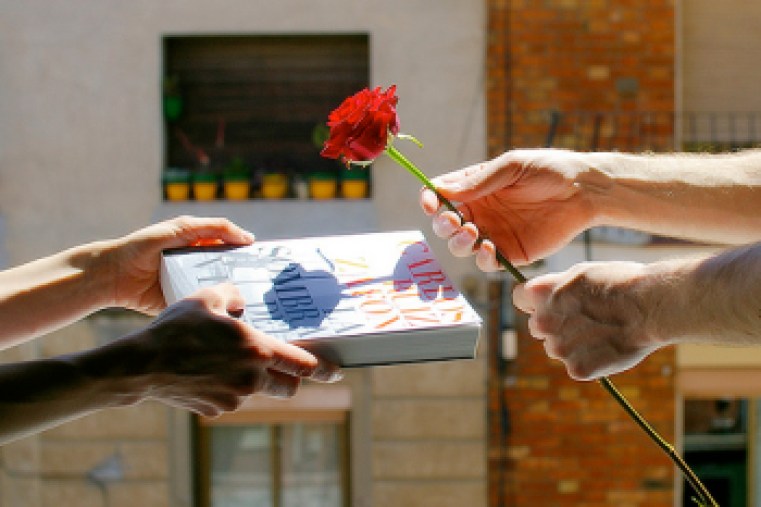
Catalonia's best-loved legend is still performed every year. A dragon lived at Montblanc and terrorised the villagers, eating their animals; when the animals ran out it turned to the people. The villagers drew lots and sacrificed one person a day. One day the lot fell on the princess. People offered to take her place because she was kind, but the king refused to let anyone die for his daughter. She was sent out to the dragon, and as it was about to swallow her a knight appeared and fought it. After a hard struggle he killed it with his lance, and its blood spilled on the ground. A red rose grew from the spot; the knight picked it and gave it to the princess. His name was San Jorge, Saint George.
Every 23 April Barcelona marks the day with a large public celebration, and men give roses to the women they love. In recent years women have begun giving books to the men. If you are in the city then, you will not miss it.
Read all about delicious food in Barcelona.
The Lovers of Teruel
Teruel has its own Romeo and Juliet, and the story dates to the thirteenth century. Isabel and Diego came from wealthy families and wanted to marry, but Diego's family lost its money and Isabel's father refused the match. Diego asked for five years to go out and make his fortune, after which he would return and marry her. Nothing was heard of him. On the day the five years ended, Isabel's father married her to another man. Immediately after the ceremony Diego came back to the city, rich. He could not bear what he saw, and that night he slipped into her bedroom and asked her to kiss him, because he was dying. She refused, unwilling to deceive her husband. He died beside her bed. The next day she went to his funeral in her wedding dress and kissed him one last time; she died there, next to his body. The villagers buried them side by side near the church of San Pedro, so that in death at least they could be together. Every February the city celebrates the pair and retells the story in different forms.
Stories you can watch in the street
Giants, big heads and human castles
On the Costa Brava, and again in the Gràcia district of Barcelona, I was lucky enough to see locals building human castles while giants paraded and danced past — thanks to TBEX. I also saw a great many giants, regular-sized figures with oversized heads (the capgrossos), and strange creatures, all kept in Gràcia. I am not sure where the figures come from; the oldest documentation I could find dates to the fourteenth century. They represent local historical characters, a king and queen or other notables, or the community at large, peasants included. They are made of papier-mâché and carried by people called giant carriers. Different groups organise the parades at festival time, and by one count there are around 100 giants in Barcelona alone. When the fiestas come round, the giants and the other creatures come out and dance in the traditional way.
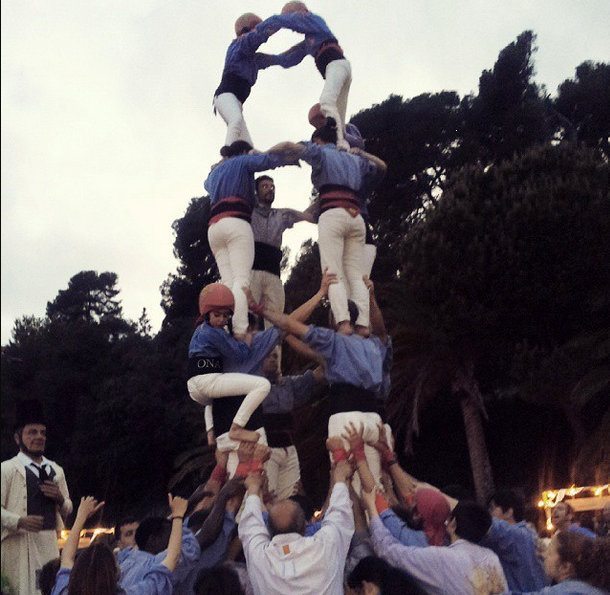
Edit: I later came across a blog post explaining the human castles in more detail — see inhabityourdreams if you are curious.
I am thinking of looking at German stories next month, so if you know any legends or folklore from Germany, tell me.
Following the stories in person
Most of these tales have a physical address. The plaque to Ratoncito Pérez is in Madrid. The fountains of the Hall of the Abencerrages are in the Alhambra in Granada. Barcelona fills with roses and books on 23 April for Sant Jordi, and Teruel remembers Isabel and Diego every February. The giants come out with the other figures during the city fiestas, and in Gràcia you can see the stored giants and big heads at other times of year. El Coco, being a story rather than a monument, is the hardest to visit, but in Spain he is in the air every time a child is sent to bed.
Three quick questions
Is any of this true?
The Barcelona foundation stories have no evidence behind them. The massacre in the Alhambra is attached to a real room and a real family, but the details come through legend. El Coco's origin story is reported as a legend, not a court record. Treat them as stories that people tell, which is what they are.
When is Sant Jordi celebrated?
On 23 April, in Barcelona and across Catalonia, with roses, books and crowds in the streets.
Where exactly is the Ratoncito Pérez plaque?
In Madrid, placed in front of the building where the mouse was said to have lived.
More posts about Spain
- Sunset sailing experience in Barcelona
- Staying in a beach hostel in Barcelona
- 10 unexpected things that happened to me in Barcelona
- Devouring vegetarian food in Barcelona
Discover more from Europe Diaries
Subscribe to get the latest posts sent to your email.
Pingback:Myths,legends and folklore from Germany - Europe Diaries
Pingback:10 unexpected things that happened with me in Barcelona | Europe Diaries:My travel stories and experiences
Pingback:The year that was:Europe Diaries 2015 | Europe Diaries:My travel stories and experiences
Packing my Suitcase
Sooo cool!!
I have written once the myths about Brazil… and I must say that people also think that every Brazilian like or know how to dance Samba, the same as for the Spanish when it comes to Flamenco haha 😀
Very cool post!!
Thank you for linking up again with #MondayEscapes 😀
reflectiveponderer
Hey! ! Thanksfor stopping by. I shall read your Brazil post for sure! I am so fascinated with stories and myths. Next I am writing about Germany. Do you know of any stories?
Packing my Suitcase
Yaay awesome!!! I can’t think of any about the Germans… maybe the fact that people think that those Bavarian costumes are from the entire Germany, and not only from Bavaria. People always mistake this 😀
mytravelmonkey
I can’t believe how interesting this post was… el Moruno sounds particularly scary. I don’t think I wil tell that one to Monkey! Thanks for linking up with #MondayEscapes
reflectiveponderer
Haha it for sure is spooky..I guess a lot of kids might have just heard of this boogey man but I don’t think they would know of the actual story behind it..THAT would be really scary!
kidGLloves (@kidGLloves)
The Mother says – I loved reading this post so much and learned such a lot. You made it all so interesting. #MondayEscapades
Pingback:Devouring vegetarian food in Barcelona | Europe Diaries:My travel stories and experiences
misspbarcelona
Thank you for mentioning Hi. This is Barcelona in your blog. For more Barcelona-based blog information check out http://blog.hithisisbarcelona.com