

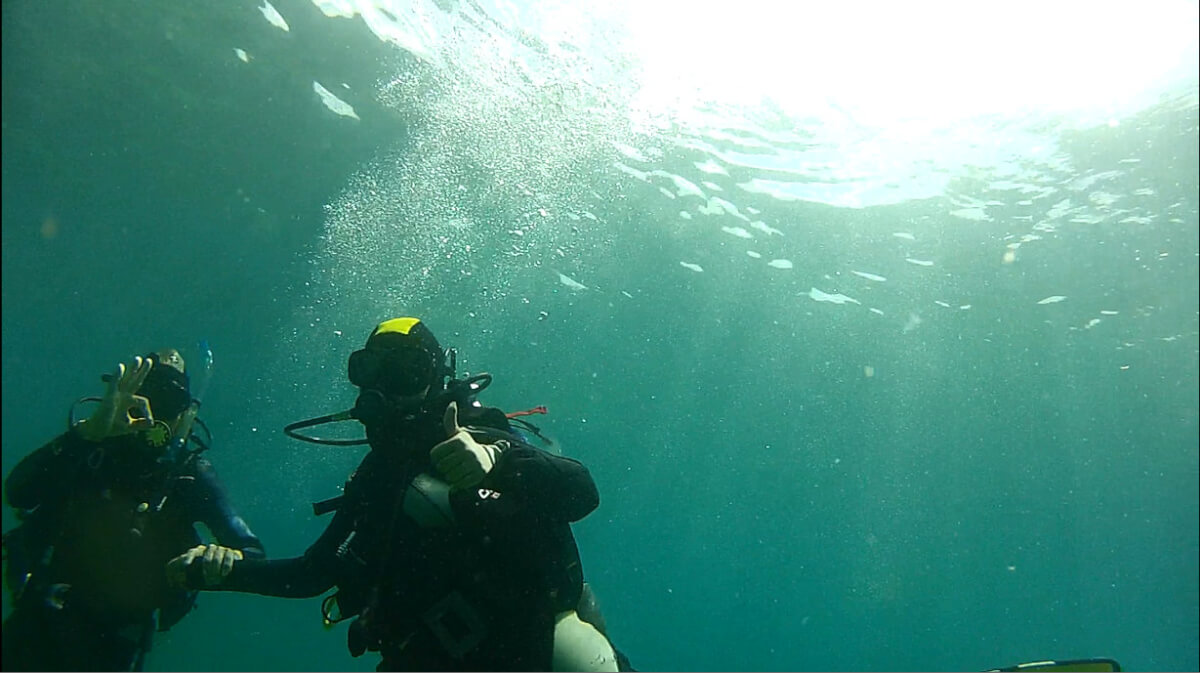
Learning to Dive in Spain: A First Scuba Session at Lloret de Mar
Some trips are planned around monuments and museums. This one began with a question I could not answer: could I really breathe underwater? In early May, a few years ago, I was due in Barcelona and on the Costa Brava, with a stop at Lloret de Mar, and I spent several days doing what I always do — reading, comparing dive schools and working out whether a beginner could join a session at that time of year.
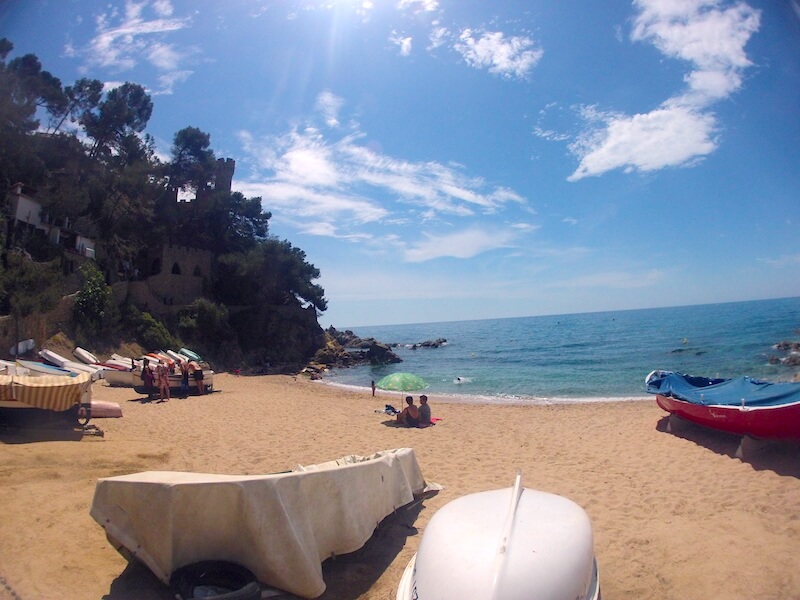
Three things stood in the way. The sea would not yet be at its warmest, I was not a strong swimmer, and I did not want to spend a fortune. While looking into water sports from Barcelona, I noticed that most operators take you out to the Costa Brava for lessons anyway. That settled it: I would dive off the Costa Brava coast, at Lloret de Mar itself. The town is only the beginning of the Costa Brava, and the further north you go the lovelier the beaches and dive sites become, but with the days I had, it was the sensible choice.
What a beginner is actually allowed to do
After a few conversations with schools, the rules became clear. Without a licence, a beginner can go no deeper than 9 metres, which in practice means diving from the beach. The option that fitted me was a Test Dive: roughly 30 minutes of briefing on the equipment and the rules, help finding gear that fits, then a 40 to 55 minute dive with an instructor. Sign up for a second session and you can come away with a licence valid for a year and a depth of 12 metres. The boat dives to 25 metres that appear in so many online offers need a licence, or several training sessions first. With one spare day, the Test Dive was my only realistic choice.
I exchanged a lot of email about safety, swimming ability and regulations before booking with Evaron Diving School in Lloret de Mar. The session cost 60 euros per person at the time and covered insurance, all equipment rental, transport to and from the beach and a personal instructor. Because I was not a confident swimmer, I wanted a guarantee that someone would be close enough to read a signal if the equipment started to bother me. The team at Evaron handled every message patiently and told me I would be fine, which sounds small but mattered.
The dive: an octopus, a leaky mask and a lot of adrenaline
The whole thing was meant to take about two hours, briefing and travel included. It turned real when I pulled on the wetsuit, around 5 mm thick, and climbed into the van with the cylinders, masks and fins. A wetsuit works by trapping a thin layer of water against your skin, which your body then warms; the first few minutes are chilly and awkward, and then you settle. The suit itself is skin-tight and not the easiest garment to wrestle into, and the weights have to be just right so that you can go under without sinking.
If diving is going to become a habit, it is worth owning some of your own kit. Wetsuits, masks and the rest can be bought online at very different prices depending on specification, and this detailed guide explains the difference between wetsuits, dry suits and the technical details in between.
On the beach the heat was fierce and the gear made walking miserable. I was nervous about what could go wrong out there: if something happened, could I get myself back to safety? I kept calm by reminding myself that I would be with an experienced guide and that a second professional was waiting on the beach in case of an emergency. Once we were in the water we warmed up by floating and swimming with fins and cylinder. It did not begin well. Swimming in a pool and swimming in the sea are two different skills, and the gap between them was obvious. My guide kept encouraging me and I improved.
He signalled a few times to check I was all right. I gave the OK sign each time, though something felt off. Then he pointed. I could not process what I was looking at: an octopus, ejecting black ink as a defence, moving away from us. I had never seen one outside a cartoon — my mental image of an octopus was Oswald — or, later, the tiny ones a friend once cooked. This was nothing like either.
Meanwhile my mask began to bother me. It had not sealed properly against my face and I was sure water was getting in. I panicked, swam for the surface and tried to adjust it on the way up. My instructor saw, I signalled that I was not OK, and he brought me up properly. Off came the mask and I breathed the open air with enormous relief. I went back down later, but only after a rest on the surface, a careful re-adjustment and a think about what had just happened. Getting the right equipment is not a detail; it is the whole thing.
I also learned that my guide had been carrying a knife the entire time, tucked under his suit and fins out of habit, as self-defence for deep dives. A beach dive does not call for that, but it was hard not to imagine lone divers far out at sea and the creatures that might take an interest.
The day left me elated and wrung out. My heart was pounding, the underwater life had overwhelmed me, and once I felt comfortable I wanted to stay down far longer. I was glad I had picked that school and had a guide within reach the whole time. Being able to swim well buys a lot of confidence, and I intend to get better, dive again and eventually try the boat dive.
Costs and limits at a glance
- Beginner without a licence: 9 metres maximum, beach dives only.
- Test Dive: around 30 minutes of briefing plus 40-55 minutes in the water.
- Second session: a one-year licence and dives to 12 metres.
- Boat dives to 25 metres: licence or several training sessions first.
- Price paid: 60 euros per person, including insurance, kit, transport and instructor.
Advice from divers who know more than I do
I asked several travel bloggers who dive regularly for the things they wish they had known at the start. Their answers are below.
Should beginners use a full-face mask?
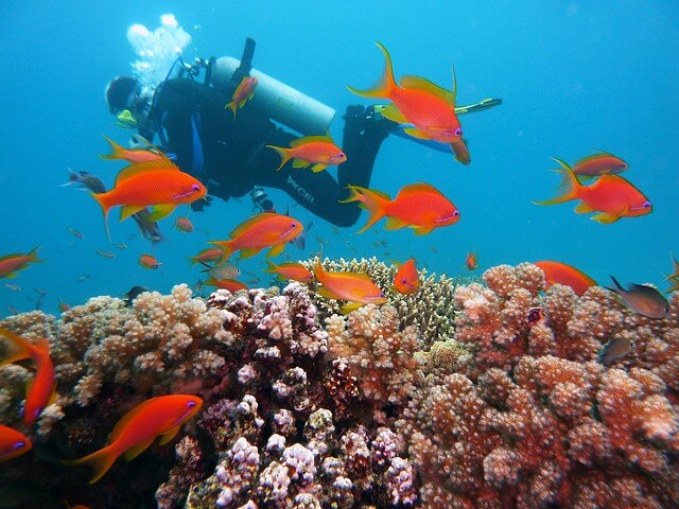
Rosie, who writes at Trips with Rosie, points out that she went scuba diving before she ever snorkelled, and found breathing underwater genuinely unnatural at first. A later attempt in Mallorca did not change her mind, and she assumed the underwater world would stay something she watched on television. Snorkelling, when she finally tried it properly, turned into the best experience of her life; she has since snorkelled in the Maldives, the Seychelles and Mallorca. Her advice for beginners is to use a full-face mask rather than a separate mask and snorkel. You cannot dive deep with one, but you will enjoy it far more. If you are unsure about seasickness on the boat out to a reef, take anti-motion sickness medication beforehand, or you risk ruining the day. Find her on Instagram.
What if I don't understand something?
Laura Bronner of Eternal Expat learned to dive three years ago in the Philippines and calls it one of the best underwater experiences she has had. She is frightened of swimming in the ocean, so putting on a tank and going under was a big deal; finishing the course left her feeling she could tackle anything. Her main advice is to ask questions. Instructors are there for exactly that, and she regrets staying quiet for fear of looking foolish in front of other divers — chances are someone else on the course has the same question. Find her on Twitter and Instagram.
How do I stop the first breaths feeling strange?
Laura of The Travelling Stomach says the first breaths underwater will feel odd, and the trick is not to panic: relax and breathe in and out slowly and steadily, and you will soon see there is nothing to worry about. Acclimatisation comes quickly, and the first turtle or school of fish makes you forget the oddness entirely. She has been diving since 2016, learning in Thailand, taking her advanced course in the freezing waters of Malta, diving in Barbados, returning to Thailand for a liveaboard in the Similans, and naming Komodo National Park in Indonesia as her best trip so far. Connect on Instagram and Facebook.
Is pool practice worth it?
Meghna and Pushkaraj of Trailing Abroad are a blogging couple: she is entirely at home in the water, while her husband is deeply afraid of snorkelling and diving after two water-related mishaps. Their first rule is to breathe, and to master the breathing technique with snorkel or cylinder before going further out or diving in. Get that right and panic is less likely, whatever happens below the surface. Ask your instructor as often as you need to if something feels wrong, and practise in a swimming pool before heading out. Find them on Instagram and Twitter.
How should I behave around marine life?
The same two have a second rule: no aquatic species is threatening or frightening unless you approach it or intimidate it. They argue that these creatures are better than we are and will leave you alone as long as you leave them alone. Do not let fear keep you out of the water. Turn into a mermaid, they suggest, and enjoy it.
Why does everyone insist on a buddy?
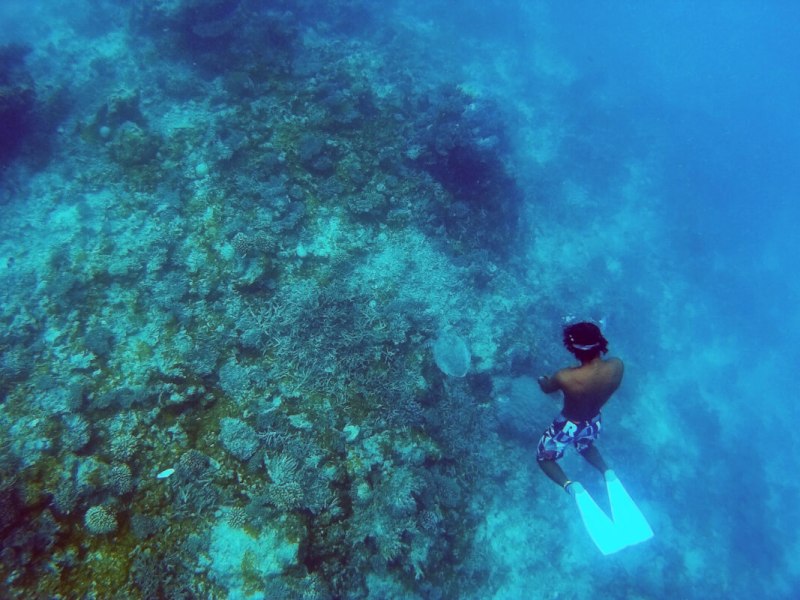
Roneth of The Fickle Feet was invited to try freediving by her boyfriend, whose friend runs a basic course, and discovered something she genuinely enjoys; it has made her more comfortable with the deep blue. In freediving the most important rule is "Never Dive Alone", and she points out that it applies just as much to scuba and snorkelling. Safety comes first, buddies watch out for each other, the activity is calmer as a result, and it is simply more fun with company. Read her first freediving experience, or find her on YouTube and Instagram.
What if the first attempt goes badly?
Anna of Would Be Traveller has snorkelled twice in her life, and after the first she was convinced there would never be a second. In Cancun, Mexico, friends talked her into snorkelling in the Caribbean Sea. She could not swim, was more than a little afraid of sharks, and the instructor spoke no English — a poor combination. She still put on mask and fins and jumped in. The group swam ahead while she tried to remember how to kick and stay afloat, and after five minutes of bobbing about, too frightened to look down, she signalled for help. The instructor kept going. She cried a little, turned back to the boat and accepted that she had been right.
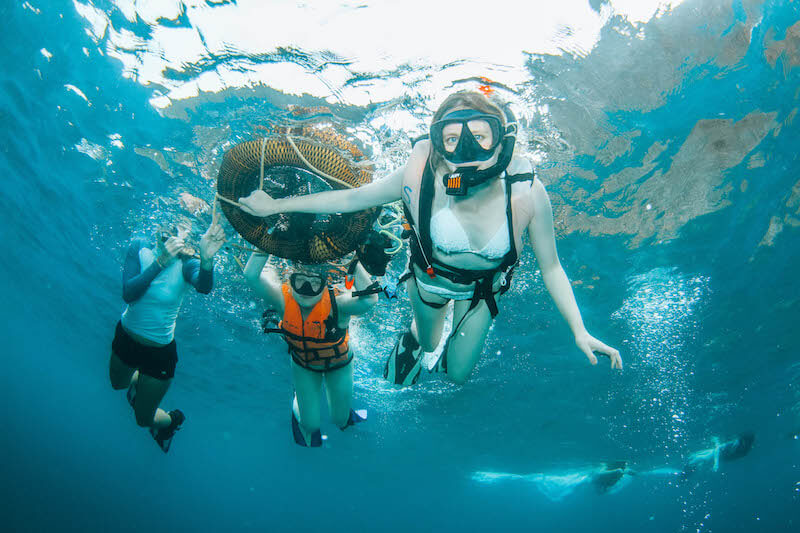
Her first tip follows from that: choose a reputable company that understands your ability and is willing to help you enjoy the day. The instructor can be the difference between a hobby you love and an experience that keeps you out of the water for good. She did try again, in Thailand, with a company that gave her and another beginner an instructor to themselves. There was a life ring to hold until they felt brave enough to let go, and she stayed with them throughout, teaching them to breathe, to turn and what to watch for. That second attempt was the time of her life: turtles, eels and tropical fish that no photograph does justice to. Her last tip is never to give up. Find her on Instagram and Facebook.
Thanks to Simply Scuba for partnering on this post and prompting me to write it all down, and to every blogger who took the time to share a tip. If you have dived or snorkelled and have something to add, leave it in the comments — the next beginner will thank you.
Discover more from Europe Diaries
Subscribe to get the latest posts sent to your email.
Cameron Page
Have you guys been to Fuerteventura? It was one of those island that had always been on my traveling plan but had somehow never visited. But after reading another article about it makes me more willing to do some last minute changes on my travel list. They say that the waves in Costa calma and Playa de Sotavento would make a perfect for surfers and many water activities. And if your not into some water action I’m very sure that theirs a lot more to do in this fine island.
Pooja
Thanks for sharing tips.
Ashwin Sinha
Thank you so much for this post. Scuba diving is one of my favourite water sports. You experience a whole different world inside the water. You refreshes my soul.
dwyeraddie
I want to get PADI certified so bad!!! Do they do certifications there?
Nate
Great article! I never could capture an octopus with my GoPro either. On the video/photo it never looks spectacular, but in real life it is fantastic to see.
reflectiveponderer
Absolutely ! I do have a GoPro video but difficult to screenshot for a good picture
Silviya
I really enjoyed reading this post. Scuba diving is something that I definitely will try some day. Under the sea there is a whole new world 🙂
May smith
seems like you guys have lots of fun. I have never done the scuba diving, but i will try it. Can you please suggest me a good place for scuba diving in middle east?