

Vegetarian food in Europe: what to eat in 24 countries
Ask a vegetarian what they remember from a trip and the answer is rarely a museum. It is the plate of bread dumplings in a Swabian cellar, the market vendor who sliced a peach for you, the wrong turn that ended at a bakery. Food is how I map a country. After years of arriving in new places hungry and slightly nervous about what I would find, I began keeping notes.
The notes turned into a question I started asking other travellers: what do you eat, as a vegetarian, where you live or where you have just been? Answers came back from every corner of the continent, and they were far more interesting than any restaurant list: cheese, dumplings, soups, bread, pastries, pancakes, walnut sauce and one unforgettable Georgian bread boat. Some are snacks, some are whole meals, and a few are desserts that quietly count as dinner.
I have grouped the countries by region and kept the voice of whoever sent each recommendation. Prices and places are reported as they were given to me, so check opening times before you set out; European kitchens keep their own calendars. Learn two sentences before you go, too. In German, “Haben Sie vegetarisches Essen?” asks whether they have vegetarian food, and “Kein Fleisch, kein Fisch” rules out meat and fish. In the south, the word vegetariano and a friendly smile do a surprising amount of work.
Western Europe
Switzerland: fondue, raclette and a great deal of potato
Three years of living in Switzerland taught me that the traditional menu rests on potatoes, cheese, bread and meat, usually in that order. My favourite is cheese fondue, that heavenly pot of melted cheese eaten with bread and fruit. Try it for dinner at least once, though like most things in the country it is not a cheap evening. Raclette comes next: potatoes, melted cheese and sometimes vegetables. Rösti is potato again, Alpine macaroni is the comfort-food version, and the regions have their own specialities. Look for Capuns from Graubünden, polenta in Ticino and Cholera in Valais, which sounds alarming and is not.
Soups deserve their own paragraph. Pumpkin, parsnip and leek appear everywhere in autumn and winter, and in Basel you should look for Mehlsuppe, a flour soup sold during Fasnacht. Bakeries and even large supermarkets stock Käsewähe and Zwiebelwähe, the cheese and onion tarts that make a good train picnic. Döner and falafel shops are easy to find, as are Italian and Mexican restaurants, so nobody needs to live on bread and cheese alone.
And then there is chocolate. Lindt may be the most famous name, but the shelves hold dozens of others, and a chocolate tasting is a perfectly reasonable way to spend a rainy afternoon. I once filmed a small challenge with friends working through a bag of Swiss chocolate; it was less of a challenge than an enthusiastic start to the evening.
Germany: dumplings, Spätzle and a vegan currywurst
Germany was the first foreign country I moved to, and I quickly discovered that eating vegetarian there is not difficult. The famous dishes are currywurst, sausages, schnitzel and juicy Döner kebabs, but alongside them sit dumplings (Knödel), Spätzle, Kartoffelpuffer and a bakery culture that could keep you fed for a week. Falafel wraps and thin pizzas are everywhere, and the bakeries sell pretzels, strudels and cakes. Coffee and cake is a national institution, and if you have a sweet tooth you will not resist it for long.
My most memorable meal in Germany was a plate of dumplings with mushroom sauce in Tübingen, in the south. I have ordered the same dish in many places since, and nothing has quite matched it. I also wrote a short guide to vegetarian restaurants in Bonn and Heidelberg, which you can read in this post about places that left my taste buds tingling. For the dumplings themselves, I asked Maria from Maria Abroad to explain.
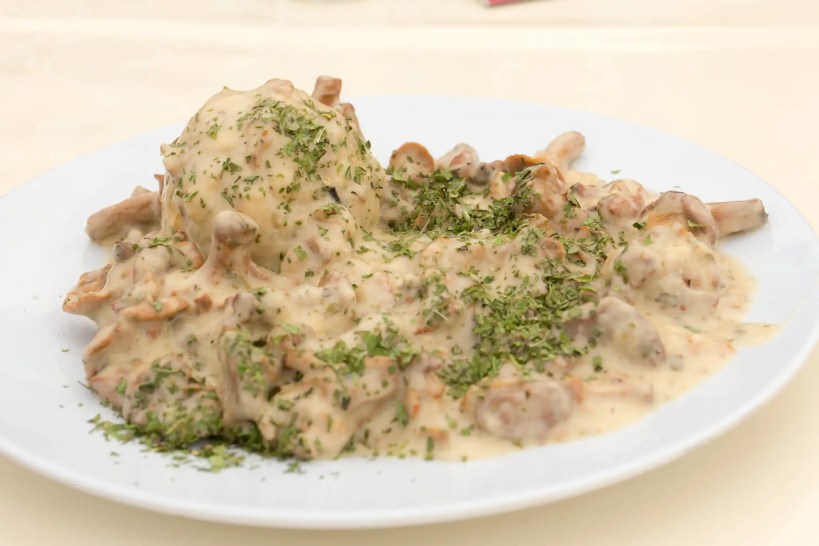
Semmelknödel mit Pfifferlingen
Bread dumplings with chanterelles are a popular vegetarian dish in Germany during summer and autumn, when chanterelle season arrives. Semmelknödel are savoury dumplings made from bread, egg, onion, garlic, herbs and spices. You mix everything, form balls about the size of a tennis ball and boil them for roughly 20 minutes in simmering salted water. The chanterelle cream sauce is the part that makes you want to lick the plate: a creamy roux coating the juicy mushrooms, so that every bite brings a burst of earthy flavour. Chanterelles, unlike most mushrooms, cannot be grown commercially, which is part of why the dish tastes like a season rather than a menu item. It is genuinely worth seeking out, because vegetarian choices in some German restaurants can still be thin on the ground.
Contributed by Maria, who writes at Maria Abroad. Find her on Instagram or Twitter. Photo by Oliver Hallman, webzine-minden.de.
Käsespätzle, and a currywurst without the sausage
Lisa from Anywhere’s Perfect sent a picture of Käsespätzle, which is essentially egg pasta with a great deal of cheese and a crown of fried onions. It is the kind of dish that makes a winter hike worthwhile.
I was surprised to learn that vegan currywurst exists. Sonja from Film Fan Travel explained how it works. Currywurst, a sausage in tomato sauce dusted with yellow curry powder, is one of Germany’s best-known fast foods and is especially associated with Berlin, where it is said to have originated in 1949. These days you can find a decent one almost anywhere, including a vegan or vegetarian version. Curry & Co, a chain in the eastern cities of Leipzig and Dresden, offers steamed or smoked vegan sausage with a range of sauces; Sonja’s favourite is peanut sauce, with skinny fries in a paper bag on the side. Despite the name, currywurst is usually not very spicy. If you want heat, the Scharfrichter restaurant in Bremen specialises in hot sauces and serves vegan and vegetarian sausages with ten levels of spiciness. Curious about the whole phenomenon? Berlin has the Deutsches Currywurst Museum, and there is a novel and film called “The Invention of Curried Sausage” from 2008.
Contributed by Sonja. Connect with her on Facebook or Twitter.
A useful phrase to carry: “Haben Sie vegetarisches Essen?” asks if they have vegetarian food, and “Kein Fleisch. Kein Fisch” makes the boundary clear.
France: crêpes, falafel and a quinoa burger in Paris
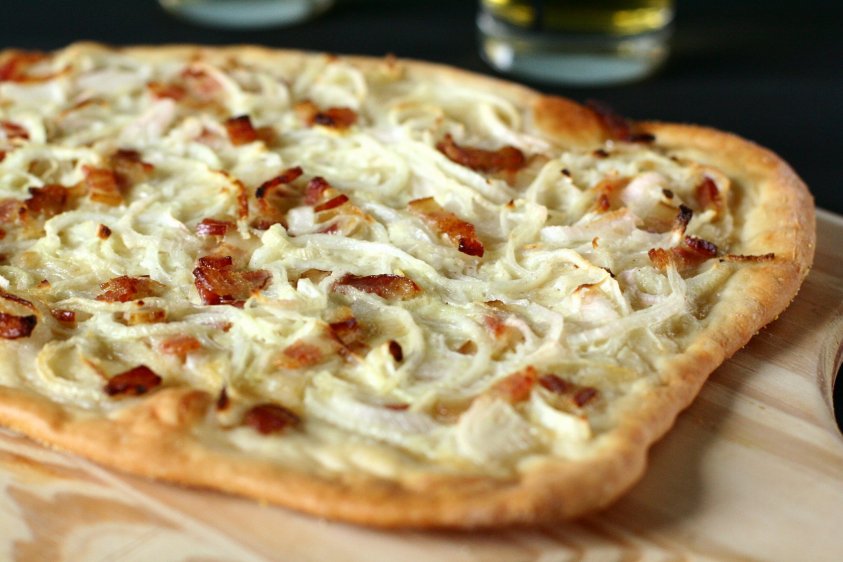
Travel around France and you will find that every region has its own speciality. Easy vegetarian options include crêpes, baguettes, falafel wraps and, in some places now, quinoa burgers. Several people told me to try the falafel in Le Marais in Paris, including fellow traveller Deepali Patel. Flammkuchen, or tarte flambée, is a speciality of Alsace and a fine thing to order with a glass of something cold.
I have also had two awkward meals in France. In Strasbourg I was served potatoes, yogurt and herbs and called it dinner; in Paris I was given plain pasta because the kitchen could not work out what to do with a vegetarian. Both were chance encounters rather than a pattern, and if you research places beforehand you should avoid the same experience. For ideas on what to eat and drink in the country, see this guide to eating and drinking in France.
Paris also has fashionable vegetarian restaurants. Rosemary and Claire of Authentic Food Quest shared a meal at Le 5 Lorette:
“Even as non-vegetarians, we were blown away by the vegetarian-style burger.” The bright colours and creative presentation engage your senses, they said. The savoury patty is made from quinoa and topped with fresh avocado and tofu, served with roasted vegetables, greens and a side of hummus. It arrives bursting with flavour.
Where: 5 Lorette, 5 rue Notre Dame de Lorette, 75009 Paris. You can connect with Rosemary and Claire on Facebook or Twitter.
If you do not speak French, a few basic phrases go a long way; these tips for visiting Paris without French are a good place to start.
Netherlands: pancakes, stroopwafels and Indonesian food
The Netherlands is hard to be disappointed by. I spent 24 hours in Amsterdam eating my way through the city and was struck by how many options there were, from fast-food krokets to cheese and mustard, stroopwafels and Dutch fries.
Karen Alexis from WanderlustingK, who lives in Amsterdam, adds that vegan food is a little harder to find but vegetarian-friendly Indonesian food is easy to come by all over the city, using tempeh as well as tofu. Middle Eastern places serving hummus are another reliable option. For a sweet tooth, look for stroopwafels and the freshly made cookies at Van Stapele. Dairy lovers who do not eat meat will be in heaven with the cheeses that you cannot even find outside the country. Karen also wrote a guide to eating on a budget in Amsterdam. Follow her on Twitter or Instagram.
Soumya from Travel Books Food discovered Dutch pancakes. Until she reached Amsterdam one summer, she had only ever eaten sweet pancakes. Then she walked into a pancake shop and ordered a pannekoek, and over the following days worked her way through both savoury and sweet vegetarian versions. Pannekoeken are like ordinary pancakes except bigger in diameter and thinner. She recommends them without hesitation.
Belgium: waffles, fries and the Noses of Ghent
Belgian food borrows from its neighbours, and in some restaurants vegetarian choices can be limited. What is never difficult is finding crêpes, waffles, fries and chocolate. In Ghent I came across a vendor selling “Noses of Ghent”, a local sweet I liked very much. If you drink beer, Belgium is also well known for it.
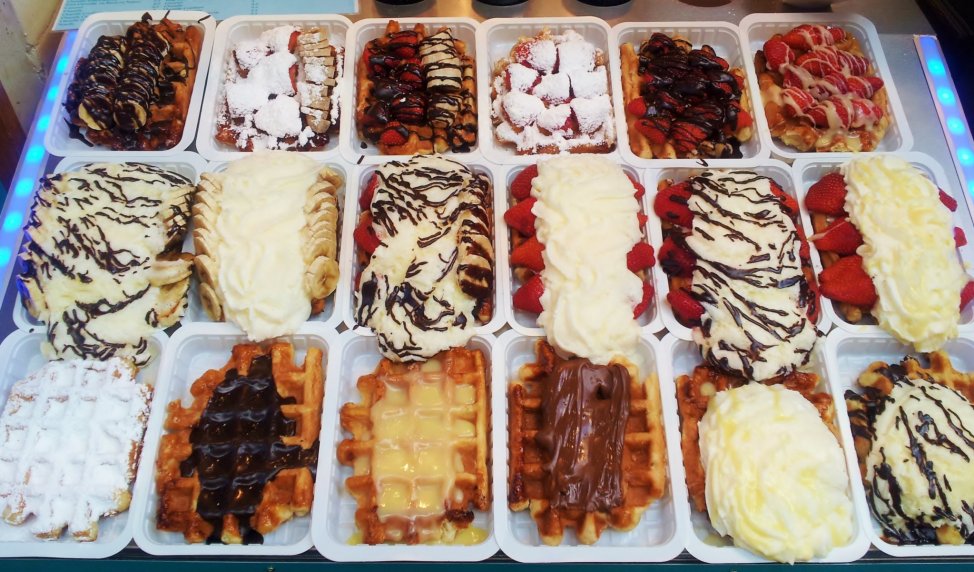
The waffles I ate in Brussels remain the most unforgettable I have had. The range of toppings is enough to leave you confused and determined to try them all. You can eat waffles anywhere in the world, but that particular paper tray, on that particular corner, set a standard.
Sabah Saeed makes a strong case for the fries. Belgian frites are in a league of their own, with a crunch you do not find elsewhere. The best part is choosing from the array of sauces to put on top of the paper cone, which lifts them to another level. Her favourite is samurai, a spicy mayo, though alioli is a good choice too. You can find them almost anywhere in Belgium, but the ones sold from a truck parked at random spots around the city are the best. In Brussels, head for the truck at Flagey. Photo by Cedric Lizotte.
If you want to repeat my budget experiment, here is how I visited four cities in three countries for around 110 euros, Belgium included.
Austria: strudel, Sacher torte and Kaiserschmarrn
You have probably heard of Wiener Schnitzel, the pan-fried meat cutlet that dominates Austrian menus. Austria is also home to a great many dumplings, strudels and excellent coffee and cake. Apfelstrudel is one of the best-known desserts, alongside Sacher torte and Salzburger Nockerl. In Vienna, the queue outside Hotel Sacher for the “original” Sacher torte is a sight in itself.
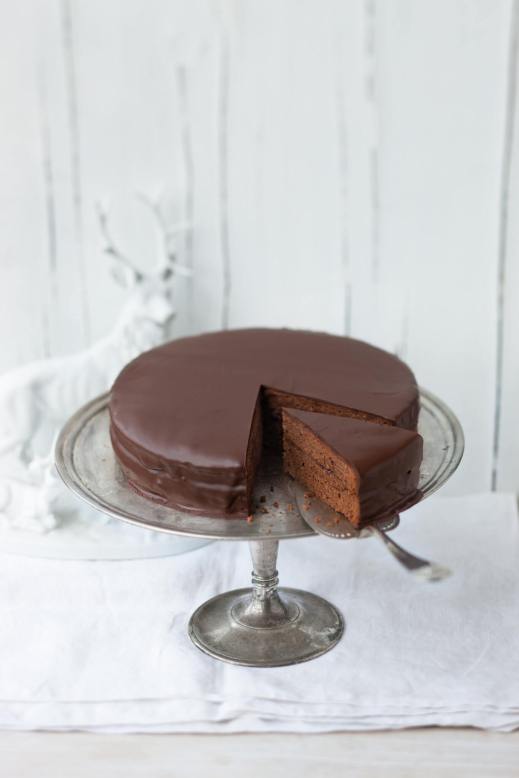
For main dishes, two staples are worth knowing. Kaiserschmarrn is best described as chopped pancakes, made with flour, eggs, milk and sugar, and easy enough to make at home. Emperor Franz Joseph is said to have preferred it alongside meat. There is a Kaiserschmarrn recipe here. Käsespätzle is another typical dish, with versions in Germany and Switzerland too. Think macaroni cheese made with grated Swiss cheese such as Emmental or Gruyère; there is a Käsespätzle recipe here.
If you like wine, visit a Heurige, the tavern where local wines are served with food. You are more likely to find meat on those menus, but the atmosphere is worth it. Here is a post on seven taverns in Vienna, and here are some vegetarian restaurant suggestions for the city.
Southern Europe
Italy: a country that makes vegetarian eating easy
It is hard to go wrong with food in Italy. Pasta, pizza, lasagne, risotto, ravioli and tiramisu are only the beginning, and the regional variation means you could eat differently for a month. In Florence I had a potato pizza and a ravioli filled with blue cheese and pear, both of which I still think about.
For Venice, here is a guide to eating like a local, including what to order and how not to be overcharged. If Parmigiano and balsamic vinegar are your idea of a good time, this food guide to Modena is worth your time.
Pizzoccheri
Pizzoccheri is one of my favourite dishes of all time, proper comfort food for a cold, rainy day. It comes from the Italian Alps and is made with buckwheat pasta that looks like broken tagliatelle, layered with potatoes, chard, a great deal of melted butter and an even greater deal of cheese. When I say a great deal, I mean it: a friend of mine uses a kilo of cheese for a kilo of butter. The dish is a speciality of Valtellina, one of the mountain valleys of Lombardy, my home region. Chiavenna, a lovely town near the Swiss border, is a wonderful place to try it, and an alternative is to order it in a mountain hut after a hike or a morning on the slopes.
Carciofi alla Giudia in Rome
On a visit to Rome I decided to look beyond the obvious. I skipped every restaurant with photographs on the menu and wandered the side streets away from the main sights, looking for places where locals were eating. That is how I ended up in a small restaurant in Trastevere with a plate of carciofi alla giudia, Jewish-style artichoke, in front of me. I had never eaten an artichoke before and would never have ordered one, had a group of Italians not been eating it as though it were the best meal of their lives. I asked the waiter to bring me the same, without knowing what it was or how to eat it. It was delicious. In fact it was so good that I tried three or four other artichoke dishes over the following days, and loved every one.
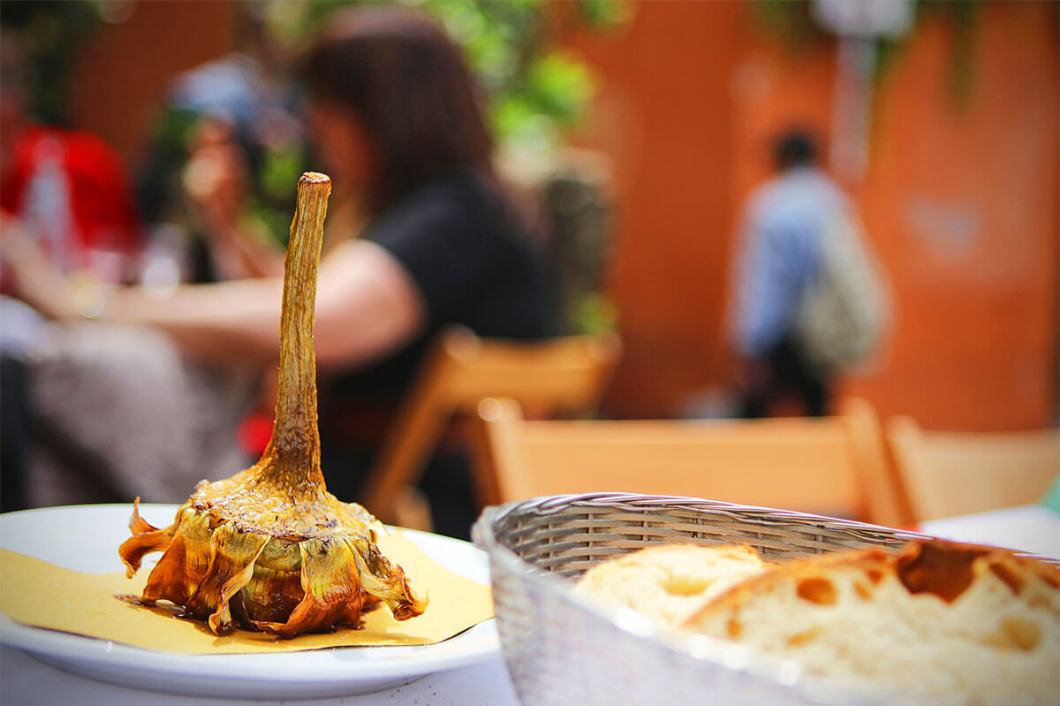
Contributed by Jurga of Full Suitcase. For more places to eat around the district, see this guide to Trastevere, Rome.
Portugal: the Azores and a very good flan
Being vegetarian in the Azores, the archipelago off the Portuguese coast, is easier than you might expect. The top-ranked restaurant on the main island of São Miguel serves nothing but vegetarian food, and it produced one of my favourite meals of the trip. For starters there were puff pastry roses with courgette, cream cheese, island cheese and thyme, plus a trio of bruschetta with various toppings. My main course was courgette noodles with mushrooms, sweet peppers, local chilli chutney, cashews, mint and island cheese. We finished with a three-chocolate mousse and a cheesecake that my husband described as to die for. It was not one dish so much as a whole vegetarian meal to remember.
Contributed by Toccara of ForgetSomeday.com. Follow her on Facebook and Instagram.
Flan
Flan, a creamy custard baked with caramel sauce, is simple to make and looks impressive when it lands on the table. It originated on the Iberian Peninsula and spread through much of the New World. Depending on the occasion, it can be baked in individual ramekins or in one large dish and cut into squares for a crowd.
Contributed by Lori B.
Spain: tapas, peppers and chickpeas
Before I visited Spain I knew little about the food beyond paella and tortilla. Paella traditionally contains seafood, and it took a long time to find a restaurant in Barcelona serving a vegetarian version. A food tour changed my impression entirely: I ate so much vegetarian food that there was no room left for patatas bravas, which is saying something. The cuisine is full of olives, cheese and romesco sauce. You can taste different olive oils, drink vermouth at one in the afternoon like many locals, try cremat and enjoy a glass or two of cava.
Pimientos de Padrón
In Barcelona you should try as many tapas as you can, though not all are vegetarian. One of the most traditional is: pimientos de padrón. The peppers are blistered over a fire and served with olive oil and sea salt. Most are mild, but every so often you get a hot one. We call it pepper roulette, because you never know until you bite. Either way, they are a fine way to start a meal.
Contributed by Alana of Great Big Globe.
Andalusian chickpea soup
Travel around Andalusia and you will notice that tapas bar food is not quite the Mediterranean diet you imagined. It is delicious, but often fried, and avoiding meat or fish is harder there than in other parts of Spain. Yet Andalusia is a conservative Catholic region, and before Easter, when abstinence from meat matters, kitchens prepare many vegetarian dishes. On a route through the region we tried several, and the chickpea soup we ate in Alcalá la Real was our favourite. It is simple: mostly chickpeas, with spinach, a little tomato and other vegetables, enriched with garlic and paprika. The taste is refreshing, and it makes a perfect first course in a set menu.
Contributed by Gabor of Surfing The Planet.
Basque Country: pintxos in San Sebastián
Spain is not the easiest country for vegetarians, largely because ham sometimes seems to count as a food group. It gets easier in the Basque Country, where the pintxos tradition is strong. Chefs combine local and seasonal ingredients on slices of fresh bread, and you can mix and match for about two euros apiece. Many contain seafood or meat, but there are always several vegetarian options. One of my favourites, eaten in an unremarkable pintxos bar in the old town of San Sebastián, had sweet roasted red and green peppers, toasted goat cheese and a fruit compote on top. It was perfect with a glass of txakoli, the young, slightly effervescent local white wine.
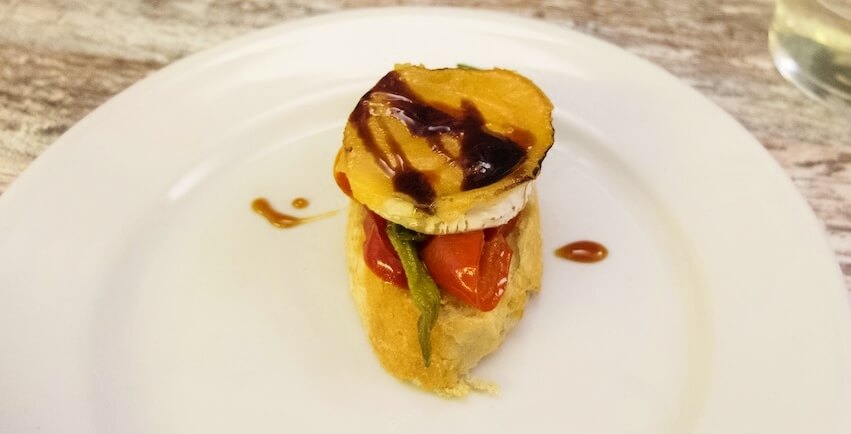
Contributed by Allison Green of Eternal Arrival.
Malta: the Maltese or Gozitan platter
Maltese cooking combines fresh Italian ingredients with the heartiness and slight sweetness of Arab cooking. One of the best things to order is the Maltese or Gozitan platter, depending on which island you are on. It arrives with a generous selection of the country’s freshest ingredients: local cheese, both fresh and peppered, sun-dried tomatoes, olives, capers, bigilla (a broad bean, garlic and parsley spread), tomato paste and olive oil.
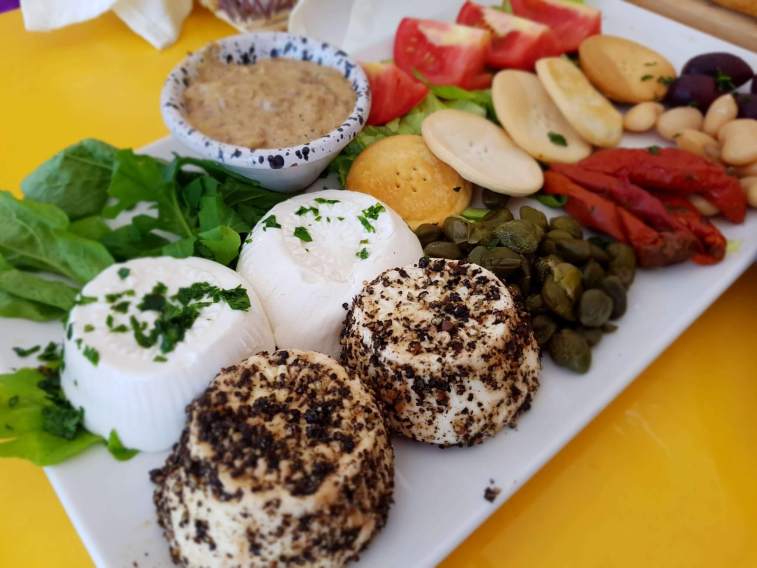
Contributed by Joanna of The World in My Pocket.
Greece: a table full of small dishes
Eating out in Greece usually means meze, a spread of small dishes shared by everyone at the table, and most of them are vegetarian. Favourites include dakos salad, beetroot salad, hummus, fava (a chickpea dip with onion and capers), vegetable fritters made with chickpeas or courgette, gigantes (giant white beans in tomato sauce), fasolakia (green beans, Greek style) and spanakorizo (spinach and rice). Tomatoes, aubergines, courgettes and onions appear in endless combinations, often with cheese, and then there are the savoury pastries and baked cheese dishes. One of the best is feta wrapped in filo, baked and served with sesame seeds and honey. Roasted figs stuffed with cheese are another. The most surprising vegetable, to me, was okra, which I had always associated with Indian food but which grows throughout the islands.
One last dish: horta, steamed greens served cold with olive oil and lemon. The word literally means weeds, and local women walk through the olive groves each morning to pick them.
Contributed by Amanda of Olive, Feta & Ouzo. Check out her recipe for dakos salad.
Fassolatha
Fassolatha has been popular in Greece since ancient times and is a favourite winter dish. The recipe is simple and the result hearty: haricot beans, onions, celery, carrots, tomatoes, bay leaves and oregano, cooked for about an hour and a half. Serve it with bread and, if you like, feta crumbled on top.
Contributed by Cristina Puscas of Greecelogue.com.
Paul Johnson of A Luxury Travel Blog sent a picture of a trilogy he ate in Crete: aubergine salad, beetroot salad and tzatziki with pita bread, Knossos cucumber and Kalamata olives.
Northern Europe
United Kingdom: beyond fish and chips
Talking to people who live in the UK about vegetarian and vegan food was eye-opening. There are many restaurants and cafés built around it. Deepali Patel, a fellow member of the Global Travel Writers group, recommends Ottolenghi’s café in Islington as a kind of vegetarian foodie heaven. I also came across a long list of vegetarian and vegan restaurants around Britain.
I was surprised to hear Glasgow described as the vegan capital of Britain. Sreya Ghosh explains the everyday reality: British food culture is cosmopolitan, and in a city like London some streets feel as though they belong to another country. Brits love meat, but they are also conscious of eating vegetables, so every canteen, takeaway and restaurant has options for vegetarians, particularly mix-and-match salads. Then there are the classics: baked beans, an astonishing range of yoghurts, vegetable soups, cabbage sautéed with aniseed, and the very popular carrot and hummus. For anyone who wants to fit in with meat eaters without eating meat, there is quorn.
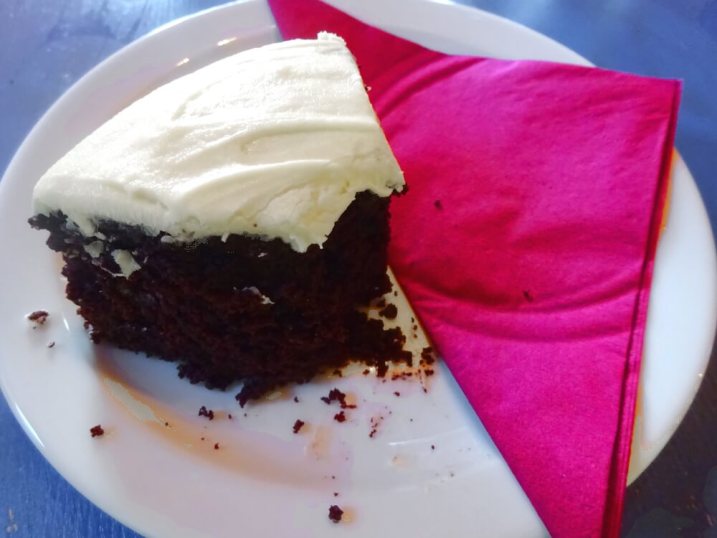
Mri Grout of Lifelong Vagabonds remembers a cake. The photograph may not do it justice, she says, but it captures the taste of the vegan chocolate and mint cake at Kat’s Kitchen in Keswick, in England. She detoured back to the café just to get a better picture for this collaboration, and then ate half the cake before remembering her plan. It is fluffy, full of flavour, and the chocolate is not too rich; it works perfectly with the homemade mint icing. She cannot travel through Keswick without stopping for a slice.
Ireland: cheese, salads and fifteens
Mindi and Daryl of 2foodtrippers took a culinary road trip across western Ireland and came back with pictures of cheese platters, fresh salads and ice cream. One was a goat cheese salad at The Hungry Monk Café in County Mayo, followed by a dessert decorated with fresh flowers. Another was Trish McCambridge’s Strawberry and Mess at Kai Restaurant in Galway.
On my own road trip around Ireland I found Fifteens at every petrol station. Some were commercially made, others looked like a bake sale, and all were tray bakes: no-bake treats that would be easy to make with children. The ingredients explain the name. I am already planning a batch billed as gourmet fifteens, with brandy-soaked cherries, homemade marshmallows and perhaps some chocolate.
Contributed by Lois B.
Estonia: winter soup in Tallinn
In Estonia, vegetarian winter soups made from squash and root vegetables are everywhere. One of the best I tried was at Peppersack in Tallinn, a medieval-period restaurant that has served many purposes over the centuries and is now fully restored. The soup was apple and roasted butternut squash, topped with pumpkin and sunflower seeds, and it was exactly what a freezing day required. Estonians also make sauerkraut or cabbage soup, split pea soup and lentil stew in winter. All of these can be, and often are, vegetarian, though you will also find pork added to many stews.
Contributed by Laura of Savored Journeys. Connect with her on Facebook or Twitter.
Finland: garlic soup
Valkosipuli means garlic in Finnish, and the soup that carries the name is a classic. Finland is known for reindeer and hearty meat dishes, but it also has plenty of vegetarian options, and the Finns love soup. Valkosipuli is one of the most traditional, and it is popular enough that you can find it everywhere, including at Helsinki Market. The garlic is roasted, so the flavour is gentler than you might fear: warm and hearty rather than something that requires other people to stand ten feet away. Many restaurants serve it, and it is a favourite to make at home.
Contributed by Ayngelina Brogan of baconismagic.ca.
Sweden: salads, fika and a cauliflower to remember
I visited Sweden one summer, slightly worried about finding vegetarian food in a country famous for fish. I need not have worried. I found the best salads I ate all year, made with locally grown ingredients, different cheeses and vegetables. Some of them were at Näslängen Island in the Stockholm archipelago, a peaceful spot with good food and wellness options, a boat ride from the city. If you visit Stockholm, leave time for the islands. And do not miss fika, the coffee-and-cake ritual that structures the Swedish day.
Stockholm itself is beautiful enough that you should go whenever you can; there is a photostory on this blog that follows the city from sunset to moonlight. I also took a day trip to Linköping and had lunch beside the Göta Canal, which produced one of the healthiest plates of the trip.
Karelian pie
Karelian hand pies are popular in Finland, Sweden and Estonia, where they are known as karjalanpiirakat. I first tried them on a guided food tour in Helsinki, where they appeared in shops all over town with different fillings. Ours had rice and carrot. In Estonia and Sweden I have had them with mashed sweet potato, and with rice and butter. The pastry is traditionally made from rye, which gives the dark colour, though white flour versions are now common.
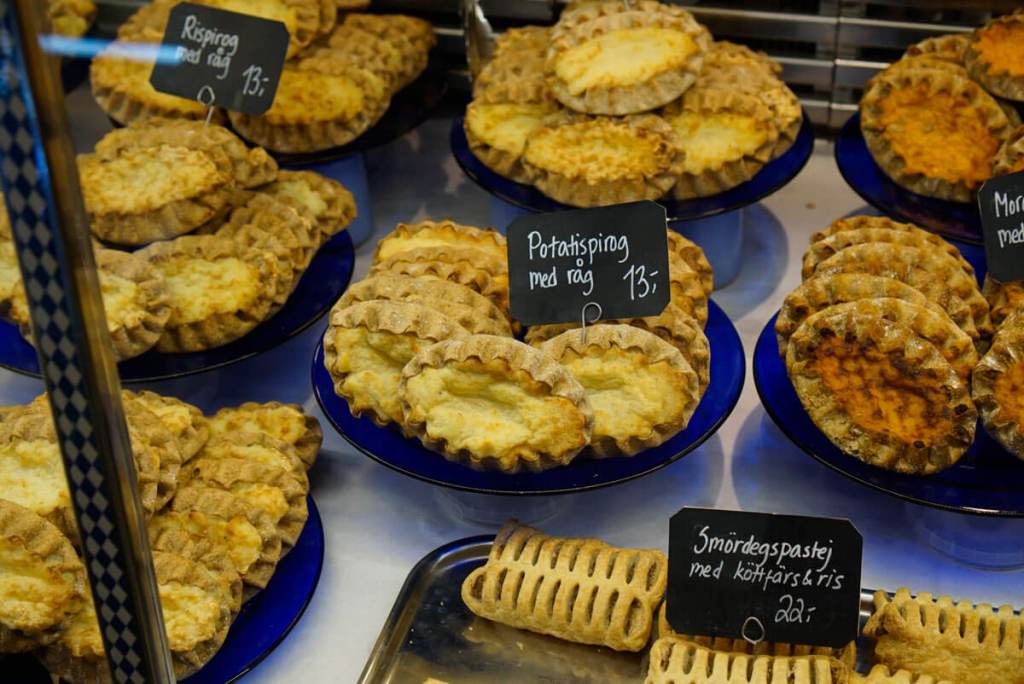
Contributed by Laura Lynch of Savored Journeys.
Roasted cauliflower at Landsort
Spending a summer night on the remote Swedish island of Landsort would already be something. Staying in one of the six rooms in the old pilot lookout tower, and having dinner exactly as the sun went down on the top floor, was better than that. The dish served at Lotstornet restaurant was roasted cauliflower, presented as a vegetarian main or as a side for the grilled cod. It is as simple as cooking gets, and it was the tastiest cauliflower I have ever eaten. Thanks to Ökå.
Beetroot salad at Hermans
Hermans Vegetarian Restaurant and Garden Café has one of the best views in Stockholm, looking out towards the archipelago. It is also known as the city’s best vegetarian restaurant, with an affordable buffet at lunch and dinner. The menu changes constantly and includes hot and cold dishes, but if you go you must pile your plate with salads. The Scandinavian beetroot salad is a personal favourite and a Swedish classic: a creamy mix of beetroot and apple, sweet, sharp and bright. Spread it on the homemade bread, baked fresh daily, and do not skimp on the vegan herb butter. Carrot salad is a bigger deal in Sweden than you might expect. Shredded, it is sweet and crisp, and Hermans makes a crunchy carrot and pomegranate version that does not disappoint.
Contributed by Bonnie of Bonnie in Wonderland.
Eastern Europe
Czech Republic: soup, omelette and trdelník
On my first visit to Prague, a friend recommended Estrella Restaurant, where I discovered how good carrot and cream soup could be, and how well carrot cake follows it. On a later trip to Brno I found a restaurant serving a vegetable omelette that was filling and full of flavour.
Hannah from Getting Stamped goes straight for the sweets. Her favourite vegetarian dish in Europe is a dessert: a trdelník smeared with Nutella inside. A trdelník is a sweet, cake-like pastry made from dough wrapped around a stick and grilled over open coals, and no matter how it is topped it is excellent. Versions appear all over Europe, especially at Christmas markets in Germany, Austria and Hungary. Eating is one of her favourite things to do in Prague, and she never misses a daily trdelník.
Georgia: khachapuri and pkhali
The best vegetarian food I have tried recently was in Georgia. Khachapuri is a bread boat filled with hot, melting cheese and butter, into which you break an egg and mix it. The bread is folded so that you can tear off the crust and use it to scoop out the filling. It is so good that it is the national dish, and a recent poll found that most Georgians prefer it to pizza. Even though cheesy bread sounds like a starter elsewhere, most people eat it as a complete meal. Sizes run from individual portions to a Titanic version that three of us could not finish half of.
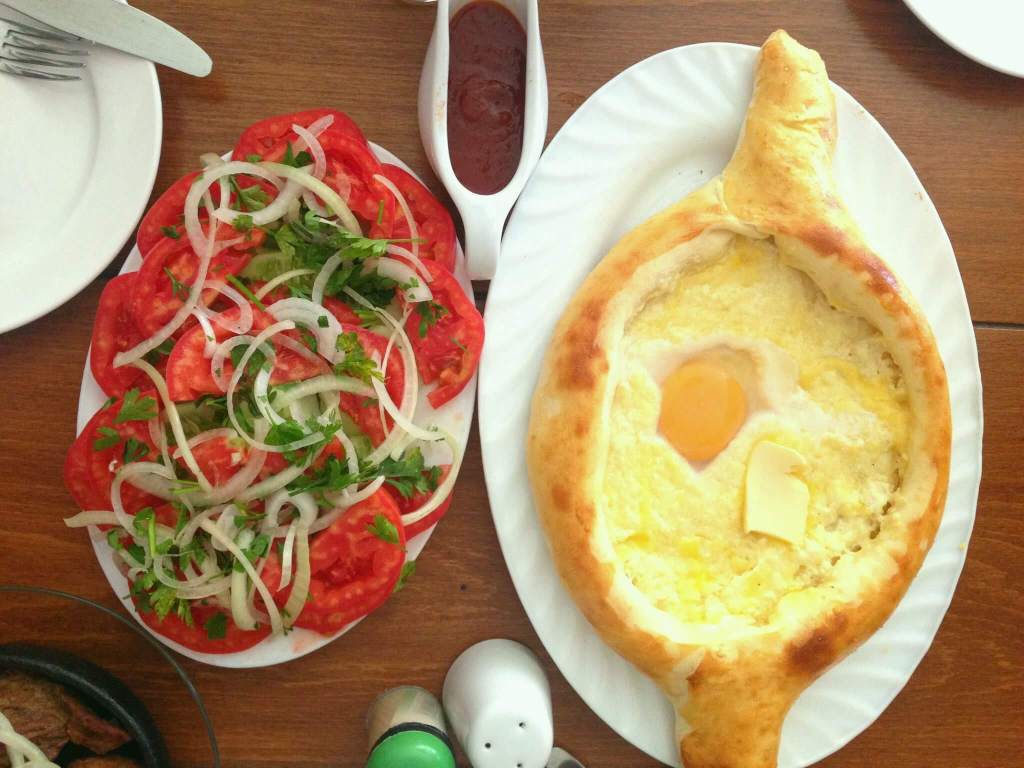
Contributed by Nathan Aguilera of Foodie Flashpacker. Find him on Instagram and Facebook.
Pkhali is a traditional Georgian dish of chopped, fried or steamed vegetables, usually aubergine, spinach, bell pepper or cabbage. The vegetables are rolled in, or mixed with, a walnut sauce made from minced walnuts, garlic, onion and seasoning. Depending on the vegetables, the sauce changes, and sometimes vinegar, fresh parsley and a couple of tablespoons of water go in. Pkhali is common at Georgian feasts and dinners, served as an appetiser or side. Some restaurants offer a plate with a mixture of all the vegetables. Every restaurant in the country has it, and every region puts its own spin on it.
Contributed by Baia Dzagnidze of Red Fedora Diary.
Poland: pancakes, soups and pierogi
I have not yet visited Poland, so I asked Marta of W Ruchu to write about the food. Her account of home cooking is one of the warmest pieces in this collection.
Her mother and both grandmothers cooked traditionally, and much of what they made was vegetarian without ever being labelled that way. Potato pancakes were made from shredded raw potato with onion and a dash of garlic, fried until golden. They were served plain or with cream, and as a child she liked them sprinkled with sugar. In restaurants you will also see them with a stew, which she points out comes from Hungarian cooking. And no salad with potato pancakes, please: there is enough work in making them already.
Then there were thin, large pancakes, not the fluffy American kind, served with a spoonful of cottage cheese, cream and homemade strawberry jam. Racuchy is another version: small yeast pancakes with half-melted apple and raisins inside, called małdrzyki in some regions, and rarely found in restaurants. Sour pancakes filled with cabbage and mushrooms, folded, covered in egg and breadcrumbs and fried, are krokiety. Some cooks add yellow cheese, but Marta prefers them with cabbage alone. The variety of yeast and soda pancakes is endless, and you find these milk-and-egg delicacies in a bar mleczny, a milk bar.
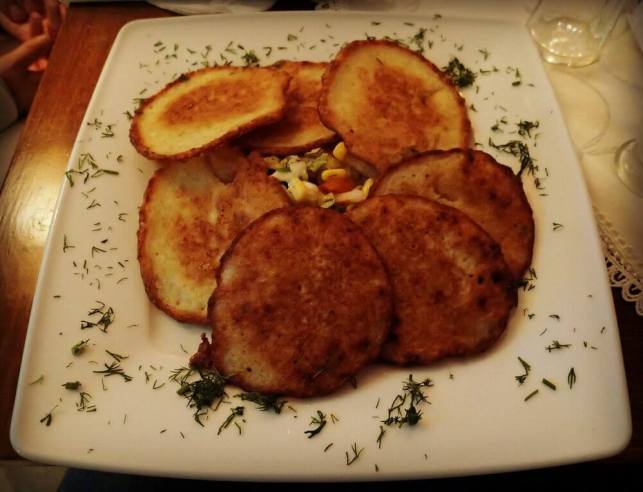
Beth McCrea of My Adventuresome Soul also remembers hot, crisp potato pancakes in a Warsaw restaurant, served with salad, though at home they are usually eaten without one.
Soups were another staple. A sour soup is something you rarely find elsewhere: beetroot soup, with a clear vegan version served in some regions on Christmas Eve; żurek, a sourdough soup with eggs; kapuśniak, made with sour cabbage; and sour cucumber soup.
And then pierogi, which can be boiled, baked or fried. A plate of pierogi is the flagship of the Polish table. Making them takes time, so fewer people make them at home, but they remain a staple in milk bars. Another stuffed dumpling is pyza or knedel: a delicate body of mashed potato and flour with a dash of water, wrapped around sweet or savoury fillings. You can have them with cabbage, because no Polish dish is complete without cabbage, or with seasonal fruit. Marta’s grandmother rolled them with a ripe plum. Kopytka are unfilled: dough rolled into a long tail, cut into trapezoids and boiled, easy and filling. The name means little trotters. Sometimes they are mixed with quark and served with sugar and cinnamon.
Romania: sarmale and zacușca
Sarmale is the traditional Romanian dish, usually made with minced meat. Because Romania is a religious country and people fast several times a year, the recipe can be made with rice instead, and it loses nothing. Rice is mixed with spices and breadcrumbs, wrapped in pickled cabbage leaves, boiled, then baked for a few hours. It is eaten with fresh polenta and sour cream.
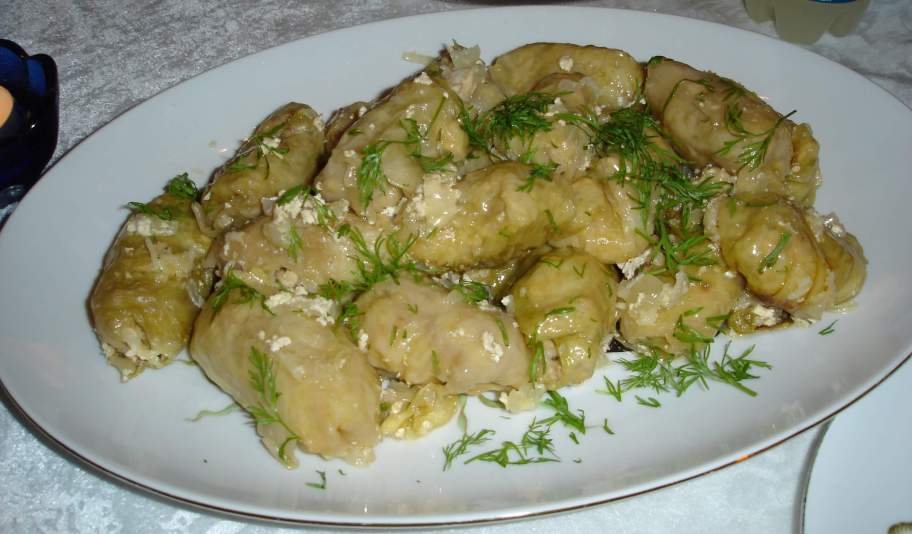
Contributed by Joanna of The World in My Pocket. Find her on Facebook and Instagram.
Zacușca, or aubergine paste, is a vegan appetiser prepared in autumn and stored in the pantry for fast days, of which there are many during the Christmas and Easter Lent, and for the rest of the year. The base is roasted aubergine, with roasted red peppers, onions, tomatoes, oil, bay leaves and black pepper.
Contributed by Cristina Puscas of LooknWalk. Check out her post on traditional Romanian foods.
Other Romanian dishes to look for include salata de vinete, the aubergine salad, and mămăligă cu brânză și smântână, polenta with cheese and sour cream.
Russia: sirniki for breakfast
I can only guess at the origins of sirniki, but something tells me they were born of necessity. Cottage cheese is the main ingredient and a staple of the Russian kitchen, and it makes a perfect breakfast on its own. The problem is its short shelf life. There is a Russian saying that translates roughly as “the poor are good at being creative”.
Here is what I think happened. Years ago, a thrifty Russian woman had some cottage cheese going bad and did not want to throw it away. She mixed it with eggs and flour, formed patties and fried them. Delicious breakfast, ready. The story is not that surprising, given that cottage cheese itself comes from milk that has gone bad.
These days cooks use fresh cottage cheese, and so do restaurants, so there is nothing to worry about when you order. Sirniki are usually served with sour cream and jam and make an excellent breakfast or dessert.
Yulia of The Foodie Miles has the recipe.
Serbia: ajvar and gibanica
Discovering Belgrade with a friend who is a native, and one of the best guides I have met, was a brilliant introduction to the city. My husband and I stayed with his family, and his mother fed us traditional Serbian dishes and drinks in their wonderfully cosy apartment, between stories about the Yugoslav civil wars of the 1990s. Of everything we ate, two recipes stayed with me: ajvar and gibanica.
Ajvar reminded me of baingan ka bharta from India, and of how we are all a blended mixture of one another, wherever we come from. There is nothing like homemade ajvar. Peppers are charred over a fire, then combined with roasted aubergine, garlic, oil and vinegar to make a spread. It is served with grilled meat and eaten on all kinds of bread. Gibanica is a Balkan cheese pie, made with flour, cheese, oil, eggs (optional), baking powder, sour cream and salt if the cheese is not salty enough. My friend’s mother stuffed hers with spinach, and I do not want to forget that flavour.
Contributed by Anshita Koul of Reflections of a Spacecaked Mind.
Trupti, who visited Belgrade recently, recommends Red Bread Café for vegetarian burgers, sandwiches, pumpkin soup and healthy smoothies.
Slovakia: sweet gnocchi and buchty
Slovak traditional vegetarian food sounds like a contradiction, but it exists. If you have a sweet tooth you are in luck. One of the typical dishes is makové šúľance, sweet gnocchi with poppy seeds. You can also try buchty, pronounced booh-tee, and decide from the photo which you prefer.
Contributed by Karin of Girl Astray. Check out her Bratislava guide if you are planning a trip to Slovakia.
Slovenia: forest mushroom soup and struklji
Slovenia is a gem of a country, the kind of place that reminds you of fairy tales: castles, lakes, dungeons and dragons, history and mystery in equal measure. It also has food worth planning around.
I am a huge fan of mushroom soup and order it whenever I see it, usually without learning my lesson, because what arrives is often bland with a few white button mushrooms floating in it. I keep ordering in the hope of reliving a day in Škofja Loka when I was served a soup made from mushrooms picked in the surrounding forests. Wild mushrooms bear no comparison to cultivated ones, and this soup used at least seven varieties, which is what made it so rich. The greater the variety, the better it tastes. I cannot wait to go back and have my husband teach me how to pick them, which is risky business if you do not know what you are doing; you can literally poison yourself.
Contributed by Jure of Call of Travel.
Strukli are dough rolls filled with a ricotta-style cheese. I was told there is egg mixed in, but I could neither see nor taste it. Sometimes they appear as a side dish, sometimes as a main with a sauce. I had them as a main with a thick mushroom sauce, on a food tour in Ljubljana where the guide knew exactly where to take us. After that, all I wanted in Slovenia was strukli.
Contributed by Claudia Tavani of My Adventures Across the World.
One last thing before you eat
Twenty-four countries and one region, and not a single one of them left me hungry. What strikes me, reading back through these contributions, is how often the best answer was not a restaurant at all: a market stall, a bakery, a family kitchen, a train picnic. Vegetarian food in Europe is rarely a separate cuisine. It is the same food, with the meat quietly left out, and often it is the dish the country is proudest of.
If you are travelling this year, take the list with you, but treat it as a starting point. Ask the person behind the counter what they would eat, and you will usually get a better answer than any guidebook. And if you have a dish I have missed, tell me in the comments. I am always hungry.
Discover more from Europe Diaries
Subscribe to get the latest posts sent to your email.
Pauline
That must be the most completed guide on european food I have ever read!! Make me cry just looking at the pictures lol
madhuonthego
Wow that’s an awesome list .. vegetarian dishes is all I needed.lovely
biketobasics1
Ok, I eat meat but I have to say that vegeterian dishes are quite delicious. From all of those you’ve mentioned, the khachapuri looks like the tasties thing on Earth.
Raj Bhide, Pune , India
A VERY USEFUL FOOD INFO FOR ME BEING VEG. A MUST ACROSS ALL EUROPEAN COUNTRIES, VERY THOUGHTFUL OF YOU.
Pingback:Vegetarian Food in Europe – 25 by 25
Pingback:A glimpse of Bulgaria - Ideas for your first trip - Europe Diaries
Pingback:Venice beyond Gondolas : Exploring like a local - Europe Diaries
Momma To Go
This is so amazing, I just got home from an Italy trip and I loved Pizzoccheri!!!!!!
Pingback:A unique wine experience in Stockholm,Sweden: Staying at The Winery - Europe Diaries
Barbara
Its a good long post with lots of food. The kurtos kalacs is not a specialty of the Czech Republic, it is a typical dessert of Hungary. It was the part written by Getting Stamped.
Mindi Hirsch
I’m not a vegetarian, but all of this food looks super delicious. You have inspired me to seek out more meat-free food around the world.
reflectiveponderer
Thnaks Mindi. Loved your pictures and now I know what I’ll be looking out for when I visit Ireland!
Anshita Koul
Amazing work. Great piece of write up that will be very helpful to anyone and everyone. Thank you for letting me be a part of this blog post. Cheers. Rise and shine 🙂
reflectiveponderer
Thanks Anshita 🙂 I am so glad you were a part of thsi collab. I am hoping to visit Belgrade soon!Take care 🙂
Karin
This post made me hungry! I´m not a vegetarian, but I love veggie food, I have to try that amazing soup when I am in Georgia 🙂
Thank you for featuring me 🙂
Marta
Wow, this post actually turned out into a real bible for vegetarian foodies! Thank you so much for featuring me in, it was a pleasure to reveal some veggie insider’s tips with you 🙂 I can’t wait to try other goodies, especially those I haven’t heard of so far. Regarding slovakian food, I remember eating in Bratislava something called ‘Bryndzové halušky’, which is a sort of fine hand made dumplings made od potatoes and flour (they look a little similar to rösti), with a cream sauce. I highly recommend them, they’re delicious! All the best
reflectiveponderer
Marta,thanks for such a beautiful article. I need to post it entirely on the blog so others also get a feel of the sentiments you have portrayed so beautifully. I am so glad you told us about authentic Polish cuisine.I am very eager to visit Poland sometime!
Anna
I used to have practically an aversion to vegetarian food, but as I get older I notice that I tend to travel better – in a sense of physiologically “lighter “- after a vegetarian meal. All of these are delectable!
reflectiveponderer
Hi Anna! How are you doing? Glad you liked the dishes featured here:) There’s so much of deliciousness everywhere <3
Jollies and Jaunts
Oh wow, I’m starving after reading this! I visited Estrella in Prague too – it’s amazing and great value for money.
If anyone’s ever in Manchester, UK there’s a really great vegetarian food scene – including a vegan junk food cafe called V Rev that’s a must visit!
reflectiveponderer
You visited Estrella to! Isn’t it wonderful? Thanks fir the tip! I’ll keep that in mind when I visit Manchester 🙂
Caroline
This is such a good list. I can only imagine how long it’s taken you to put together! I was interested in your take on the UK where I’m from. Manchester and Liverpool both have lots of gorgeous veggie and vegan options as well as Glasgow. I’m not vegetarian but only eat free range meat which is usually impossible to get when travelling so tend to go pescetarian or vegetarian then.
Baia
Sure, can you give me your email address? I am currently traveling but will note it down and send you once I am back home
reflectiveponderer
That would be great! You can mail me at europediaries(at)gmail.com
Baia
Hey! lovely post. I am glad you visited Georgia and tried khachapuri. But here are soo many more vegeterian dishes in Georgian cuisine, like Spinach, egglpants or bell pepper in walnut sauce. 🙂
reflectiveponderer
Hey thanks Baia! I wasn’t aware of it.Would love to add on to it if you’d be interested in sending something over.
Ellis
Lovely Blog Post. There are some other dutch vegetarian delicacies. Did you try stroopwafels ?? If you love pancake you love those too. My favourite pancake is actually a sweet one. Apple pancake with cinnamon.
reflectiveponderer
Hey Ellis! Yes, I loved stroopwafels! I want to go back and try more pancakes