
Autumn in Switzerland, by Interest
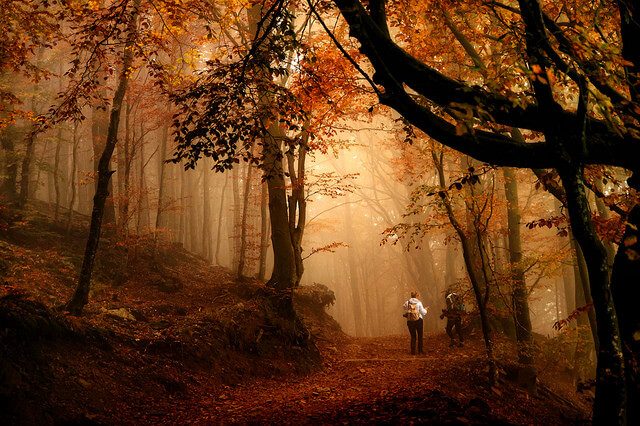
Autumn in Switzerland begins with a change in the air: colder mornings, leaves turning across the valleys, harvest festivals filling village squares and the start of cheese season. It is the most generous time of year for anyone who likes eating, drinking, walking, or simply standing still in a landscape that has decided to put on a show.
What follows is a guide organised by what you enjoy most, with the dates that matter at the front so you can build a trip around them.
The season arrives unevenly. In the lowlands it can feel like a long, mild extension of summer well into October, while the high passes may see their first snow in September. That spread is useful: it means you can spend the morning in a vineyard and the afternoon looking at white peaks, and it means the country's walking season lasts longer than a single month suggests.
The dates worth planning around
- 29 and 30 September: Herbstsonntag in Wilchingen, in the Schaffhausen vineyards.
- 13 and 14 October: Herbstsonntag in Osterfingen, known there as the Trottenfest.
- 14 October: the ProSpecieRara Reutenmarkt at Heiternplatz in Zofingen.
- 20 and 21 October: the Transruinaulta Trailmarathon and Transviamala Run&Walk.
- 26 and 27 October: Thusis UnterNull, when the village opens its old cellars.
- September: the Grape Harvest Festival in the old town of Lutry, above Lake Geneva.
For people who plan their days around food
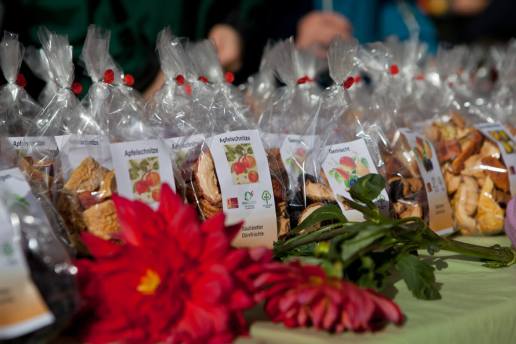
Autumn is planting time, which surprises people who associate the season only with harvest. Visit the ProSpecieRara Reutenmarkt on 14 October at Heiternplatz in Zofingen and you will see the argument for yourself: vegetables, salad leaves and flowers that can survive the cold and come back as your first fresh salad of early spring. If you have bigger plans, a tree or a berry bush planted now has the whole winter to settle in.
The market is run by Pro Specie Rara, a foundation devoted to conserving rare and unusual plants and animals. That means you can buy seeds and plants for vegetables you have never cooked, and probably never seen.
One warning. Once you have eaten these varieties, the supermarket shelf becomes a dull place. The range of tastes and colours is genuinely arresting, and it is easy to get hooked.
If you have no garden, or no time to plant one, there are still ways in. Coop stocks a small selection of rare vegetables under the Pro Specie Rara label. Depending on the season you might find purple potatoes, sweet parsnips, striped green zebra tomatoes, unusual and delicious pumpkins such as the Delicata, and black radish, which is spicy enough to need a warning of its own.
There is more at stake here than flavour. Preserving the genetic diversity of the plants and animals we eat is a form of insurance, and a real one in a changing climate. Chefs have started to rely on these varieties for exactly that reason. A tasty safety net, as safety nets go.
In Zofingen, the Hotel Römerbad is the comfortable mid-range choice, with free breakfast and well-appointed rooms. The Zofingen Youth Hostel is cheaper, with private and dorm rooms including breakfast. Airbnb covers the rest.
Read more: the best food to have in Switzerland and 23 other European countries.
For wine lovers: the Herbstsonntage
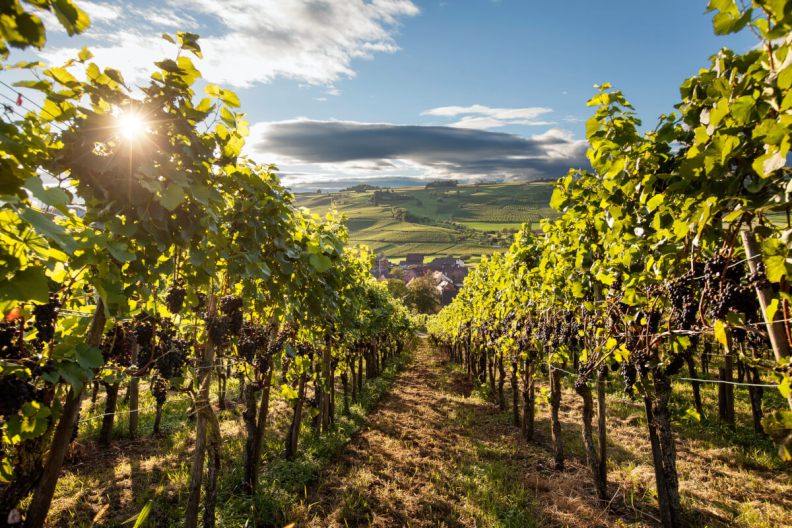
If autumn means wine to you, head for the Herbstsonntage in the Blauburgunderland, the vineyard country of the canton of Schaffhausen. Each weekend a different village hosts its own festival, with local wines to taste, local specialities to eat, live folk music, games and horse-carriage rides for children and adults alike.
These are harvest festivals in the old sense: a chance to give thanks for the year's crop, and not only the grapes. The name says Sunday, but the festivities usually begin on Saturday and run through the weekend. The Herbstsonntage are as colourful and cheerful as Swiss traditions get.
The name Blauburgunderland is worth knowing before you go: Blauburgunder is the German name for Pinot Noir, the grape this corner of Schaffhausen is known for, and the villages along the wine route take it seriously.
Two weekends were on the calendar for 2018: 29 and 30 September in Wilchingen, and 13 and 14 October in Osterfingen, where the festival is called the Trottenfest.
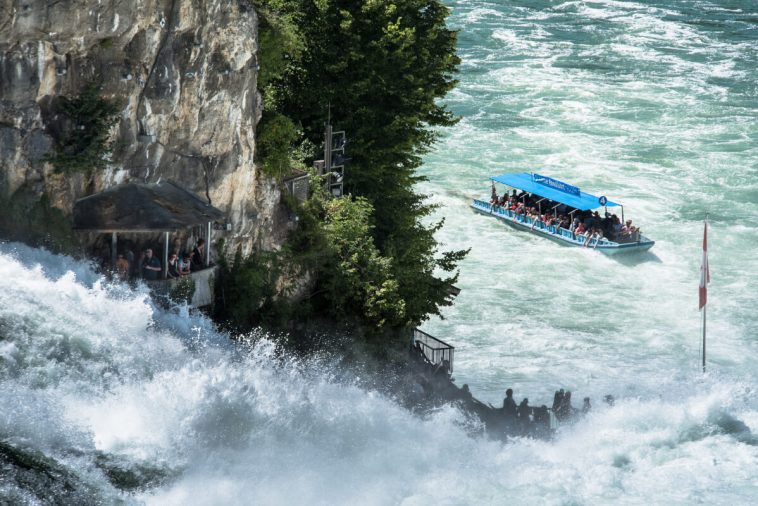
On the way, stop at the Rhinefall in Neuhausen. Get off the train at Neuhausen Rheinfall, or take Bus 1 from Schaffhausen. If you like technology, the self-driving bus on line 12 runs from Neuhausenzentrum to the falls; Neuhausen was one of the first three Swiss cities to put a self-driving bus into public service, and the timetable is online.
In Schaffhausen, the Hotel 2B is a handsome historic building dating to 1654, recently refurbished. On a tighter budget, the castle-like Schaffhausen Youth Hostel has dorms and private rooms and includes breakfast.
For wine lovers: the Lavaux vineyards
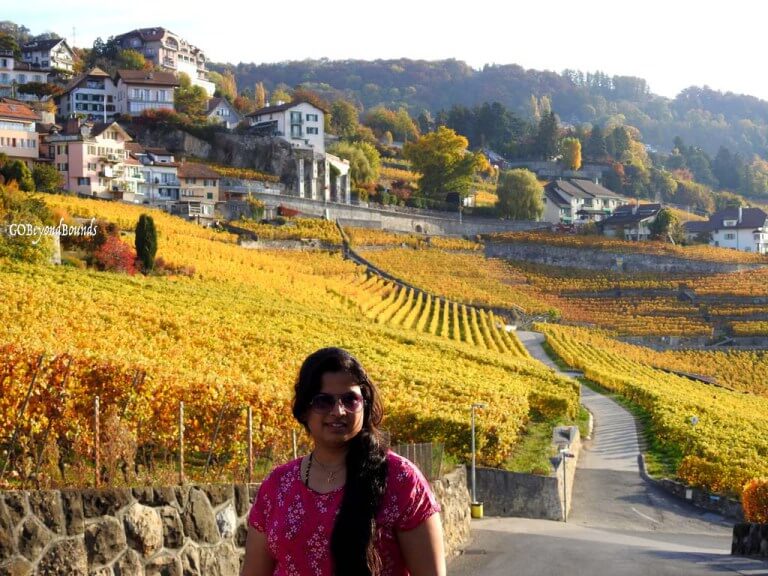
The Lavaux is Switzerland's best-known wine region, more than 30 km of walking trails laid along the shore of Lake Geneva, with the mountains behind and the water in front. The terraces are a UNESCO World Heritage Site, and they run from Montreux to Lausanne.
Wine cellars are scattered through the terraces, most offering a tasting alongside a tour. You can walk the terraces yourself, join a guided tour, or take one of the two tourist trains.
Autumn is the season to see it: the terraces turn orange and gold, and the harvest is under way. Time a visit for September and you will catch the Grape Harvest Festival, a three-day event in the old town of Lutry with a traditional procession, music, a fancy-dress parade, wine tasting and jazz concerts.
While you are in the area, a city tour of Montreux or Lausanne fills an afternoon. For somewhere to stay, the 1820 Guest House in Montreux is a chic, modern mid-range option, and there are plenty of apartments and rooms in both towns on Airbnb.
Contributed by Rashmi and Chalukya of GOBeyondBounds.
For culture: Thusis UnterNull
On 26 and 27 October 2018, Thusis UnterNull opens the old vaulted cellars (Gewölbekeller) of private households, shops and businesses across the village. Each one puts on something small: food, drinks, music, a contest. You wander and choose whichever takes your fancy.
This is a modest event, neither heavily touristic nor dramatic, and that is exactly its charm. It is a way into a mountain region and the people who live there, rather than a performance put on for visitors.
During the day, walk through the autumn forest to the Traversinasteg, a narrow suspension bridge over a small stream at a height that will make your stomach drop. The walk takes about two to three hours from Thusis and needs proper shoes.
The Gasthaus Alpina has mountain views, a hot tub and a sauna. Airbnb is the alternative.
Read more: hiking your way through art from Switzerland to Germany.
For runners: the gorge races
Every autumn the Transruinaulta Trailmarathon and the Transviamala Run&Walk take runners through two of the Alps' most dramatic gorges. In 2018 the races fell on 20 and 21 October. This is a genuine trail marathon: steep in places, narrow in others, and not something to enter on a whim unless your legs are ready for it.
The fastest man and woman over the full distance are crowned with a wooden crown and the title Schluchtenkönig or Schluchtenkönigin, King or Queen of the Gorges. For the less ambitious there is a shorter 24 km route through the UNESCO-listed Rhine Gorge.
You do not have to run. Spectators are needed, and the athletes will be glad of the noise. The Viamala and Ruinaulta gorges are worth visiting at any time of year, whether for a scenic walk or a river rafting trip.
Afterwards, the Hotel Fravi is the place to recover: stylish, with mountain views, direct access to mineral pools and a sauna for aching legs.
For nature lovers: the Swiss National Park
Autumn may be the best time of year to see the Alps, and the country's only national park is the place to do it. The Swiss National Park covers the high Engadin, a valley of larch woods and open slopes where the rules are strict, the paths are marked, and the wildlife has room to behave as it should.
- Watch the larches (Lärche) turn yellow. The contrast between that bright gold, a blue sky, glittering streams and dark mountains is startling.
- Animals are easier to see in autumn: bearded vultures (Bartgeier), red deer (Hirsch), ibex (Steinbock) and chamois (Gämse).
- Listen for the deer. Their calls echo through the valleys in a phenomenon known as Röhren der Hirsche, and the sound carries for miles.
- If it rains, the Nationalparkzentrum in Zernez has an interactive museum devoted to the park.
- If it shines, take the train to S-chanf and then the Nationalparkexpress to the entrance of Val Trupchun for an easy one to two hour walk in extraordinary scenery. Bring binoculars; the wildlife is the point.
- Visit Castle Tarasp in the Lower Engadin, which dates back to the 11th century.
The Hotel Crusch Alba in Zernez is a traditional base minutes from the National Park Visitors Centre.
For festival lovers: pumpkins in Basel-Land
Say autumn and I think of pumpkins. In recent years they have become popular enough that most supermarkets now sell them in every shape, colour and size, but a supermarket is not a festival.
The Pumpkin Festival Basel-Land is held each autumn at the Mathis Hof in Bottmingen. It is small and delightful. Hundreds of varieties of pumpkin and squash are for sale, many of them edible, with little displays explaining how best to cook them. Others are purely decorative, carved for Halloween. The sheer range is hard to believe until you see it laid out.
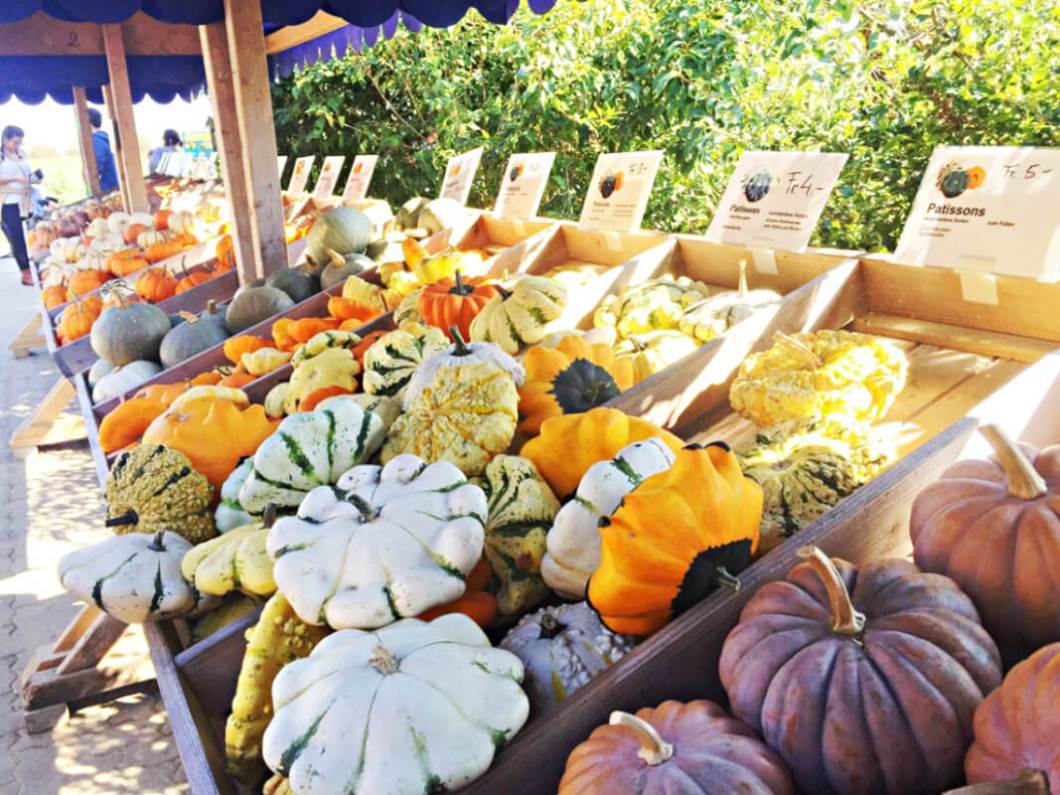
Our favourite part is the food: pumpkin beer, pumpkin dishes of every kind, and a pumpkin pie that is extraordinarily good.
Contributed by Thomas of Trip Gourmets.
While you are in the area, a walking tour of Basel is worth the time, and the city holds one of Switzerland's oldest autumn fairs, the Herbstmesse, with a fine selection of desserts and cheese-based food. The sleek Basel Youth Hostel is the affordable bed, while the Nomad Design and Lifestyle Hotel is the fun one.
Read more: unique things you can do in Basel.
For climbers: the Valais in autumn
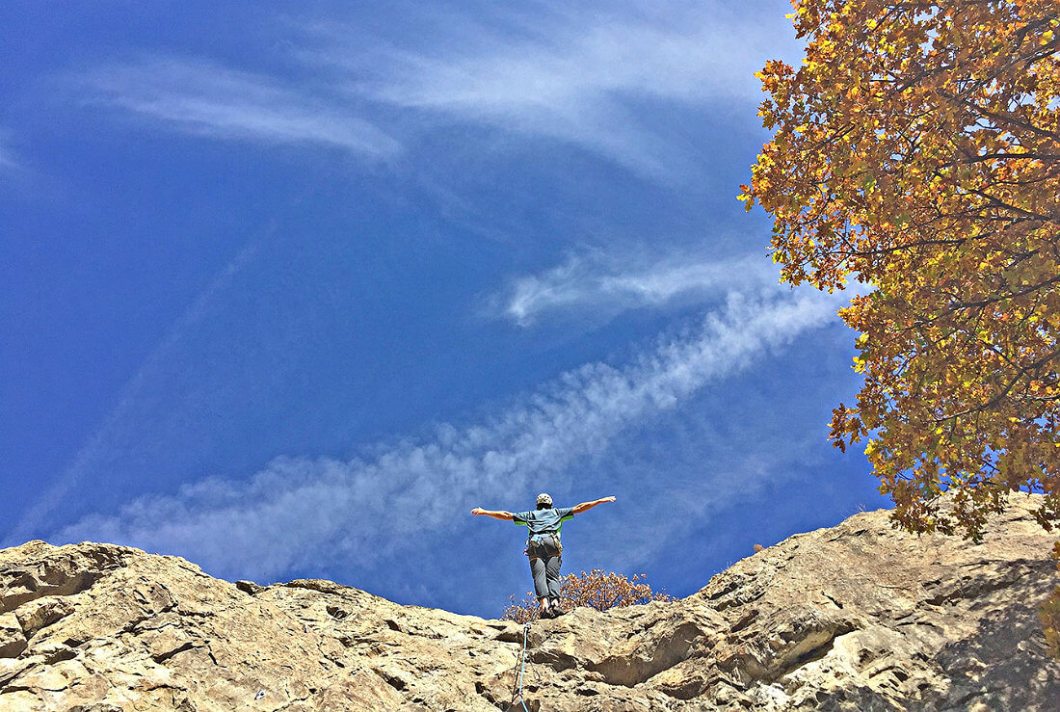
Just as summer ends and outdoor climbing seems finished, autumn arrives. It brings the best colours of the year and, more practically, opens up walls that were too hot to touch in July and August.
The Valais is the country's climbing heartland, and several of its walls are well suited to families: picnic areas, safe ground, and a forest or a river nearby so that children have something to explore when they have had enough. In autumn they can also collect acorns and chestnuts for craft projects at home.
There are nearly 2,000 bolted routes, from a child's grade 3b to 8+ and beyond, so there is something for every level of nerve.
In Zermatt, the Hotel Bellerive Chic Hideaway has a hot tub, a sauna and free breakfast with local specialities.
Contributed by Corina of Packed Again.
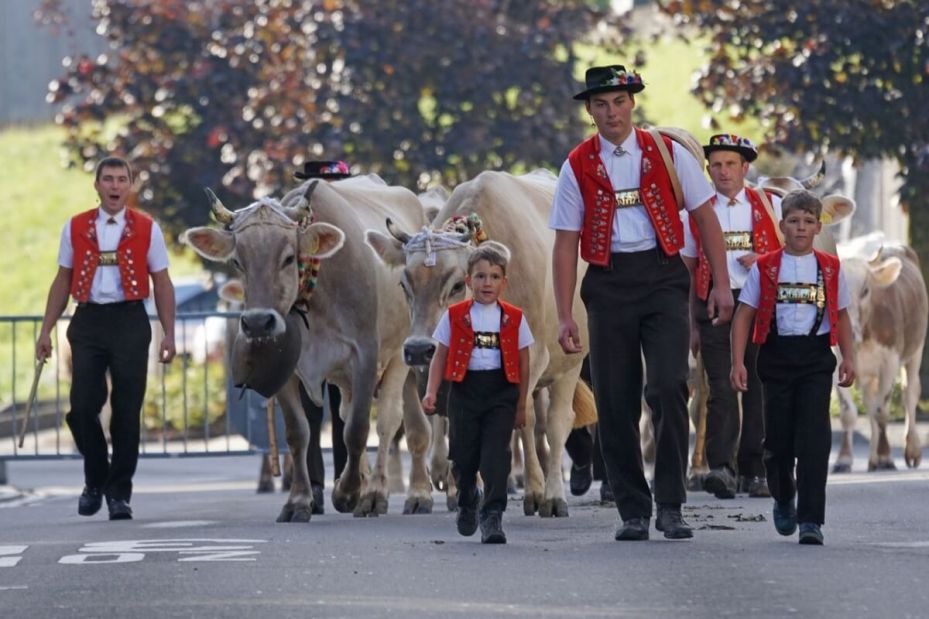
For hikers: the Ebenalp
The Ebenalp sits at 1,640 metres in the Appenzell region of eastern Switzerland, about two hours from Zurich. You reach it by cable car, or on foot from Wasserauen. Around it are cliff formations, snow-capped peaks, green meadows with grazing cows, dense forest and an alpine lake.
Trails range from strenuous to short and family-friendly. The walk down to the Ascher Cliff Restaurant is the one to do. It passes the Wildkirchli, a chapel built inside a cave in 1621, and a series of large caves where archaeological finds go back more than 45,000 years.
A few minutes further is the Ascher cliff guesthouse, a 170-year-old building that appears to hang from a 100-metre vertical wall and was once described as the most interesting restaurant in the world. The terrace is the place for alpine views and Appenzell specialities.
Stay at the Hotel Kaubad, with an indoor pool and a regional restaurant, or more cheaply on straw bedding at the Heiterhof farmhouse in nearby Eichberg.
Contributed by Nina of West Australian Explorer.
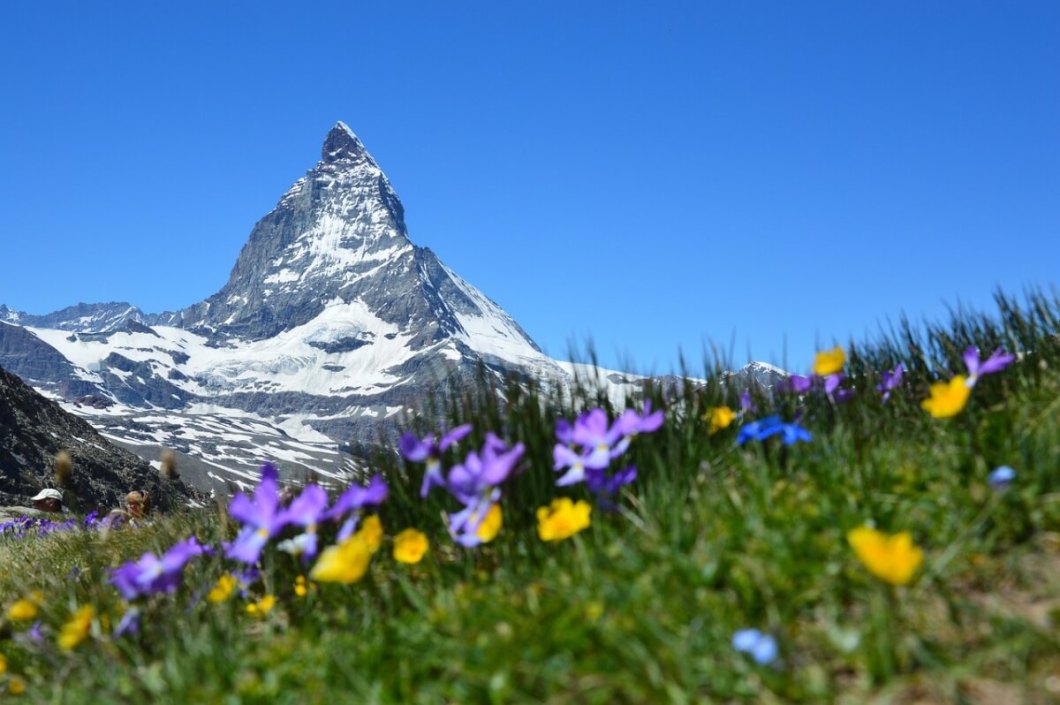
For hikers: the Five Lakes Walk from Zermatt
After two weeks on the Haute Route from Chamonix to Zermatt, the Five Lakes Walk, or 5-Seenweg, was the best day hike I found from the town. A quick funicular to Sunnegga puts you above the valley, and the 9 km route past five lakes is well marked, with views that do the work for you.
In good weather the highlight is the Matterhorn, reflected in several of the lakes. The walk suits all ages, the lift stations have snack shops, and there is a swimming lake and a playground at Leisee.
To start, take the Sunnegga funicular and then the telecabine to Blauherd. If you want more of a challenge, begin in Zermatt and climb.
Contributed by Leigh Wilson of Campfires & Concierges.
Before you go
Autumn weather in the mountains changes quickly, so pack for cold mornings and warm afternoons, and check cable car and hut opening dates before you commit. The season is short and the best weekends fill up.
Featured image by Maritè Toledo via Flickr (CC BY-NC-ND 2.0). Which of these would you try first? Tell me in the comments.
Discover more from Europe Diaries
Subscribe to get the latest posts sent to your email.
Anna Makridi
Such beautiful pics! Thanks for sharing!
Anna
Just added the 5 lakes trail to my to-do!