
Basel Fasnacht: The Night I Was Attacked With Confetti
For weeks before Basel Fasnacht, the city practises. You hear drums from cellars, see groups carrying instruments through the streets, and watch shop windows fill with masks. Everyone tells you that the Basel carnival is different from every other carnival, and after three days of it, I understood what they meant.
I missed the opening at four in the morning — the Morgenstreich — which I still intend to attend one year. Instead I did what a working resident does: I walked out of the office each evening and joined whatever was happening in the streets. That is how I learned the most important rule of Fasnacht the hard way.
What the badge means
Basel's carnival is organised around cliques: groups that spend months preparing costumes, floats and music, and that rehearse their piccolo players in cellars through the winter. Only clique members wear the elaborate costumes during the parade, and they take the traditions extremely seriously.
The other tradition is confetti. If you are not wearing a Plakette — a small metal badge sold in support of the carnival and the cliques — you are fair game. Locals will throw confetti at you, and children take this duty particularly seriously. I knew the rule. I had read about it. I still managed to forget it.
An evening at Petersplatz
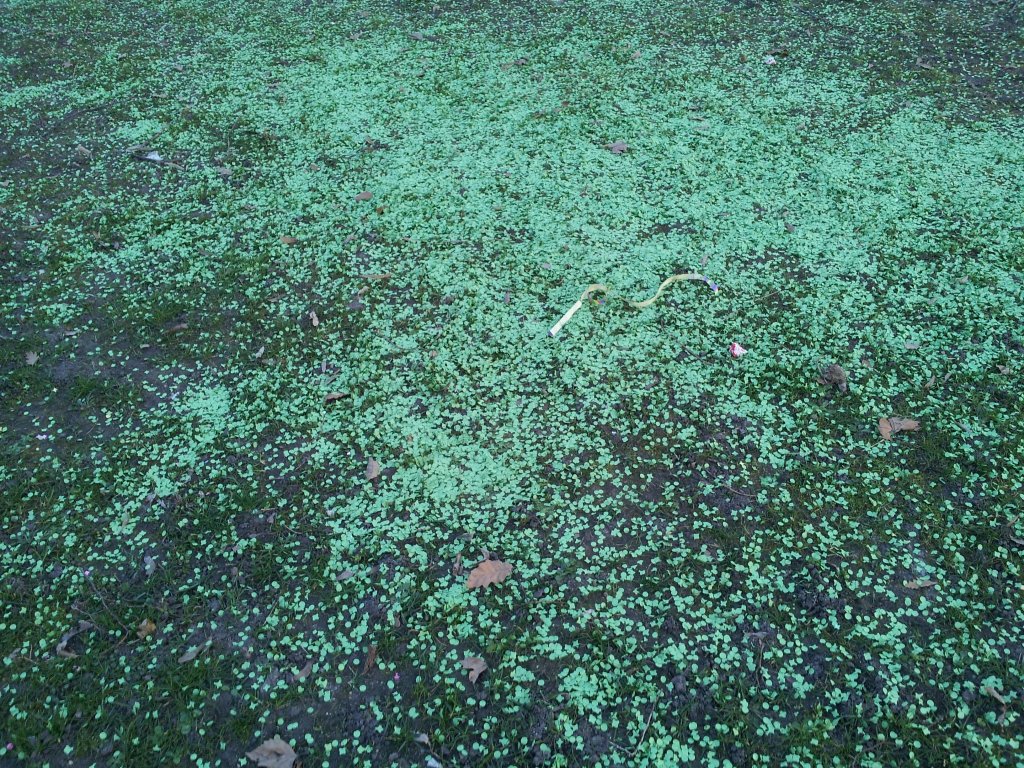
One evening, walking home, I heard music and shouting from the direction of Petersplatz and went to look. A clique was resting in the park, members sprawled on benches, eating between sets. The grass was already carpeted in confetti. A few children in costume were playing nearby, and I did what any visitor would do: I smiled and raised my camera.
The child I smiled at did not smile back. He stared. Then I noticed others approaching from several directions, and before I had worked out what was happening, they had surrounded me and begun stuffing confetti into my clothes.

The attack
I told myself this was tradition, that I was not wearing a badge, and that the children would tire in a minute. They did not tire. They had packets of the stuff and a clear plan. I asked them to stop, politely, then less politely, and eventually extracted myself and walked the four hundred metres home, shedding paper the whole way.
The real surprise came inside. When I took off my jacket near the balcony, a sea of confetti fell out. It was in every seam, every pocket, stuck to my clothes and my hair. Getting rid of it took most of the evening. The lesson was simple: during Fasnacht, do not stand still and smile at children. Keep moving, or buy the badge.
Food, cellars and Schnitzelbank
Fasnacht is also an eating festival. That week I tried Käsewähe and Zweibelwähe — cheese and onion tarts sold in bakeries and taken warm from the counter — along with Mehlsuppe, the flour soup that appears everywhere during the carnival. It is plain, salty and exactly what you want in the cold.
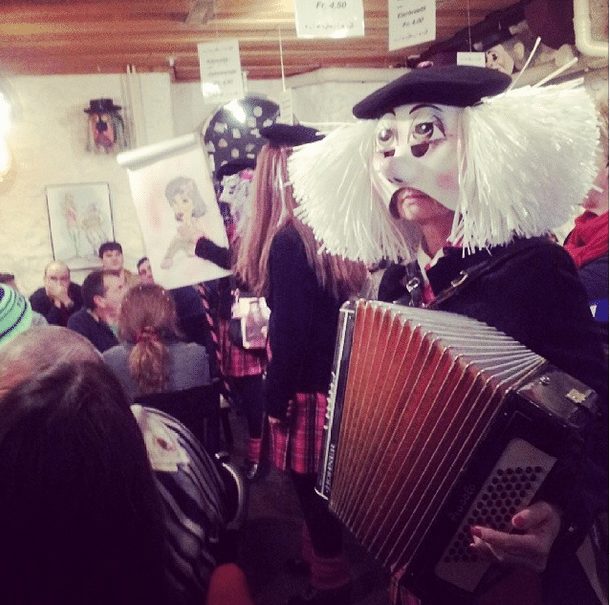
In the evenings we went cellar hopping. Cliques perform Schnitzelbank: satirical verses about politics and recent events, sung or recited while illustrations are held up behind the performers. The room is packed, the verses are printed and handed around, and everyone except the visitor understands them.
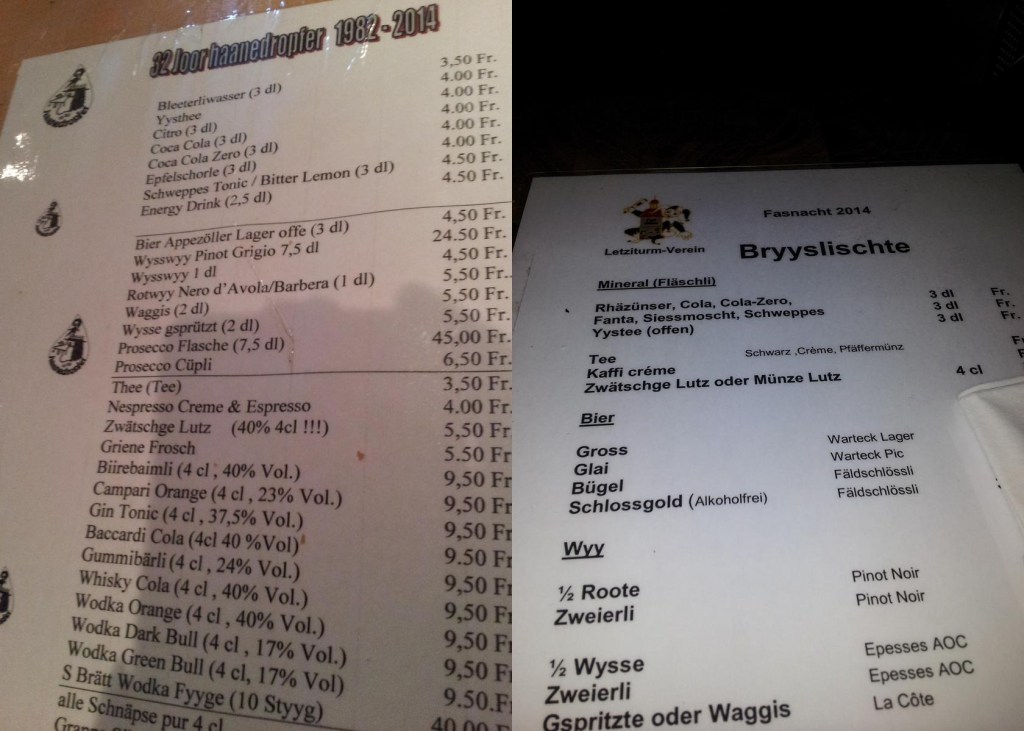
I understood nothing. The performances are in Basel German, a dialect that looked and sounded closer to Dutch than to the German I had learned. Even with the text in front of me, I could not follow a line. It did not matter. The masks, the illustrations, the obvious delight of the people around me and the sheer energy of the performance carried the evening.
If you go
Buy the Plakette before you enter the old town. Wear clothes you do not mind filling with paper. Arrive for the four o'clock opening at least once, and eat as much Käsewähe as you can. Then find a cellar, take a seat, and let the dialect wash over you. For more practical preparation, see my carnival survival hacks.
Discover more from Europe Diaries
Subscribe to get the latest posts sent to your email.
Pingback:5 ways in which Basel Fasnacht reminds me of Holi in India - Europe Diaries
Pingback:10 Festival Hacks for Carnivals and Oktoberfest | Europe Diaries:My travel stories and experiences
Haimwehbebby
This entry is quite entertaining to read (even for me who was born and raised in Basel and has been very active in a Clique for several decades), I just have 1 correction to make:
“Only they are allowed to wear fancy costumes during the Carnival, and are extremely serious about the ways and traditions of the festival.” … This is not quite correct: EVERYONE is allowed to wear as fancy costumes as they like, but if you want to participate actively in the Cortège (=parade) you will have to be registered in advance. Thank you so much for this! It’s been fun reading! 🙂
Pingback:Carnivals across the World to Visit Next Year - Travel on the Brain
Ami Bhat
Amazing pics…sounds like absolute fun
Pingback:The year that was:Europe Diaries 2015 | Europe Diaries:My travel stories and experiences
Packing my Suitcase
hahaha OMG how crazy!! I would run away as fast as I could hahaha 😀
Happy to have you on #MondayEscapes
Pingback:From German to Swiss-German: Getting around in Basel | On the banks of the Neckar and the Rhine