
Planning Your First Europe Trip: Seven Things Worth Sorting Early
These tips come from more than six years of living in Europe. They are written for the point when you have decided roughly where you are going and are working out the itinerary and the logistics. Some readers will be planning a two-week trip, some a quick ten days, some a month or more across several countries. The advice is the same at any length. If you want help with a specific plan, the Europe trip planner is the place to start.
1. Do not rush the first and last days
Planning a first trip can feel overwhelming, and the temptation is to fill every day. Resist it. Leave room to be flexible, and keep buffer time for finding your accommodation, resting after the journey and dealing with the ordinary friction of arrival. Do not book much for the first and last day, especially if you have a long flight. Delays happen, and a tight schedule turns a small delay into a ruined day.
2. Sort out connectivity before you fly
A surprising amount of arrival time can vanish into hunting for a sim card, a bottle of water or a ticket machine. Arrange those things in advance. Some sim cards offer data plans that work across Europe, and you can order one — MTX, for example — to be delivered free and load it online. Roaming charges across the EU have been removed, so a sim bought at your first destination should give you a useful amount of data in several other countries. Free wifi is also easy to find in cafes, restaurants, public places and some railway stations.
Related: travel accessories I have found most useful, and wifi on the road with My Webspot.
3. Research the small things, not just the sights
Find out which currency each destination uses, what food is worth trying, whether the tap water is drinkable, and how to ask for a bottle of water in a local supermarket. In Germany and Switzerland all tap water is drinkable, and in Switzerland even the fountains are. In restaurants and shops, ask for wasser mit kohlensaure if you want it sparkling, or ohne kohlensaure for still.
Related: vegetarian food in 25 countries across Europe, and the cheapest ways to travel in Germany.
4. Learn a few words of the language
A handful of basic words in the local language goes a long way. It makes conversations easier, and it usually earns a smile from the stranger you are asking for help. Apps such as Duolingo or Babble are enough to get started.
Related: visiting Paris when you do not speak French, and some Swiss-German words for Switzerland.
5. Keep the trip in one place
With tours, bookings and plans scattered across email, it becomes hard to keep track. Trip planning apps synchronise everything and make it easy to share the itinerary with family or friends. I have used Tripit for years, tried Tripcipe for building itineraries, and recently came across Ya3, though I have not had a chance to test it yet.
Do one thing the apps cannot: write the important phone numbers and hotel addresses on paper. If your phone is lost or dead, that piece of paper still gets you to your destination and back in touch with people. A travel journal is also a good way to keep the memories; mine has notes from before a trip to a cheese factory in Switzerland.
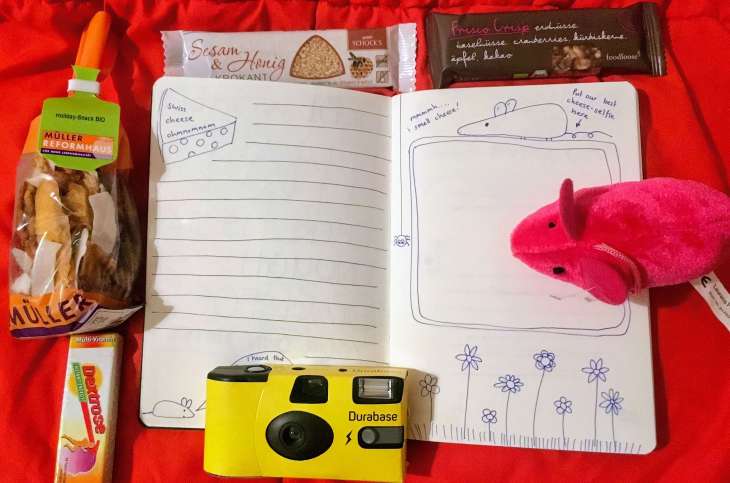
A travel journal is a fine way to record the trip.
6. Know where to ask for help
If you are unsure about something or want suggestions, walk into a tourist information office and ask for a map and advice. In most European cities the office is at or near the central railway station. Before you leave home, download offline maps so that you can still find your way when there is no signal.
7. Make room for locals
A new place is more enjoyable and more interesting when you meet people who live there. Couchsurfing is one route: post on the forums in advance to ask for meetups or insider tips, or use the Hangout app. Staying in a shared Airbnb flat or Couchsurfing usually brings good company. You can also see a city through local eyes by booking a customised private tour through a site such as City Unscripted, or by having a meal in someone's home through a service like VizEat.
Related: exploring Venice like a local with Wanderjack.
The short version
- Leave buffer time on the first and last days.
- Order a data sim before you fly.
- Check currency, food and tap water in advance.
- Learn a few words of the language.
- Keep bookings in one app and key details on paper.
- Use tourist information offices and offline maps.
- Meet locals through Couchsurfing, shared stays, private tours or a meal at someone's home.
Most importantly, have fun, stay safe and enjoy the trip. If you are travelling or living solo, these thoughts on the magic of being alone and happy, not lonely may help. And if you would like help with your plan, fill in the form on the Europe trip planner or get in touch directly.
If you liked this, you may also find these useful
- Budget travel: travelling to 4 cities in 3 countries for 110 euros
- How to plan a weekend getaway to Munich
- Where to go in Switzerland in winter
- 10 tips to enjoy for free in Cologne
Discover more from Europe Diaries
Subscribe to get the latest posts sent to your email.
Gloria john
All the tips are worth considering. A well researched trip can save a lot of money so make proper research of your destiation before heading out.
Michelle
These are such great tips and so true. I remember feeling so overwhelmed planning our first trip to Europe. I’m so glad we went on our own instead of just giving up and going with a tour company 🙂