
Polish Food Traditions: A Polish Girl on What the Country Really Eats
Ask a visitor what Polish food means and the answer is usually sausage. Ask someone who grew up there and the answer takes longer, because the country's cooking is wider than its reputation. This piece comes from Marta, a Polish anthropologist who now lives in Basel, and it is her account of the food she remembers from home.
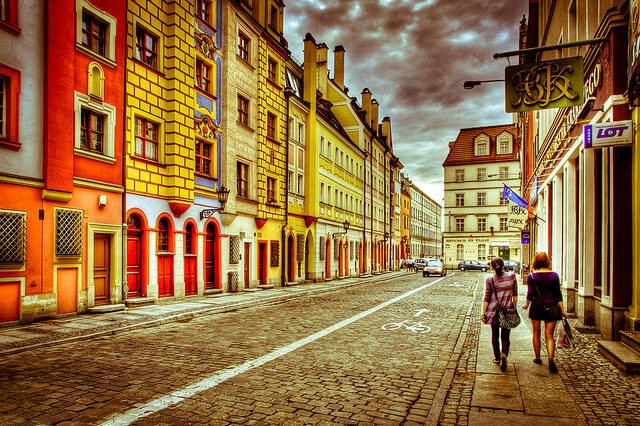
The cobbled streets of Wrocław. Picture: Arcadius, Flickr.
A street that smells of cabbage
Picture a narrow cobbled lane at midday in summer. The little houses are painted in bright colours, their windows open and white lace curtains moving in the draught. Nobody is out; a cat licks its paw on the pavement. What drifts from the kitchens? Onion, first of all. Then the warm smell of a cake just out of the oven, and the oily trace of butter and garlic catching in a pan. That last one is cabbage. This is what traditional vegetarian Polish cooking smells like.
More than sausage and pork chops
The recipes have been handed down from mother to daughter for generations, and nobody can say exactly where they began. What is clear is the context they came from: periods when meat was scarce and hungry mouths were many. The pantry that filled the gap held butter, milk, eggs, vegetables fresh and pickled, bread and soup. Look for those things and you find a vegetarian cuisine that has been there for centuries.
It has changed, of course. Yet it is being revived and rediscovered, both in home kitchens and in the modern vegetarian restaurants that have opened across the country. For a traveller who likes to eat, those restaurants now belong on the map alongside the castles.
The food my grandmother made
My mother cooks in the traditional way, as did both of my grandmothers. Their tables were full of simple dishes that happened to contain no meat.
Potato pancakes came first: raw potatoes grated fine, mixed with onion and a little garlic, fried until the edges turned golden. We ate them plain or with cream, and as a child I liked mine dusted with sugar. Some restaurants serve them with a stew, but that is a Hungarian habit rather than a Polish one. And no salad on the side, please. Making them is work enough.
Then there were pancakes, thin and wide rather than thick and fluffy, spread with cottage cheese, cream and homemade strawberry jam. Ren Behan has a recipe for these sweet cream cheese pancakes, and her book Wild Honey and Rye is a good companion for anyone who wants to cook this way at home.
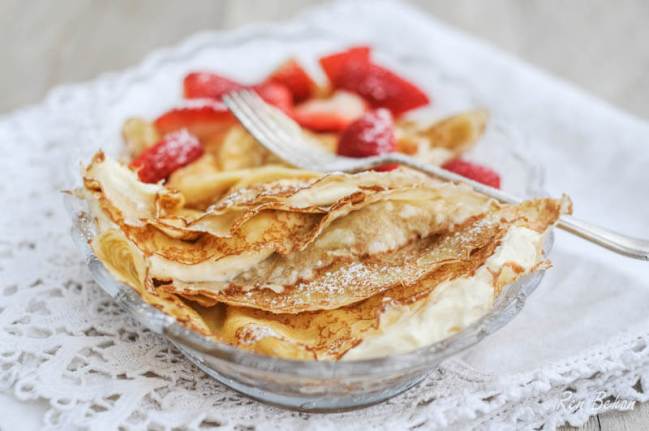
Sweet pancakes, one of the staples of a Polish table. Picture: Ren Behan.
Racuchy are a different pleasure: small yeast pancakes with pieces of apple and raisins half-melted inside, known in some regions as małdrzyki and similar to Russian blins. Good luck finding them in a restaurant. Krokiety are savoury: thin pancakes wrapped around cabbage and mushrooms, folded, dipped in egg and breadcrumbs and fried. Some cooks add a strip of yellow cheese, though I prefer the cabbage alone.
The place to try this whole family of milk-and-egg dishes is a bar mleczny, a milk bar. These canteens fell out of fashion and have come back, and they now serve a wide range of vegetarian food at prices that suit a student.
Soups that warm you after school
Soup was a daily presence. The sour ones are hard to find anywhere else: beetroot soup, with a clear vegan version served in some regions on Christmas Eve; żurek, made from sourdough and served with eggs; kapuśniak, the sour cabbage soup; and a cold sour cucumber soup. I still remember autumn afternoons, coming home from school shivering, and how the first spoonful of my grandmother's kapuśniak warmed me through.
One warning matters for vegetarians. A soup may contain no meat and still be built on a beef stock. Ask before you order.
Dumplings, in every shape
Pierogi need no introduction: dough wrapped around whatever filling you like, then boiled, baked or fried. They are the flagship of the Polish table. They are also slow to make, which is why fewer families prepare them at home and why milk bars keep them on the menu.
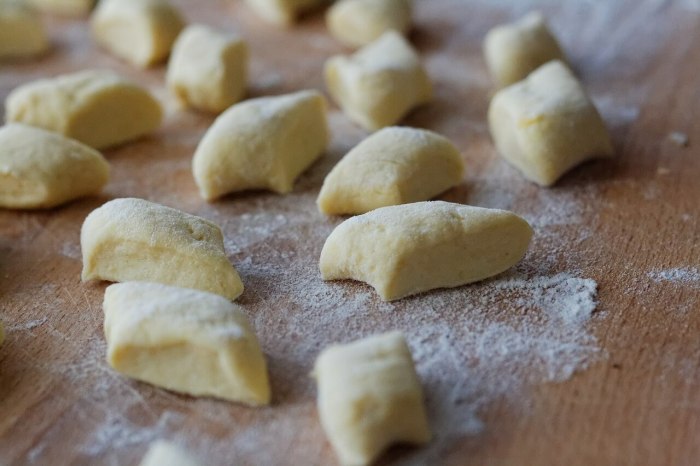
Pyza, or knedel, is the plump relative: a soft shell of mashed potato and flour, barely bound with water, around a sweet or savoury centre. My grandmother's version held a ripe plum. You will also see them with cabbage, because almost nothing here escapes cabbage, or with seasonal fruit.
Kopytka are simpler still: dough rolled into a long rope, cut into trapezoids and cooked. The name means little trotters. Mixed with quark and served with sugar and cinnamon, they make an easy, filling plate.
Where to eat it now
So where can a visitor actually eat all this? Poland has plenty of vegan and vegetarian restaurants, including ones that serve traditional, quasi-homemade food. Here is the catch: most of the popular vegetarian places serve everything except Polish dishes. Western influence, presumably.
Treat that as an opportunity rather than a problem. Vegetarian cooking in Poland is very good at Middle Eastern and Asian food — hummus, falafel, tagines, salads — and many kitchens also do beetroot burgers, ramen, lentil soup and vegetarian fajita. A number of these places are run by people connected to the alternative and underground scene, which makes them interesting to sit in as well as to eat in: watch who comes through the door, look at the interior, check the events on the wall.
The best way to taste it
For a proper home-cooked experience, stay with Couchsurfers or in an Airbnb flat. Polish hospitality is real, as is a quiet national weakness for traditional food. Even a host who cannot make pierogi or kopytka will probably enjoy trying with you, and there is a fair chance you will both be making them for the first time. A call to mum or grandma is guaranteed.
If you want to read about food elsewhere in Europe, see these droolworthy dishes from 24 countries. There are more stories, tips and guides on the food page.
With thanks to Marta from W Ruchu for the journey through Polish cuisine. Marta is an anthropologist from Poland who now lives in Basel, Switzerland. Her Facebook page is worth a follow.
Discover more from Europe Diaries
Subscribe to get the latest posts sent to your email.
Marzena
Hmmm, it felt at home. Smacznego/Enjoy!
reflectiveponderer
Hey thanks Marzena! So glad you dropped by to check out the article. Smacznego!
Patrick
I love Polish food, especially pierogi! I could eat them every day. Unfortunately I am not the best cook, so I usually have them in Polish restaurants. The best pierogi I have ever had I have eaten in Warsaw, in a restaurant called the Akademia. Everything they serve is delicious, but their pierogi are just incredible! I can’t wait to visit them again 🙂
reflectiveponderer
Thanks for the great tip,Patrick! I will keep that in mind whenever I go to Warsaw Thanks so much for reading and commenting.
Corinne
Despite my grandfather being Polish, I never really got to experience any Polish food or culture growing up. I’d love to learn and these are some great dishes to start with. Yum!
reflectiveponderer
Hey Corinne, I really hope you get to learn how to cook and experience the flavours of Poland yourself soon. Hope this post does serve as a guide to help you start off 🙂
Passport Kiwi | A Travel Blog
Oh my gosh yum! Those potato pancakes sound soooo good!
reflectiveponderer
They do! I love potato and pancakes any way, so need to try this combination asap!
The Wandering Wife
Filing this away for future reference. Poland is on our bucket list, and it’s always great to have advice from locals.
reflectiveponderer
Absolutely! I feel living like a local is the best way to experience a destination:)Poland is on my list too! Hopefully I get to go there soon.
Poorna Banerjee
Your post just evoked a series of images in my head which directly increased my hunger. Damn.
reflectiveponderer
Haha I feel you, girl! I feel so drawn to all that food now!
Anna
It’s like carbs-central. I approve.