Plan your Europe Trip with Europe Diaries

Planning your Europe trip and in need of help with your itinerary? Or perhaps you are looking for additional information to ensure hassle-free travel? Whether in need of travel tips, thorough info about your destinations, or even ideas on where to go within your budget and the best modes of transport/accommodation – I’m here to help you out!

Fill out the form here to plan your Europe Trip

Why me?

I have been living in Europe for the last six years, and with my aim of spending less while seeing more, I always conduct extensive research and planning before any travels! To be honest, I love travel planning and have helped several people with their itineraries or even finding out the cheapest and most reasonable travel options for them. I have lived in Germany and Switzerland so far and have extensive knowledge about the area. I am, in fact, one of those people who browse for cheap flights on a DAILY basis and am constantly curious about different cultures, vegetarian food options, and unique experiences.

I would love to help you have a great time on your travels and explore more!

All you need to do is fill out this form below so I can get to know your interests, preferences, and ideas, and I’ll get back to you with a quote as soon as possible.

Click to fill out the form and help me help you plan your customized Europe trip

Here are special prices with Bonus features for your Europe Trip planning

Here is what some people say about this blog:

Europe Travel blog:Europe Diaries Review

That’s it! Looking forward to hearing from you, and I’ll respond to you soon after I receive your form.

Meanwhile, here are some posts that you might find useful:

Cheapest ways to travel in Germany

Droolworthy vegetarian dishes in 25 countries across Europe

Swiss locals share their favourite winter holiday destinations

Making the most of your holidays to Canary Islands

The most beautiful village in Austria ?

Venice Food Guide: Eating and drinking like a local

Cheese and Chocolate day trip in Switzerland

5 scenic Swiss day trips and guide to offbeat Lucerne

Stay curious and explore more.

expat life in italy

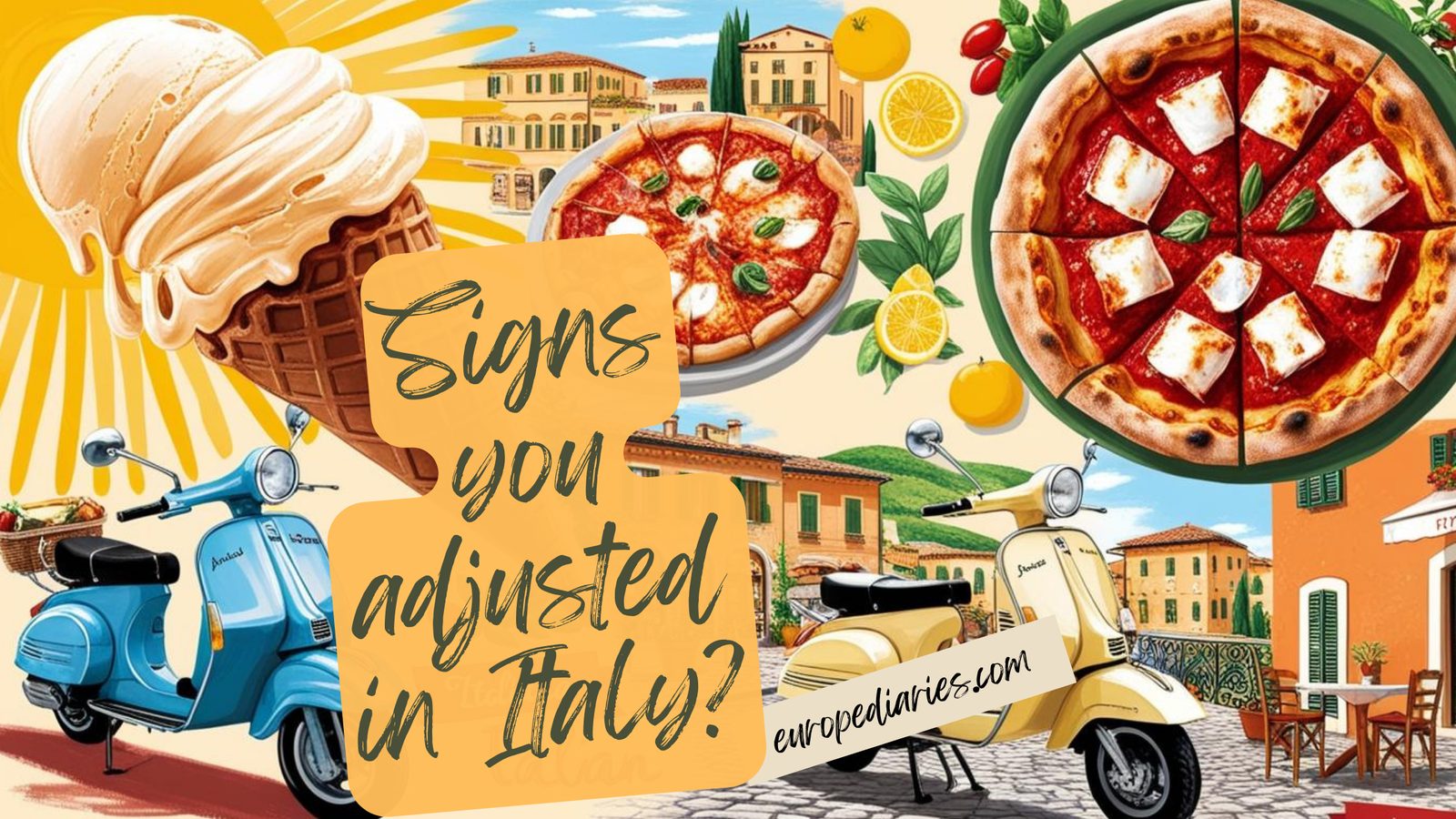
5 Signs You Have Adjusted to Life in Italy

This week, our guest expat author, Cassandra Tesi, shares her experience on living in Italy. Do you know anyone else showing these signs? Read on and get in touch to share your stories too!

Moving to Italy is all pasta and gelato until you are knee-deep in bureaucracy and realize that “on time” is more of a suggestion. But somewhere along the way, you start sipping coffee like a local and prioritizing the simple joy of enjoying the day.

Once we found ourselves embracing these quirks with a smile, we realized we might have finally adjusted to life in Italy as we approach our third year here. Here are five signs you’re officially living our Italian dream.

1. Mastering the Art of Timing Around Store Closures

Italy’s regions are wonderfully diverse, but one thing remains consistent throughout the country: riposo, the midday break that falls after lunch and before the evening kicks off. Particularly in the southern regions, you can count on most stores and restaurants shutting their doors around 1–2 PM and reopening around 4–5 PM.

For Americans like us who last lived in the hustle of NYC, where you can grab anything you need at any hour, riposo can feel like an inconvenient hurdle at first. But give it a few months, and you’ll find that this pause introduces a rhythm that encourages a slower pace, more intentional schedules, and a clearer sense of priorities.

While store closures may start to dictate your plans, one thing you can always count on is the local bar (aka a café) staying open—because in Italy, the idea of not finding coffee when you need it is simply unthinkable.

2. Ditching Google Maps: Learning to Just Ask

We noticed this habit among Italians within just days of driving around. On local, rural, or even city roads, drivers would stop and pull over to the nearest pedestrian to ask for directions. Total strangers would chat for minutes about routes they could probably find on their phones. But no—that’s not the Italian way.

Asking someone who knows the area firsthand is always the superior method. After all, no GPS can rival a local who knows the shortcut that will save you five minutes (and maybe a toll).

While we don’t stop to ask for directions as often, we’ve definitely adopted a more low-tech approach: following physical road signs. Italy is surprisingly well-marked when it comes to signage, and as long as you know the name of the town you’re headed to, GPS becomes almost unnecessary.

3. Pasta-Free Days? Unthinkable.

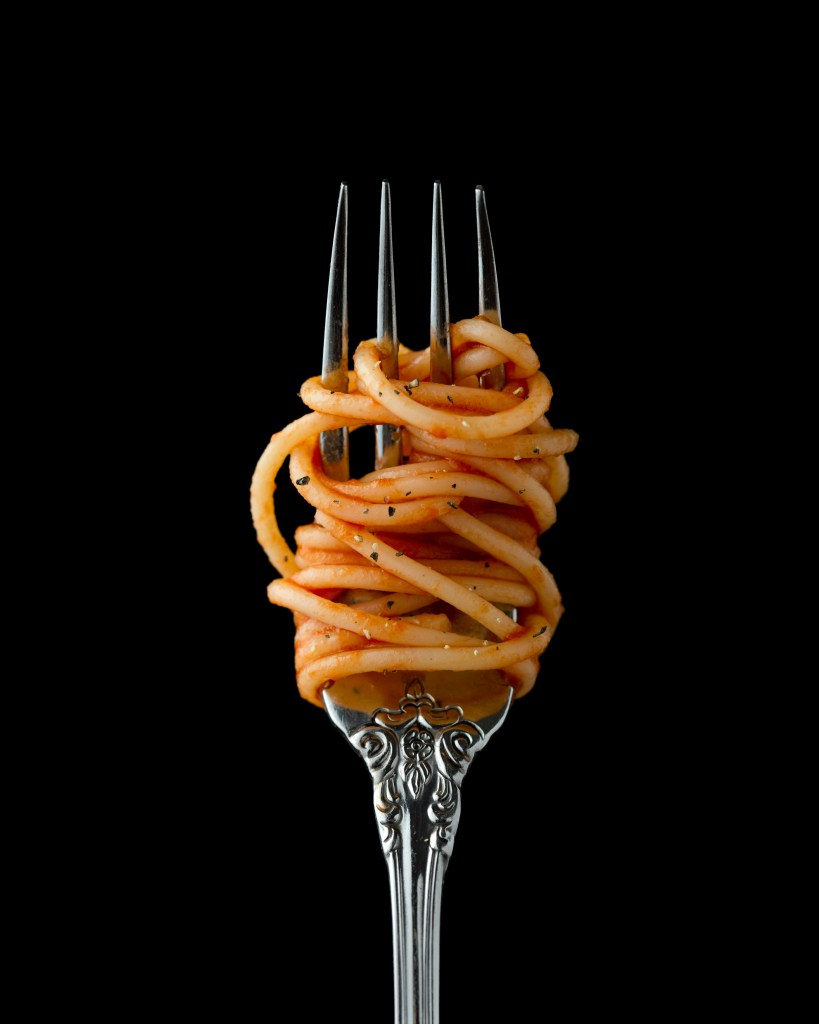
Although it might sound like a stereotype to assume Italians eat pasta every day, but after living here, we’ve found it’s absolutely true. For the most part, a typical Italian will have pasta at least once a day, usually at lunchtime. In smaller towns or rural areas, you can even count on households eating homemade pasta—it’s just part of the culture and tradition.

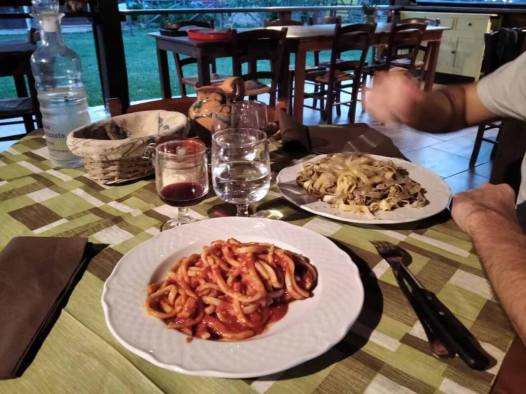
It took us a while to fully embrace this tradition, not because we don’t love pasta, but because we needed time to figure out simple, healthy, and convenient variations to work into our weekly meals. Our daughter, who attends preschool in Italy, now eats pasta with red sauce almost every day as part of her four-course lunch. At this point, it’s practically a family ritual that can’t be messed with.

4. Understanding That ‘Later’ Is a Flexible Concept

In Italy, time becomes a fluid concept, especially when making plans or wrapping up conversations with next steps in mind. Whether it’s a plumber promising to finish the job “later” or a hostess assuring you your table will be ready “later,” nailing down a precise timeframe can feel impossible. But over time, you learn that “later” has many different meanings, depending on the situation—and that’s perfectly okay.

While many people might lose their minds over not knowing whether “later” means five minutes or next week, this cultural quirk has taught us a humbling lesson. Is anything in life really that urgent? After living in Italy, we’ve realized that most things we once thought needed to be done immediately can, in fact, wait.

5. Summer Bedtime? What Bedtime?

When our daughter was a newborn, we stuck to a firm bedtime schedule, determined not to let late nights become a habit. But after moving to Italy, we noticed kids—even babies—out and about late into the evening. Here, bedtime is a relaxed concept, with children naturally adapting to their parents’ schedules. During our first year in Italy, we were hesitant to embrace this cultural norm, but oh, how quickly humans adapt!

Since then, we’ve let go of rigid routines and allowed our family to go with the flow. The result? A more flexible and adaptable child. In the summertime, we don’t bat an eye if we’re out until 11 PM, and miraculously, during the school year, she still transitions to an earlier bedtime without a hitch. No harm, no foul!

Do you relate to these signs or have more to add? Comment with your thoughts below!

Author Bio:

Cassandra Tresl is the author and owner of Adventures of Ace, a travel blog that helps fellow adventurers uncover underrated destinations, budget travel hacks and family travel tips. She serves as the head co-pilot on road trips and is known to get captivated for hours by a search in Google Maps. When she isn’t writing, Cassandra enjoys navigating life abroad in Italy and cooking for her daughter and husband.

people on a gondola

A Magical Gondola Ride Through The Canals of Venice: Traveller’s Tales

In this edition of Traveller’s Tales, Anthony Curione takes us through his serene Gondola ride in Venice, Italy. Have a story to share? Get in touch!

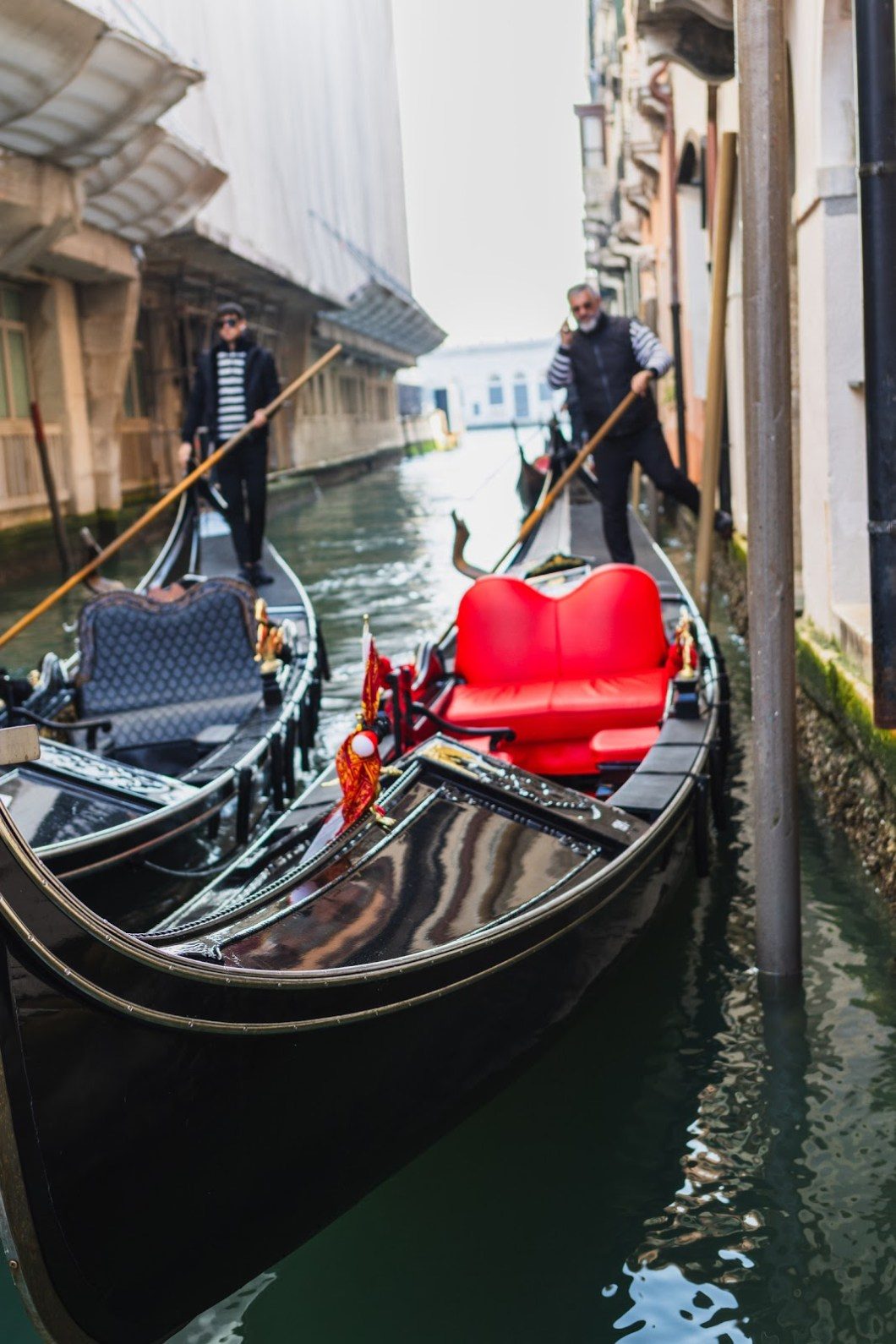
The sun hovered just above the horizon, casting a warm golden glow across the canals of Venice. The air was thick with the salty tang of the lagoon, mingling with the faint aroma of freshly baked pastries wafting from nearby cafés. The city’s narrow streets were alive with the murmur of tourists and locals, but as I stepped into the gondola, the noise seemed to fade, replaced by the gentle lapping of water against stone.

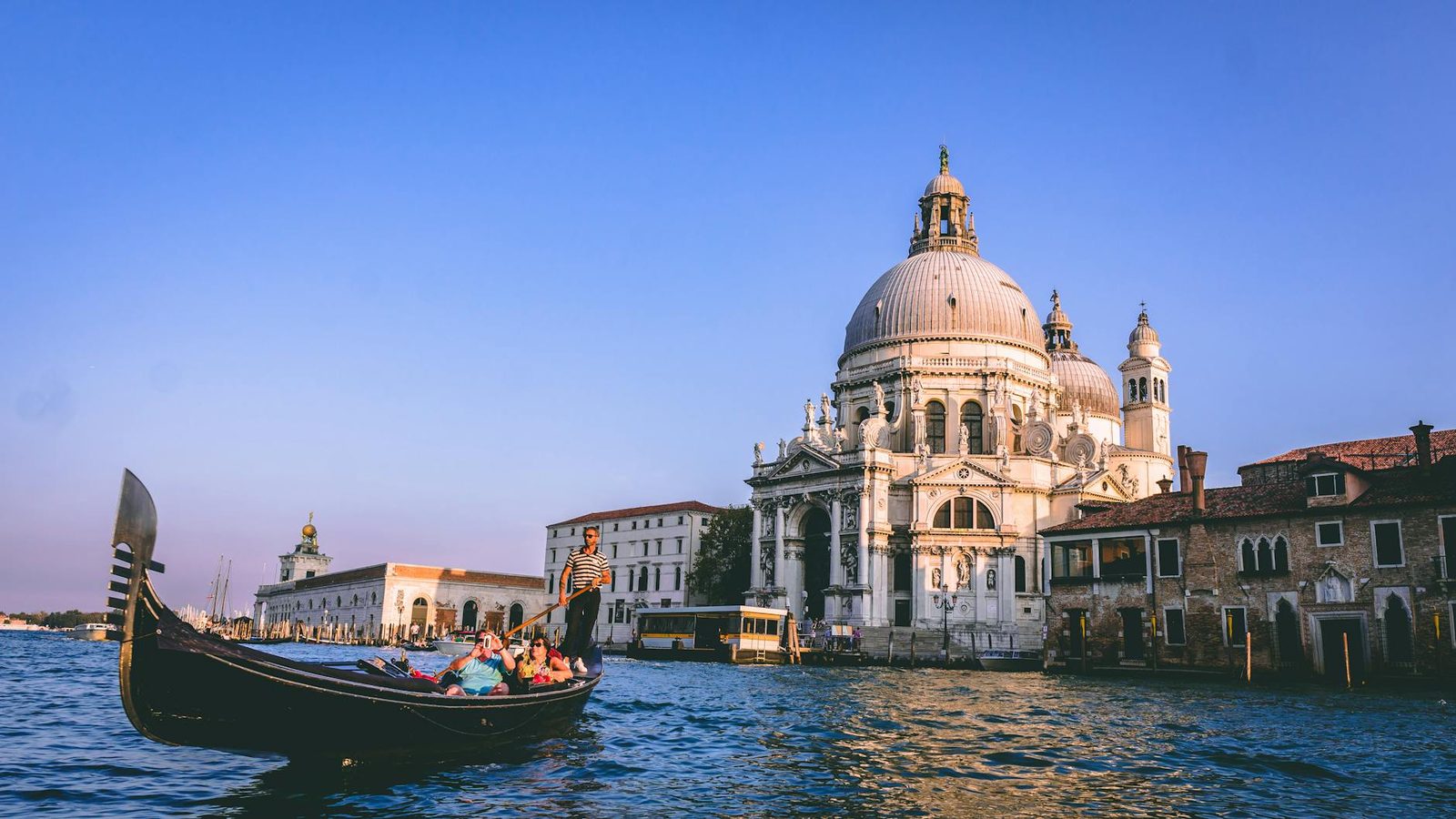
Wading through the wavy blue water on an elegant gondola in vENICE

Image: Wading through the wavy blue water on an elegant gondola

The gondolier, a middle-aged man with a weathered face and a striped shirt, tipped his hat to me and pushed off the dock with a practiced ease. His long oar dipped into the water, propelling us forward with a graceful rhythm. “Welcome to Venice,” he said, his voice rich and melodic. “You’ve chosen the best way to see the city.”

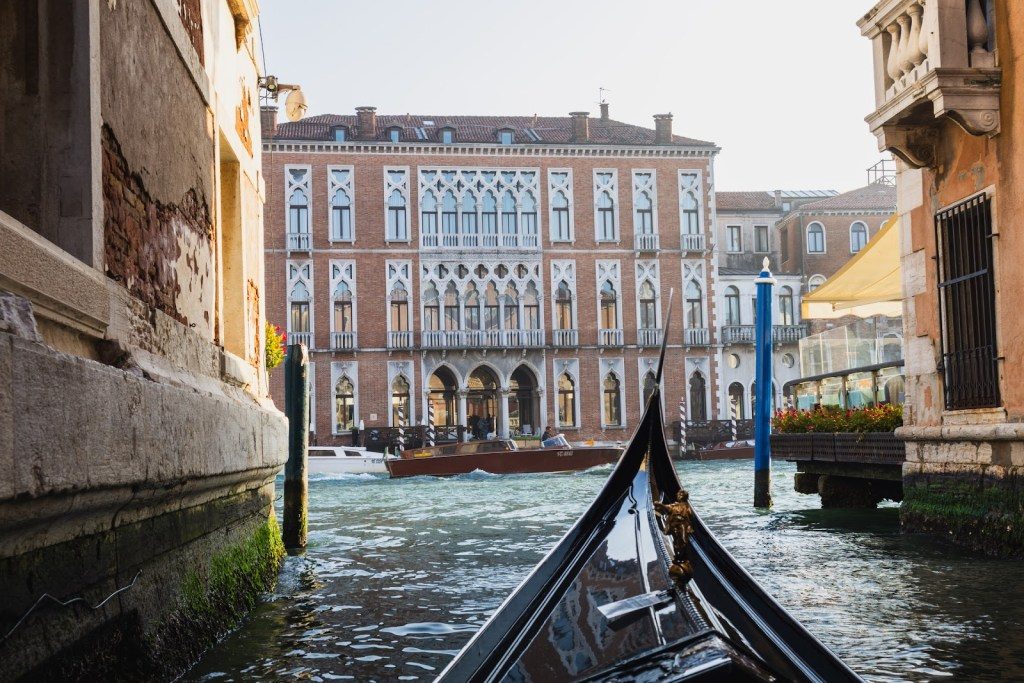
The gondola glided smoothly through the Grand Canal, the city’s main artery. On either side, centuries-old palazzi rose like grand sentinels, their faded facades a kaleidoscope of ochre, blush, and cream. Some buildings leaned slightly, as if nodding to their neighbors, a reminder of the city’s perpetual dance with the sea. Ornate balconies overflowed with geraniums, their vibrant blooms spilling over wrought iron railings.

“That one there,” the gondolier said, gesturing with his chin toward a grand structure, “was once the home of a famous merchant. Marco Polo walked these waters, you know.” I nodded, imagining the explorer returning home with tales of distant lands. The gondolier’s voice blended with the soft sound of water, creating a tapestry of history and tranquility.

As we turned into a smaller canal, the ambiance shifted. The noise of the Grand Canal gave way to a hushed serenity. Here, the water seemed darker, reflecting the narrow slice of sky visible between the buildings. Laundry lines criss crossed above us, colorful garments swaying gently in the breeze. A tabby cat perched on a windowsill, its amber eyes watching our passage with detached curiosity.

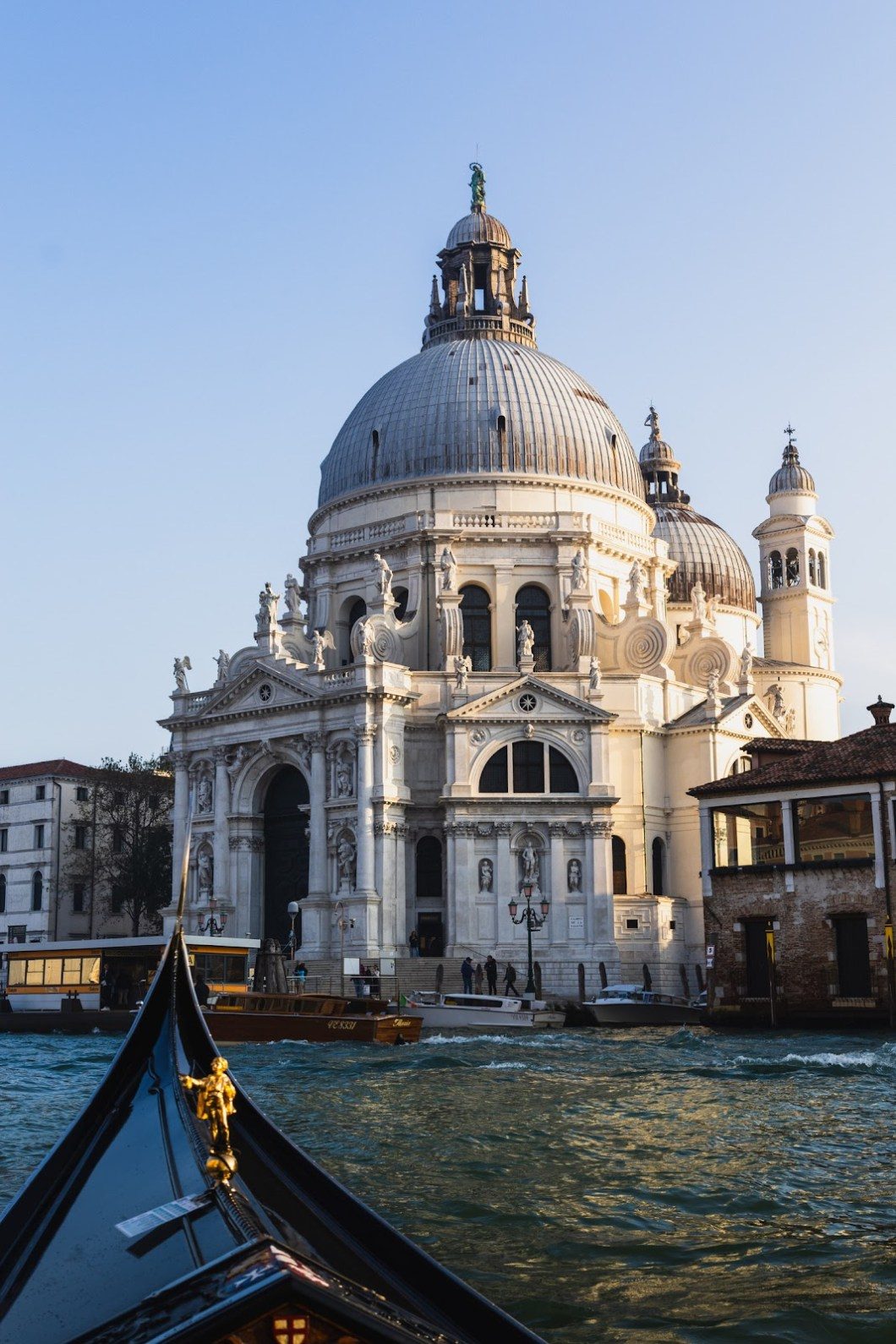
A grand church sits along the ancient Venetian waters

Image: A grand church sits along the ancient Venetian waters

I ran my fingers along the edge of the gondola, feeling the smooth lacquered wood. The gondolier began to hum an old Venetian tune, his voice resonating with the cadence of his strokes. The melody seemed to echo off the walls, filling the space with a timeless charm. For a moment, it felt as if we had slipped into another era, where life moved only as fast as the gondola could carry it.

The gondola passed under a low stone bridge, its arch so close I instinctively ducked my head. On the other side, we emerged into a small piazza, where the canal widened. Children played along the water’s edge, their laughter ringing out like bells. A couple stood on a nearby dock, their hands intertwined, lost in each other’s gaze. Venice, it seemed, was a city built for romance and reflection.

“Are you visiting for long?” the gondolier asked, breaking the comfortable silence.

“Just a few days,” I replied. “But I feel like I could stay forever.”

He smiled knowingly. “Venice has a way of capturing the heart. It’s not just the beauty, but the soul of the city. You’ll carry it with you, even when you leave.”

We continued our journey, passing beneath the famous Rialto Bridge. Tourists crowded its balustrades, waving and snapping photos as we floated by. I waved back, feeling a strange connection to the throngs of people who had come to Venice seeking something—beauty, history, perhaps even themselves.

Image: Two Paddlers discuss business along the waters of Venice

As the sun dipped lower, the light turned amber, casting long shadows across the water. The gondolier steered us toward a quieter canal, where the only sound was the occasional splash of an oar. The stillness was intoxicating, a moment suspended in time. I leaned back, letting the rhythm of the ride lull me into a state of bliss.

When we returned to the dock, the gondolier helped me step out of the gondola. “Thank you,” I said, handing him a tip. “It was unforgettable.”

“It’s Venice,” he replied with a wink. “Unforgettable is what we do best.”

As I walked away, the sounds of the city gradually returned—the chatter, the clinking of glasses, the distant strains of a violin. Yet, in my heart, I carried the quiet magic of the canals, a memory as enduring as the city itself.


Author Bio: Anthony Curione is an avid traveler and storyteller from upstate New York, with a passion for exploring the world’s hidden gems. Having visited over 15 countries, he shares his adventures and travel insights through his blog, Curione Travel. When not planning his next trip, Anthony enjoys visiting national parks and inspiring others to embrace the joy of discovery. Find me on: Curione travel : Instagram Facebook

Motorhome camping in France: A journey with freedom and adventure

If you are looking for a place to find rich history, charming villages, stunning landscapes and good food, France is the perfect destination for you! Motorhome camping in France brings you a great way to explore all the best France has to offer. It is just lovely to discover the country while still enjoying the comfort of your own place!

In this article, we will delve into the essentials of camping with a motorhome in France. We will go into key destinations, practical tips, and the overall experience of traveling through France.

Why choose motorhome camping in France?

Motorhome camping in France is becoming more and more of a popular choice for both locals and tourists. The allure lies in the ability to travel at your own pace. The convenience of having all amenities on board is such a great advantage. When camping in France you will often find yourself staying in picturesque locations.

The flexibility and freedom that motorhome travel offers is incredible. With a motorhome, you can create your own itinerary. You can stay longer in places you love, and change your plans any time. Because you have your home with you, you don’t have to worry about booking an accommodation in advance or adhere to a strict schedule.

Another great benefit is the comfort and convenience that a motorhome provides. Modern motorhomes are equipped with all the necessities. This means having your own bed, kitchen and bathroom always with you. This ensures a stress- free trip where you can cook your own meals and enjoy a good night’s sleep wherever you are. The ability to cook your own meals, means you can reduce dining expenses as well.

France offers a diverse range of landscapes. From the beautiful beaches of the Mediterranean sea to the scenic vineyards of Bordeaux. The breathtaking beauty of the Alps, and the ancient forests of the Ardennes. A motorhome allows you to experience all of these environments in one trip.

Motorhome travel allows you to immerse into the local culture. Many free campsites are located in small and beautiful villages in the countryside. These overnight stays will allow you to enjoy the local culture of the country, complete with weekend markets and local food specialties. 

Essential preparations for motorhome camping in France

Before you start your motorhome trip, it’s essential to be well-prepared. Here are some important considerations:

1 Choosing the Right Motorhome

Not every motorhome will suit your needs, but don’t worry, there is a wide selection of RV’s. When selecting a motorhome, always consider the size, amenities, and ease of driving and of course your budget. Rental companies usually offer multiple different types of RV so make sure to compare. 

2 Documentation and Insurance

Make sure you have all the necessary documentation with you. This includes your driver’s license, insurance papers and vehicle registration papers / rental agreement. For visitors outside of the EU (European Union) you may need an International Driving Permit (IDP). If you come with your own motorhome make sure you get a Crit’Air! Crit’Air is the mandatory environmental sticker for vehicles in France. 

3 Understanding French Road Rules

It is always advised to look up the road rules of a country before you start driving there. In France most of the road rules are similar to the rest of the EU. For travelers from outside of the EU there might be some different traffic laws then those that you are used to. Here you can check these rules. Also keep in mind that some roads are quite narrow and low bridges are not uncommon in France. Not all motorhomes can fit on all roads!

4 Campsite Reservations

During peak camping season (during the school summer holidays) the campings in France can fill up quickly. To make sure you have a spot to spend the night you can make a reservation. If you go to touristic places this is definitely advised! Outside peak season the campings are not fully booked and you could easily drive around and find a spot to spend the night without making reservations. 

5 Packing Essentials

The weather can be unpredictable, no matter the season. It is a smart thing to pack clothing for different weather conditions. Even in the summer you can have a cold or rainy day. Cooking supplies are always necessary during your motorhome getaway. A reliable navigation or your phone makes driving a lot less stressful! At last and hopefully you won’t need it, a first-aid kit. 

Top destinations for motorhome camping in France

France is full of beautiful destinations that are perfect for motorhome camping. Some of our favorite regions are;

Normandy: In this region the D-Day landing happened in WW2. The area is still full of historical sites, museums and memorials. Mont-Saint-Michel is worth a visited if you want to see the most iconic abby of France

The French Alps: If you like to be outdoors this area is the place to be! From hiking to skiing and from mountain biking to canoeing here you can have it all. This stunning part of France is beautiful in every season.

The French Riviera: In the southeast of France along the coast with the Mediterranean sea you will find stunning beaches, beautiful cities like Nice, Saint-Tropez and Cannes. If you want you can even make a quick trip to Monaco. 

The Dordogne: This region in the southwest of France is known for its historic caves and many castles. In this area as well as in many other French areas you can find a lot of picturesque villages and beautiful rivers.

Practical tips for a smooth journey

  1. Plan out your route: While taking your motorhome camping in France without a strict route schedule can definitely be a lot of fun, you might miss out! You could lookup some highlights in France you want to visit and create a flexible route plan. You can use apps or maps designed for motorhome travelers to find campsites and interesting stops along your route.
  2. Wild camping: In France it is not allowed to go camping in the wild. You can however get permission from landowners to camp on their ground in rural areas. It is not permitted in national parks, near historic sites and coastal areas. Always check local regulations.
  3. Safety: In numerous different ways you can get your motorhome secured. But to start it is advised to always close doors and windows when you are away. When you park overnight try to avoid isolated areas.
  4. Local food: While driving around in France try to enjoy the local cuisines. Almost every region has its own speciality in food (cheese) and wine. You can try to visit the local market and try some for yourself. 
  5. Internet: In a lot of campsites WIFI is available but there is not always a good and stable connection. If you get yourself an e-sim or local sim card you have better consistent internet access. Not in all areas in France your sim will have an internet connection. If you explore the remote areas of France it might happen that you will disconnect from the network.
  6. Language: Although a lot of young French can speak English, certainly not everybody in the country understands it. Especially in small villages it comes in handy if you know a few phrases in French.
  7. Respect: If you camp in remote places respect nature and clean up after yourself. This way the next adventurer can enjoy France just like you. Every campsite has its own rules and regulations. Mostly these are about; quiet hours, waste disposing and fellow campers.

Conclusion

Motorhome camping in France is an amazing way to explore this diverse and breathtaking country. From forest, mountains and beaches to castles, villages and cities in the French regions you can see it all. By taking your motorhome you can be sure to make an enjoyable and memorable journey through one of Europe’s most loved countries.

So, pack your bags, hit the road, and experience the magic of motorhome camping in France. Bon voyage!

Author Bio

Veerle and Koen are two content creators from the Netherlands and the owners of RVTravelUps. They share a passion for travel, good food and nature. Together with their RV ‘Gary’ they are trying to see the most beautiful areas in Europe. They both like to write about their adventures and hope you will like it too 🙂

Where to visit in Greece

Discover the Best of Greece: Ideal Destinations for Every Season

Perhaps one of the most popular vacation destinations in the world, Greece welcomes millions of visitors every year to its sun-soaked shores. Given that it offers almost everything a holidaymaker could wish for, including paradisiacal beaches, fascinating historical sites, and mouthwatering cuisine, it’s little wonder it regularly tops travel lists. 

Despite thousands of hours of sunshine throughout the year, summer remains one of the busiest seasons here. But spring, autumn, and winter can be equally charming—albeit for different reasons—if you know where to go. In this post, we look at the best spots to visit in Greece, no matter when you set off on your travels. 

Where to go in Greece in Spring: Meteora

The monasteries of Meteora are featured on many postcards or Instagram posts. However, in the summer months, you’ll be hard-pressed to find an isolated spot to snap a picture or take in view. Many organized tours rise in price or are fully booked in the summer months, too. In contrast, you’ll be able to more easily benefit from the expert local guides in the off-season. 

If you’re an adventure-seeker, spring is also an excellent time for outdoor activities. You must check the weather forecast in March (snow isn’t unheard of on the mainland), as it’s a beautiful season for hiking and rock climbing. The Vikos Gorge in Epirus is a fantastic destination for those wanting to combine the culture of Meteora with some time soaking up the great outdoors.

Photo by Valdemaras D. on Unsplash

Where to go in Greece in Summer: Island hopping

Suppose you love socializing on holiday or reading a good book on a beach. In that case, summer is the perfect time to visit the famous Greek Islands. From the party vibe of Mykonos to the romantic atmosphere of Santorini, there’s so much to do and see that you won’t want to limit yourself to just one place. 

Prepare for crowds—many people flock to the islands in the summer, including local holidaymakers from the mainland. On the upside, this means there are usually plenty of special events throughout the season, and restaurants will be open regularly. Transport links will also be better at this time of year.

Photo by Oliver Sjöström on Unsplash

Where to go in Greece in autumn: Corfu

Autumn in Corfu means hotels packed with tourists make way for locals to slow down and enjoy the island after a successful summer. While the new school term starts back at home, September and October are the perfect months to explore this fascinating island, delving deep into the history that led to Corfu’s Old Town getting UNESCO World Heritage status. The Old Town is a maze of winding streets lined with charming cafes and boutiques, where you can easily spend a day or two just wandering around. For those who want to go even further back in time, the 6th century BC Temple of Artemis, a stunning example of ancient Greek architecture, can be found just outside town.

The temperature is still lovely and warm, too, with the sea benefitting from several months of sun, meaning that it has none of the chills of the spring season. 

Photo by Maciej Marko on Unsplash

Where to go in Greece in Winter: Athens

When the weather turns temperamental, there’s no joy in being out in the wilds of nature or trying to have a day at the beach. Instead, a city break is your best chance of getting a dose of culture, excellent food, and a place to sit and drink should the sunshine decide to make an appearance. 

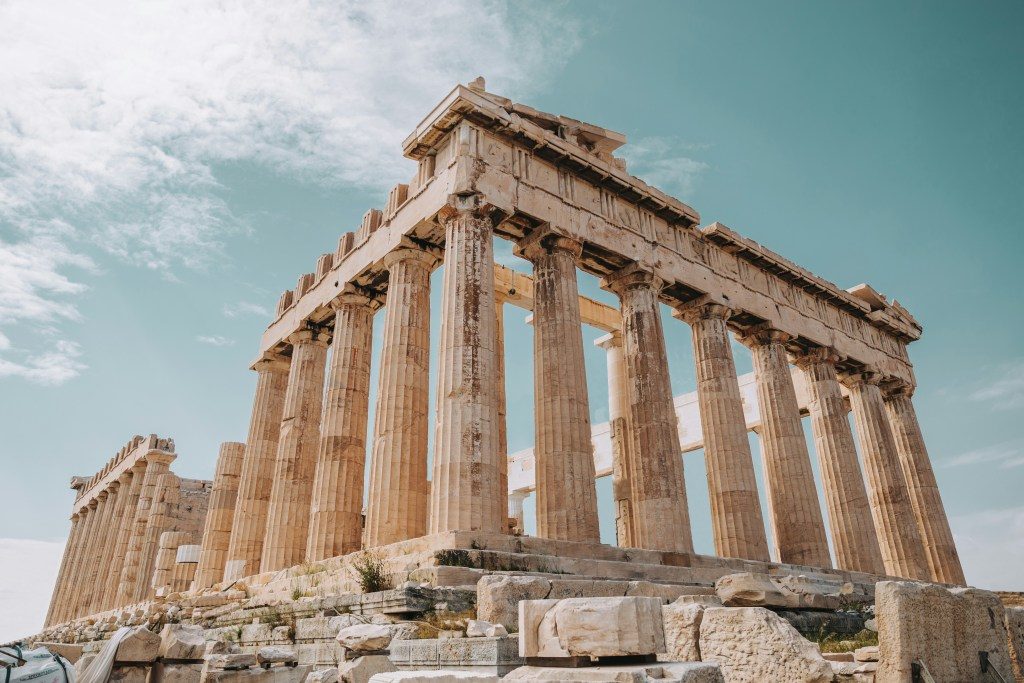
As the capital, Athens has plenty to offer. Make sure to visit the Parthenon and the Acropolis and book a food tour to experience some classic Greek cuisine. You can expect to indulge in dishes like moussaka, souvlaki, and baklava, all prepared with fresh, local ingredients. Depending on when you visit, you may also come across seasonal attractions such as ice skating and light trails – a genuinely unique way to see Greece. If you’re lucky, you may even get snow, creating some once-in-a-lifetime pictures.

Photo by <a href="https://unsplash.com/@spencerdavis?utm_content=creditCopyText&utm_medium=referral&utm_source=unsplash">Spencer Davis</a> on <a href="https://unsplash.com/photos/view-of-brown-ruin-during-daytime-ilQmlVIMN4c?utm_content=creditCopyText&utm_medium=referral&utm_source=unsplash">Unsplash</a>
Photo by Spencer Davis on Unsplash

No bad season

There’s really no bad season to visit Greece. This amazing country has something new to offer every time you visit, so it’s worth returning at different times of year. Before you travel, check the weather forecast and pack accordingly so you can truly enjoy your vacation to the fullest.

Disclaimer: This is a partnered article, but all opinions are my own.

The Best Gift for Travel lovers: One gift to rule them all

While giving someone time and attention can be the most memorable, well-thought-out gifts are a close second! Over the last decade, I have moved heavily toward planning or gifting experiences for my close friends and family instead of bulky gifts that must be lunged around after weddings or celebrations. Ever since I came across this ONE gifting solution offering the world’s most exciting experience gifts, it’s been my favourite way of gifting memories for the travel lovers in my life! Curious? Read on!

What is Tinggly?

Tinggly is a global gift-solution company that stands for gifting happiness, emotions, and inspiration by making it possible to book experiences in 100+ countries via one experience box that has no expiration date. All you have to do is choose a gift collection based on the theme of your choice and then send them a digital or a beautiful physical gift box with your message. Moreover, with every gift collection purchased, the company plants one or more trees and offsets CO2 emissions! Meanwhile, those who receive the gifts can choose when and in which country and city to use them, and how many people can enjoy the experience. Then, they will have options among 100,000 experiences and 150,000 hotel stays worldwide to choose from!

Here are some ideas for gifting special travel experiences to your loved ones:

1. What to gift a solo traveller, an adorable couple, or a special friend: The Essential Collection. This was one of the three original collections that Tinggly launched with—hence, I clearly remember gifting it to friends and additionally gifting it to myself at one point—eventually using it to explore Lisbon via food!

2. What to gift your partner: Be my Valentine, a Date in NYC, or Fun Together Collection. Whatever one’s love language may be, the thought counts, right? Perhaps one of these gift boxes is a sweet gesture for your partner or a fun-loving couple looking to experience something new together.

Other options: Perfect for Her, Perfect for Him

3. Thank You gestures, Weddings, Farewell gifts: My all-time favourite Premium Collection

This is my OG multi-purpose and most gifted gift box—one that I absolutely love! I have carefully browsed through several of the locations and experiences offered and gifted it to friends and family who have used it to take a Gondola ride in Venice, explore the Colosseum on a guided tour in Rome, or go on a day trip from Kuala Lumpur, among other things.

Other options: Thank You Collection

Best views of Venice . Image copyright - europediaries.com- 10 beautiful famous places in italy .Bacaro Venice.
Venice: I chose to surprise my cousins by booking a Gondola Ride for them on their Italy trip

4. What to gift someone graduating or moving abroad: Bucketlist Collection, Experience the World or Adventure Awaits

Travel is education. Why not give the gift of adventure, spark curiosity and help them make memories!

Fly away on an adventure! Tinggly offers the possibility of multiple adventure experiences worldwide.

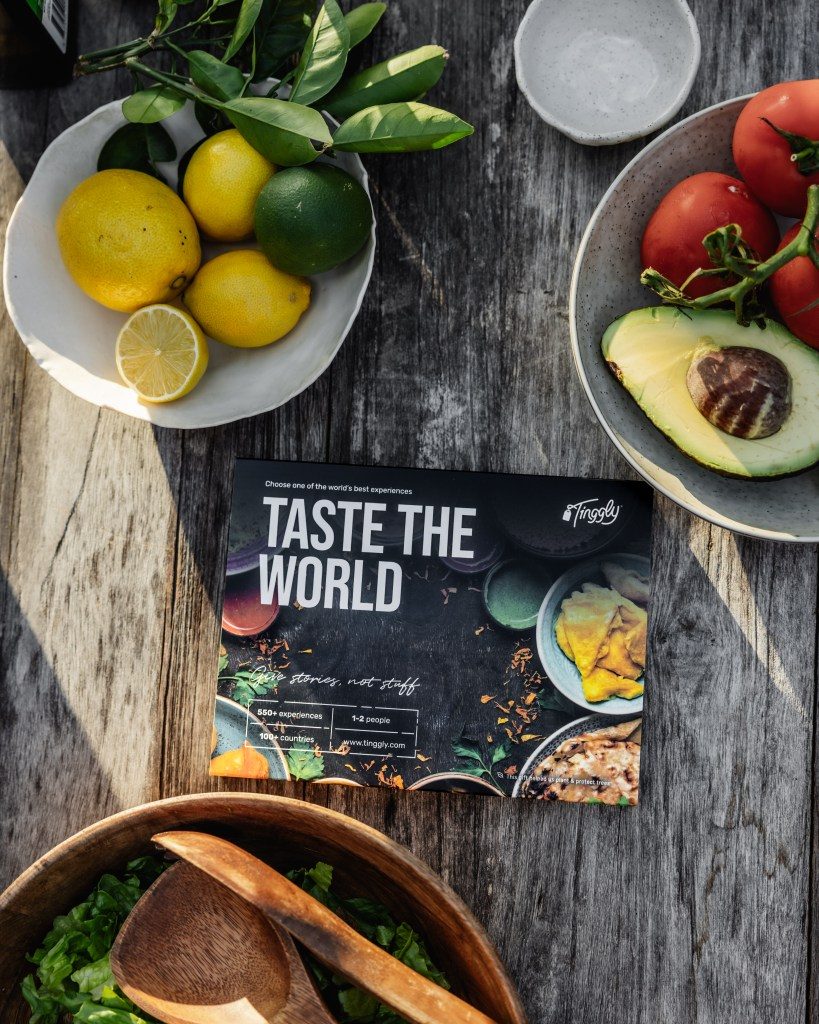
5. What to gift the foodie in your life: Taste the World

If you want to send your foodie friend or your favourite foodie couple for a delicious adventure anywhere around the world, check out this collection of 1,000+ experiences and keep it in mind to make the next occasion memorable.

For the love of food: For individuals or couples. Image: Tinggly

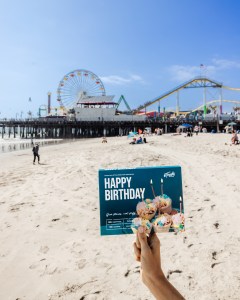
6. What to gift a travel lover on their birthday: Happy Birthday Collection

I have admittedly spent my own birthday in a fun/amusement park more than once. But even if you don’t like rides, who wouldn’t love having a special experience of their choice on their birthday! Whether they decide to spend a day at a spa, kayaking, watching whales, or going on a peaceful sunset boat ride with friends, they are bound to think of you fondly and appreciate your gesture.

7. Special gift for a wedding, honeymoon or anniversary: Just Married, Dream Wedding, Getaway Gifts

Last Christmas, we embarked on a 2-week road trip across California for our honeymoon. We had a fantastic time driving from San Francisco to San Diego, taking in the breathtaking coastal views and stopping at charming towns along the way. On checking our older Tinggly vouchers, we realized we had two unused ones and decided to combine the credit (yes, that’s also possible) to book a 2-night stay in a beautiful ocean-front room at the Hyatt Regency Mission Bay Spa and Marina and ring in the new year! My favorite part was admiring all the sea lions and adorable otters in the region, but after full days of sightseeing, relaxing in the pool area with a cocktail or watching the NYE fireworks from our balcony was a much-needed relief.

Other options: Happily Ever After

Ocean-front room in San Diego booked via Tinggly

8. Holiday-themed gifts for the special ones: Merry Christmas, Happy Holiday, Merry and Bright

Holiday shopping can get stressful sometimes. But with gift cards and boxes for every occassion, it can sure help out atleast when planning gifts for travel lovers. I was also surprised to find new boxes of late that could be great for Father’s Day and Mother’s Day. Isn’t this truly one gift to rule them all?

9. Big-ticket gifts for big occasions: Ultimate Collection, Once in a Lifetime

If none of these seem fit for the occasion, a gift card could always be a good option to inspire their wanderlust.

What experiences would you like to gift your loved ones? Leave your thoughts in the comments below.

Disclaimer: This post includes affiliate links, meaning incase you decide to gift someone beautiful memories using the links above, you will be helping this blog in a small way with no additional costs at your end. All opinions are my own and based on my personal experiences.

Italy Wonders: Beautiful places to consider for your Italy vacations

Italy is a country of dreams. With one of the richest cultures and heritages in the world, the nation has been the epicenter of the Holy Roman Empire for millenniums and is home to some of the world’s oldest architecture, all of which tell the tale of the ancient European state. But it’s not just history in Italy; the country is also home to beautiful beaches, spectacular alpine scenery and mesmerizingly beautiful countryside. And of course, Italian food cannot be forgotten; Italy is home to pizza, pasta, risotto and numerous other dishes. The sights in Italy will take your breath away, but the country is tantalizing in every other sense as well. In a country as rich and diverse as Italy, one can easily be confused about where to start planning your Italy travels from! Here are just some of the amazing places to consider for your Italy vacations. You can self-plan or book one of the many Italy tour packages.

  • ROME AND VATICAN CITY

Rome, the capital of Italy, has been one of the most significant European cities for the last two millenniums, and its legends and stories can be felt just by walking the streets. Whether you’re soaking up the history of the Trevi Fountain or marvelling at the Colosseum, visiting Rome is an overwhelmingly sensory experience to be relished.

If you are done with ancient history, check out some of the art galleries that the city is famous for, which range from the historic Basilica of Our Lady to the much more contemporary Macro on Via Nizza, which showcases some of Italy’s best modern art.There is something for everyone in Rome, and exploring its most famous sites will give you a greater understanding of not just the individual city or country, but the whole world.

Check out and book Rome tours in advance.


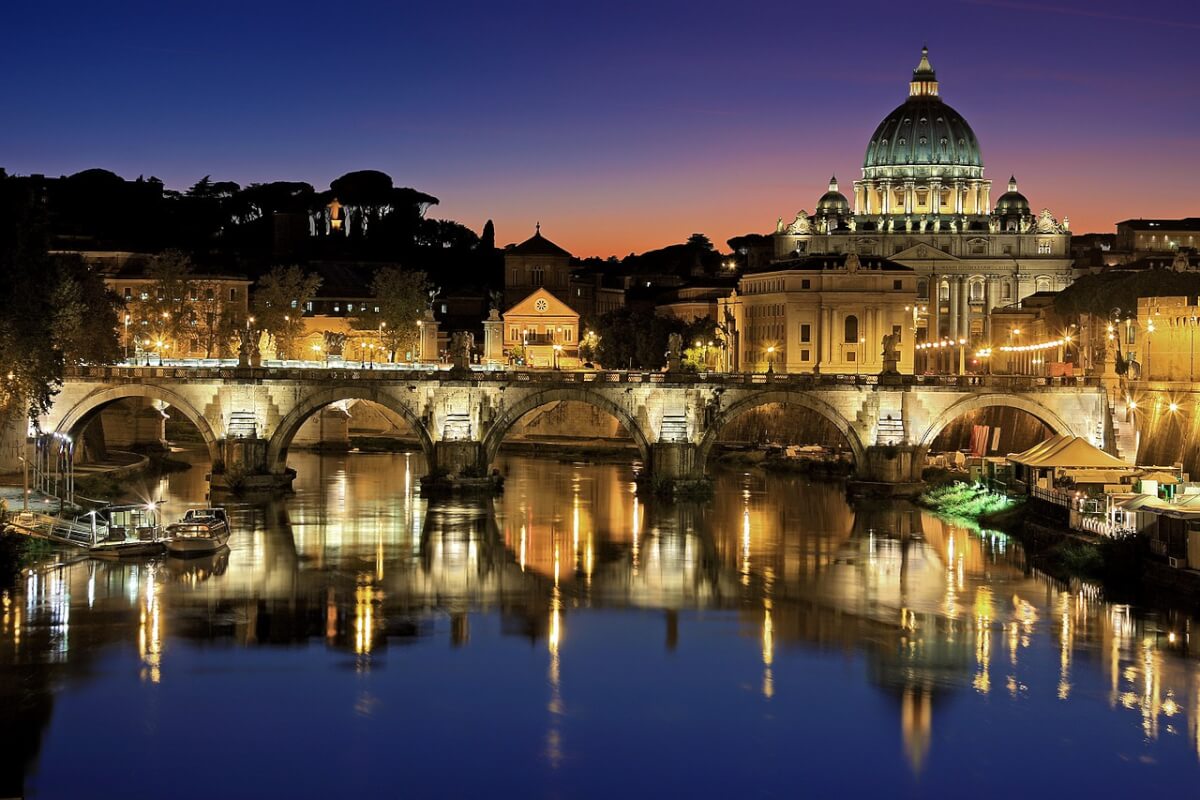
Vatican City is officially the world’s smallest country by both size and population but feels very much just part of Rome. The Vatican City has been an independent country since 1929, but has been the home of the Pope since the 14th century and is the global epicentre of Catholicism. Architecture fans will be delighted at some of the oldest, largest and most intricate Catholic buildings in the world, and religious folk especially will find the links to deities unique and captivating. From entering the country by Saint Peter’s Square, you will be surrounded with some of the most distinguishably beautiful and ancient architecture in the entirety of Italy – and perhaps the world!

The iconic Saint Peter’s Basilica contains Michelangelo’s famous Pieta and the ornately decorated Sistine Chapel. Underneath are the remains of a 4th-century church and St Peter’s Tomb. Visiting the Vatican City is an experience like no other, and the history and cultural significance of the country within Rome makes it a must-visit on your Italian bucket list.

Book skip-the-line tickets for Vatican City so you don’t have to queue up for hours.

Where to go in italy - History lovers, head to Rome and vatican City! Check out 10 famous and beautiul places to visit in italyVatican City

  • VENICE

The jewel in the Adriatic’s crown, the city of Venice has been sparkling for centuries, and its allure can easily be felt through a trip here. The north-eastern Italian city is a place absolutely bursting with history; the city has rigidly strict rules about the preservation of its canals and historic buildings, meaning that you’ll feel like you’ve been whisked away to an era long forgotten.

Any architecture fans will be in their element in Venice; it is the home of 14th-century Venetian Gothic architecture – a Gothic building looming from the waters of a canal is a common sight of the city. Venetian masks are another thing that the Italian city is famous for, and there is a certain glitz and glamour to going into one of the mask stores and seeing some of local artists’ finest – or even purchasing one of your own. In fact, you can take some tours to learn all about mask-making in Venice too.

And of course, any trip to Venice wouldn’t be complete from its most unique angle – the water. Take a trip on a gondola or one of the other boats and watch the breathtakingly beautiful city go by at its relaxed pace. The globally renowned and unique city of Venice has the distinctly Italian air and is without a doubt one of the must-visit places in the European country. If you have time, head over to Lake Garda while you are in the region or visit some Prosecco vineyards!

READ: Rowing a boat in Venice and exploring like a local

ALSO: A foodie’s guide to Venice: Eat and drink like a local

Best views of Venice . Image copyright - europediaries.com- 10 beautiful famous places in italy .The only city where I was greeted with a view of the lovely blue waters soon after exiting the Railway station

  • AMALFI COAST

It’s surely up there with one of the most picturesque coastlines in the world; the Amalfi Coast is the perfect destination for photographers and sun seekers. Set alongside the Tyrrhenian Sea on Italy’s west coast, the 60 kilometre UNESCO coastline road encompasses scenic towns, historic houses and ancient churches.

Visitors to the Amalfi Coast can enjoy both the spectacular natural beauty of the region on hikes such as Il Sentiero Degli Dei, which runs from Positano to Agerola and the quaintly atmospheric towns of Ravello and the busier Sorrento on the western end.

An Amalfi Coast self-drive trip is a somewhat hair-raising experience; Italian drivers are fast and the road is rather infamous for being a little treacherous, but you’ll be rewarded with unbelievable views at almost every turn.

But if the weather is not the best, or if you’ve had enough of laying in the sun, there is incredible architecture such as an 11th century church cathedral in Ravello, Roman ruins throughout the whole coast and ceramic vases, tiles and urns to admire and purchase in the adorable village of Vietri Sul Mare.

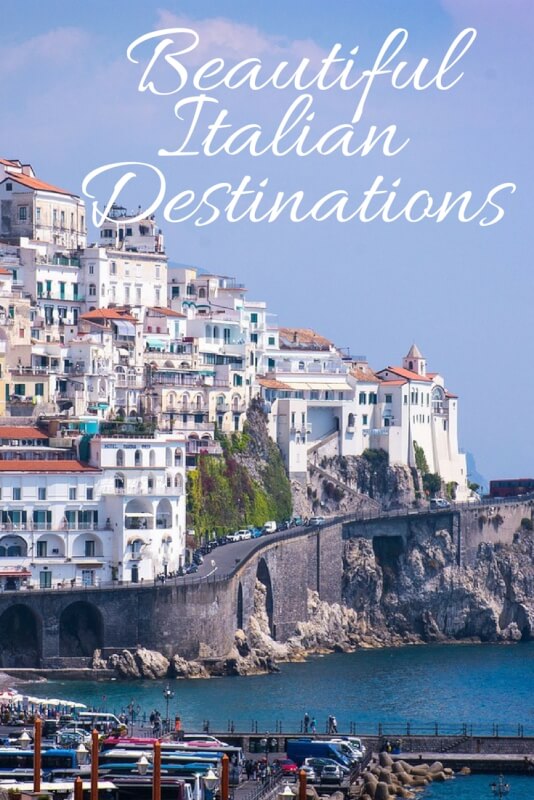
Where to go in italy: best Italy vacations in amalfi Coast. Check out more suggestions at europediaries.comAmalfi Coast is one region I have been dreaming of for a long time.May can be a good time to visit Amalfi before it gets too crowded and warm.

Check out some of the Amalfi Coast tours here:

  • CINQUE TERRE

Sometimes the world’s most photographed sites are so for a reason. Nobody could deny the beauty of the Cinque Terre; which is why it was made a UNESCO world heritage site in 1997 and the reason for so many people to frequent the site to this day.

Cinque Terre is nested within a valley of the mountainous Italian Riviera, between Genoa and Pisa in the north-west of the country. The area is comprised of Monterosso, Vernazza, Corniglia, Manarola and Riomaggiore – five villages which date back to medieval times, each which has its own distinct character and charm.

Cinque Terre is not just ideal for keen photographers but great for history fanatics as well; it’s hard not to be absolutely enchanted by the fabled stories contained within each medieval village. And if you’re into hiking, Cinque Terre is your dream destination. With extraordinary mountains to climb and spectacular vantage points at almost every corner, the sheer natural beauty of this spot of Italian coastline makes trekking a mesmerizing experience.

Exploring the Cinque Terre, whether it be on foot, rail or by boat is one of the most uniquely Italian things you can do which makes it a staple on your bucket list.

Famous places in italy: go to Amalfi Coast for a great Italy vacation!

Cinque Terre means ‘five villages’. You can easily get there from Florence.Although some people go for a day trip, it would be much better to spend a few days there, savouring the views and going on hikes.

For your dose of history and architecture, you can visit Florence.

READ: Exploring Florence on foot

ALSO: FOOD in Florence

  • SICILY

There is nowhere on this planet with as many UNESCO world heritage sites as Sicily. The island, located off the coast of the Italian peninsula, is packed with ancient Roman architecture, Greek ruins and some of the best food that you’ll eat on your entire trip to Italy.

Popular Sicilian spots can be best enjoyed on a road trip around the island, passing by the best spots and ending in its capital city, Palermo; Sicily can also be encompassed on a Southern Italy road trip. A must-visit for history enthusiasts, a trip around Sicily will help you understand the Ancient Greek influence over southern Italy; and it’s also a fantastic part of the country for foodies to enjoy.

Life in Sicily moves at a slower pace than that on the mainland, leaving visitors refreshed and recharged. Exploring Sicily by car is the perfect Italian road trip to soak in some quintessential Italian history and culture.

Europe Diaries Tip- Check out Wanderjack for private, customised experiences in Sicily. I had a wonderful experience in Venice with them and would try them out in Sicily too.

Sicily- dream destinations in Italy. If you are planning your italy vacations and looking for places to visit, Sicily is a great option for you.

Sicily, italy

  • THE DOLOMITES

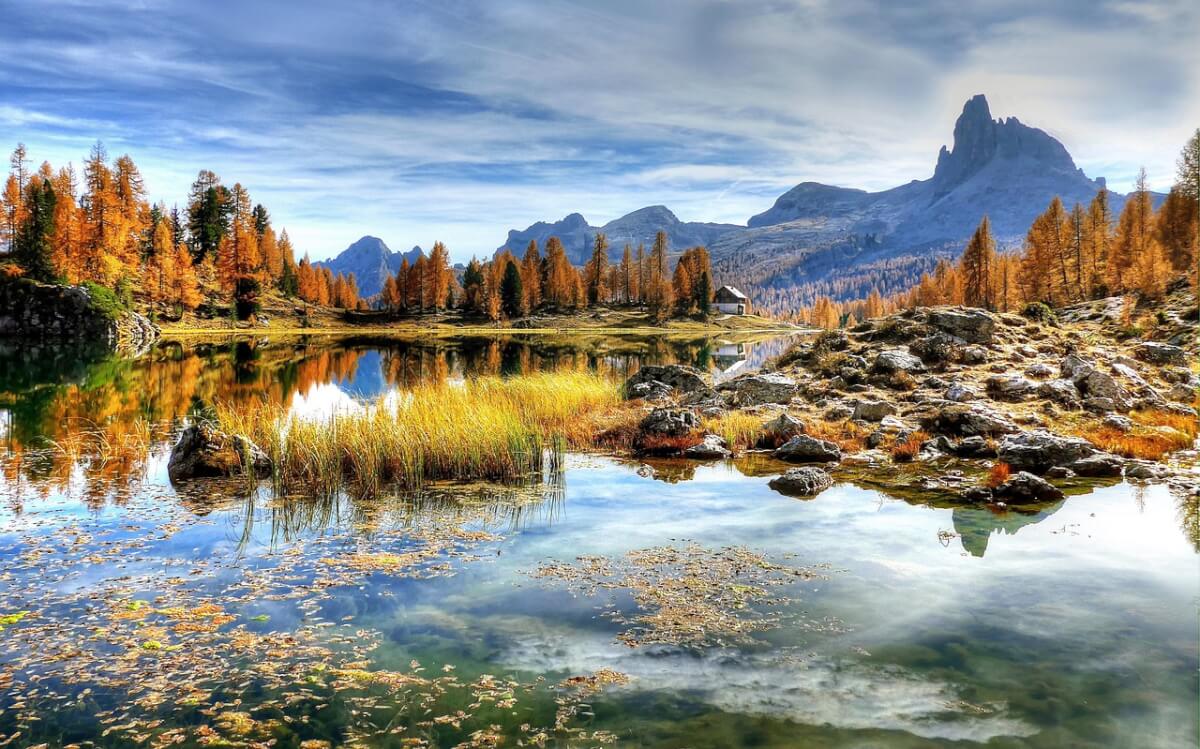
Northern Italy is renowned for its mountain ranges, and the Dolomites in the north-east of the country, not too far from the Austrian border, are a spectacular place to get a little lost in. In the summer, the spectacular mountain ranges offer clear, fresh air and cooler temperatures than the lowland part of the country.

Hikers will love the plethora of intertwining walking trails leading into quaint mountainous villages that could not be found anywhere other than the alps ranges. They are perfect to take a day hike or enjoy a walking holiday, stopping at various Alpine villages on the way. The Dolomites are also a renowned world heritage site and fossil archipelago, with a fascinating and enthralling amount of natural history.

If you are more into snow sports, head to the Dolomites during the winter season where the villages and towns get a white blanket and are transformed to some of Italy’s favourite skiing and snowboarding destinations, with adrenalin pumping pistes during the day and lively bars by night.

Visitors to the Dolomites will feel refreshed and rejuvenated and the spectacular vistas and a fantastic array of activities on offer are reasons to put visiting the Dolomites on the top of your European bucket list.

Italy alps- Dolomites- Best places for italy vacations.

If you are in the mood of exploring a mountainous area, head over to the Dolomites in Italy.

  • LAKE MAGGIORE

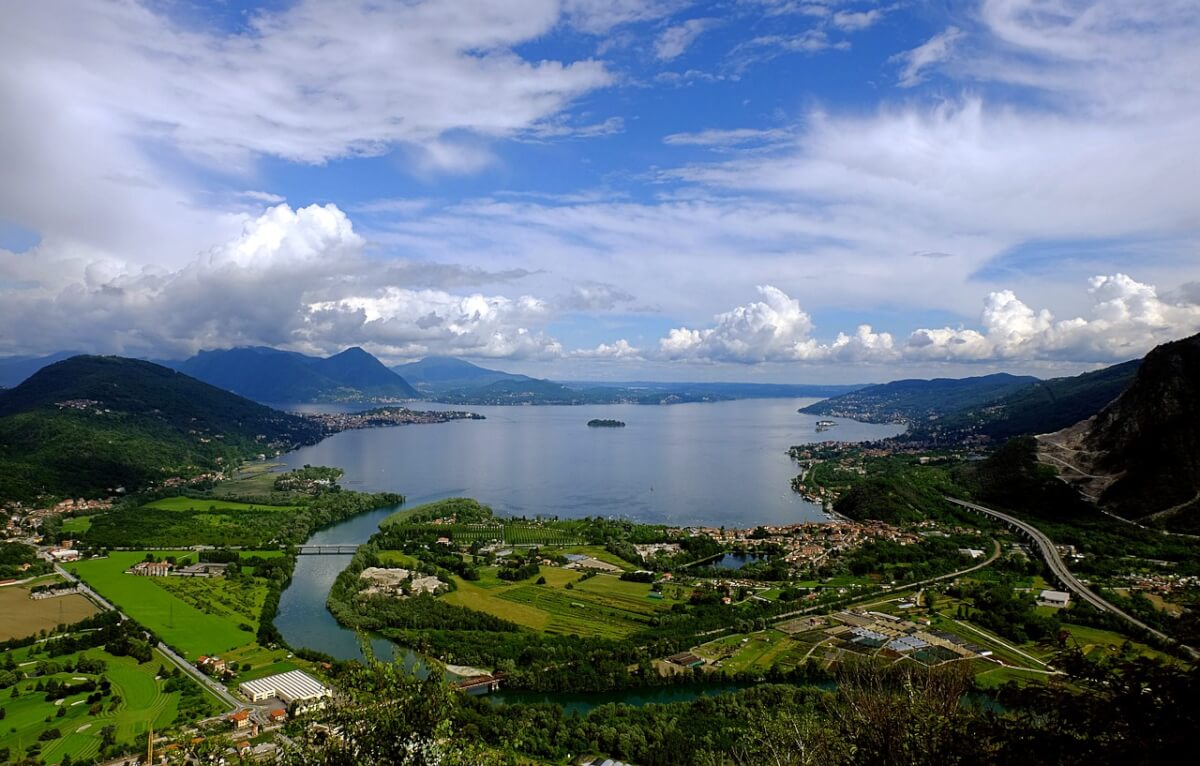
There’s nothing quite as refreshing as breathing in the clear air of an alpine lake; especially when it’s as large and as spectacular as Lake Maggiore. Straddling the Swiss-Italian border in the north-west of the country, Maggiore is famed as Italy’s second largest lake, but what fewer people are aware of is that it’s one of the country’s most spectacular sights as well.

Visit as part of a skiing holiday in the winter, or head to Maggiore in May or June for stunning wildflowers and warmer weather. Take a hike around the lake itself and admire lookouts which showcase the best of the mountainous surroundings. Or alternatively, you could kick back in one of the many charismatic villages on the western shore of the lake. Stresa encompasses ancient villages and a cable car to the scenic Monte Mottarone, and Arona which contains a gorgeous ancient castle.

Positioned proudly in the middle of the waters are the Borromean Islands, which are open to visitors and only add to the irresistible beauty of the lake itself. Visit Maggiore to feel refreshed, rejuvenated and revitalised; that and the glorious beauty of the lake are enough to push it to the top of your Italian bucket list.

Most beautiful places to visit in Italy for your vacations: lake maggiore

Lake Maggiore

  • VIA FRANCIGENA

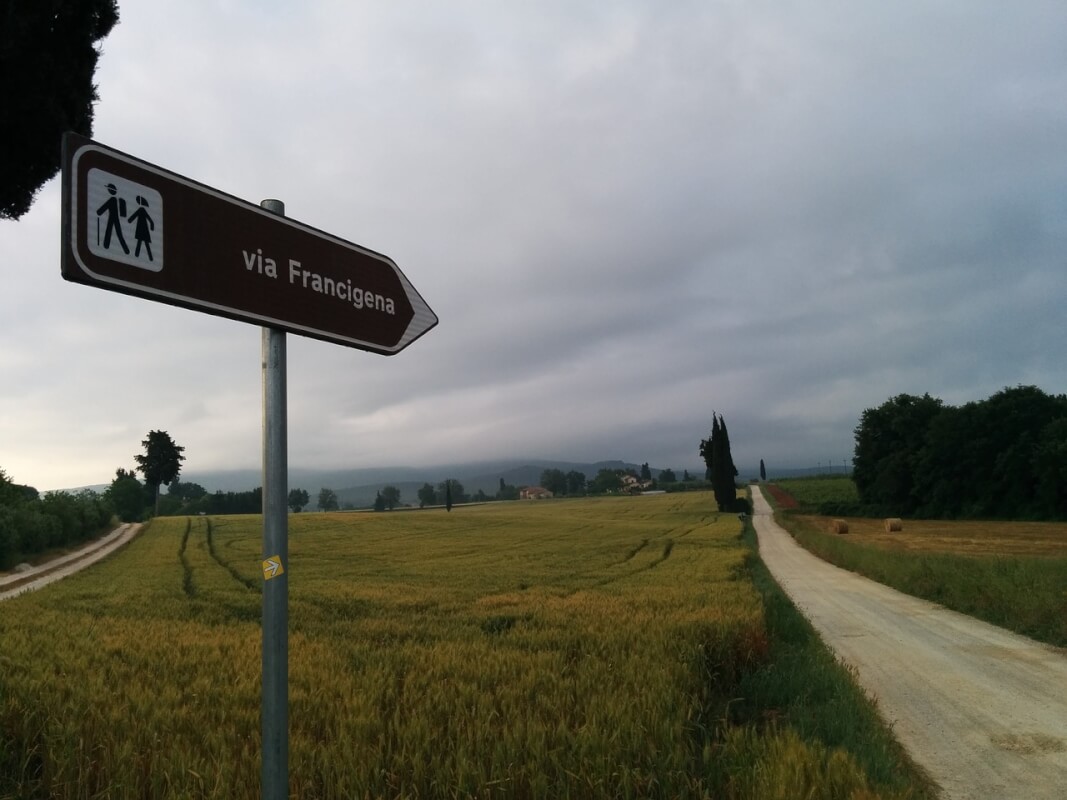
Part of an old route that connected Canterbury in the UK to Rome, the Via Francigena is a rediscovered pilgrimage-style route through some of Europe’s best countryside. The Italian portion stems through the Po Valley, into Fidenza, through Tuscany and finally toward the Mediterranean Sea, heading southwards to Italy’s capital.

The journey can be enjoyed in its entirety or as sections, as a road trip or hikes which can range from day walks to week-long treks. Nature fans will love the tranquillity and serenity that the track provides, as it winds through some of Italy’s most loved countryside; but history lovers will be equally in their element as they retrace the steps of so many before on this ancient route.

There are also plenty of quaint towns to explore, which of course contain some of Italy’s most well-known characteristics; ancient buildings and great food. Exploring the Via Francigena will give you a tremendous sense of achievement; a pride at completing a quest, and will also educate travellers as to how the pilgrims journeyed over a thousand years ago.

This eye-opening journey will give you an insatiable lust to explore even more of historic Europe, which is why it is a must-visit for all travellers to the continent.

Italy pilgrimage: Via francigena- Where to go in Italy

Via Francigena

  • SARDINIA

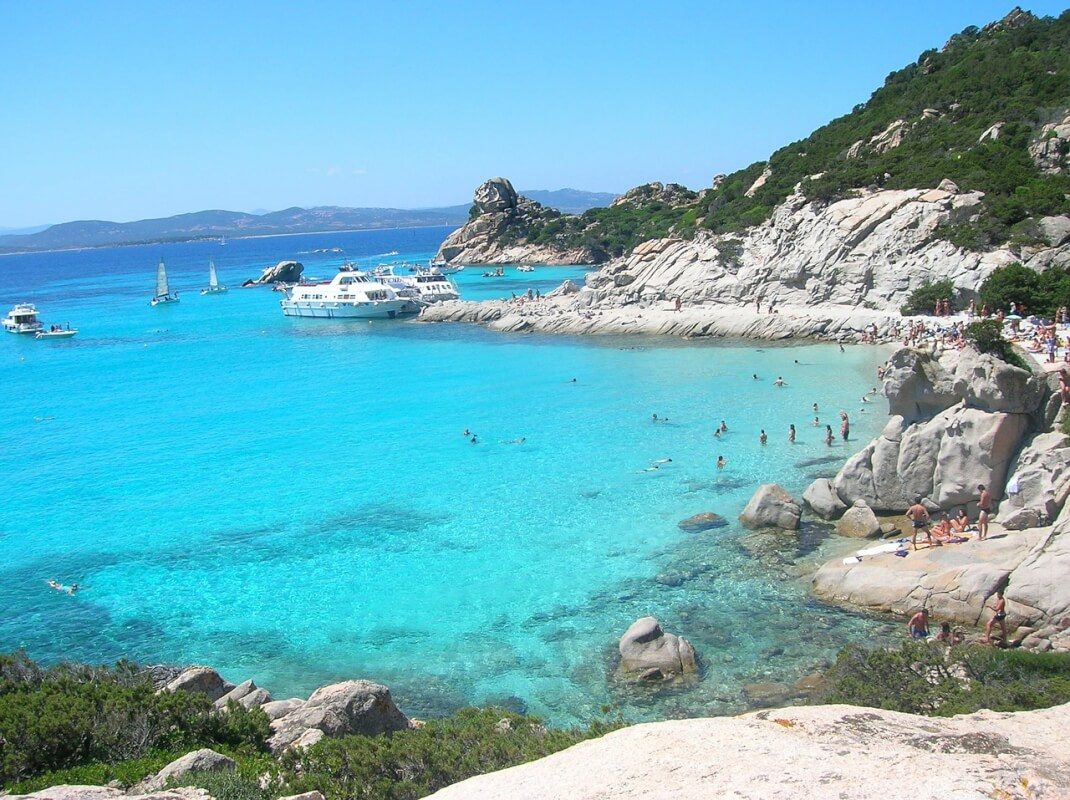
You’re not exactly pushed to find a beautiful bay in mainland Italy, but in mesmerizing Sardinia, an Italian-owned island in the middle of the Mediterranean Sea, there’s stunning bays and azure waters on every corner. Sardinia has been part of Italy since 1861 and the island has 2,000 kilometres of coastline.

It is an ideal place to visit once you’ve explored some of Italy’s hectic cities; here in Sardinia, where the entire population enjoys a far more relaxed pace of life than on the mainland. But if you’re seeking adventure, don’t rule Sardinia out – the hinterland of the island is packed with hiking trails up steep mountain paths, offering magical forests to explore and spectacular coastal vistas from vantage points.

Or search for the nuraghi that Sardinia is famous for – Bronze Age stone ruins, some of which date back to 1500 BC. Sardinia has something for everyone: tasty food, great Italian wine, adventurous hikes and plenty of sun-soaked beaches perfect for soaking some rays. Head to the Italian island to both relax and adventure, and enjoy some authentic Mediterranean culture while still in the wonderful country of Italy.

Check out some tour options in Sardinia.

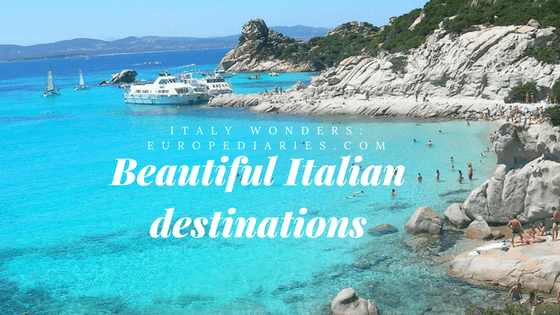
Most beautiful places in Italy: Sardinia.

Sardinia: Dream destination in Italy

Which of these places will you consider for your next trip? Do you have a favourite city/region in Italy? Share your thoughts in the comments below and do share this article with your friends and family on Facebook/Twitter.

Why not save this post on Pinterest for finding it easily later?

Written by Claire from Claire’s Footsteps.

Claire is a British travel blogger on a mission to get to the heart of places by overland adventures. She writes about eco-travel and travelling with purpose on her blog, and she is currently back in the UK, plotting her next adventure! Keep updated with her travels on her blog.

Disclaimer- Some links in this post may be affiliate or sponsored, with no extra costs for you incase you decide to visit and book any of the tours/stays. The content in itself is and always will be authentic for all you curious travellers.

Mexico Temezcal Workaway ravel story

Travellers’ Tales: Embracing Ancient Rituals and Wildlife in Mexico

This story is part of the Travellers’ Tales series, where we invite travellers and storytellers to share stories from their journeys. Have a story you’d like to share? Get in touch!

Our story, Allan and Katharina, starts in Mexico City, where we met for the first time while stuck in a hostel during the pandemic. As everything started to get more and more locked down, we were part of a small group of lunatic travelers who decided to stick it out in Mexico.

This was the best decision of our lives because three years later, we are still on the road together! We never returned to our home countries but stayed in Mexico for two years. During this time, we volunteered through Workaway to keep expenses down and had many memorable experiences.

Our favorite Workaway host was Juan, a local guy from San Pancho, a little beach town on the west coast of Mexico. We helped him out with construction, cleaning, cooking, marketing, and other odd jobs. Just whatever he wanted us to do around the house.

But what made our stay memorable was the places and experiences he took us to. 


One day, he took us to Clay Beach, a beautiful deserted beach where you can cover your body in clay to cleanse your skin. While there, he told Katharina to put her head under the water because whales were singing. 

When she put her head under, she could hear her whales singing, which she said sounded like beautiful music. Everyone came out of the water and talked about how amazing it sounded when, suddenly, an enormous whale swam past about 20 meters from shore! It was incredible how close it was and one of the most impressive displays of nature we have ever seen.

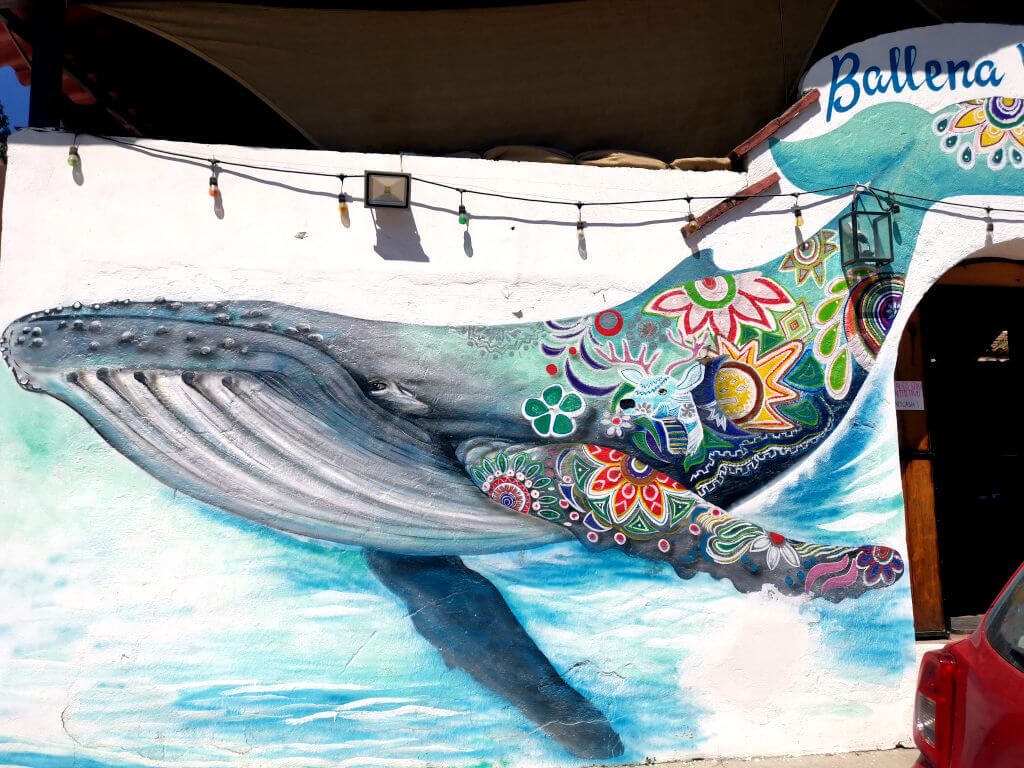
Whale art in Mexico- mexico travel experience- Travellers tales

Whale art in Mexico

Another experience he took us on, which we will never forget, was a Temazcal, a kind of sweat lodge used by indigenous groups from North and Central America for centuries. Juan described it as kind of a sauna but homemade. We thought, okay, sounds relaxing we are in. But it turned out to be far from relaxing!

We arrived at a house after driving down a long, bumpy dirt road. Next to that house was a small hut made out of blankets, a bonfire, and a group of people. Immediately, we were told to get into our swimwear and go inside the hut. No introduction; get in!

Inside the hut, the roof was just above our heads while we sat in the dirt, and everyone was jammed in like sardines. It was far from comfortable. There were about 20 other people we had never met inside, including families with their kids. 

After being inside for a while, hot stones were brought inside and placed in the middle. Then the “doors” made of blankets were closed, and it was so dark we couldn’t see our hands in front of our faces. We still had no idea what was happening because our Spanish was not very good.

All of a sudden, the leader of the ceremony started chanting and banging a drum, and water was poured on the hot stones. The heat created by the steam from the stones was unbelievable! It felt like our skin was going to peel off. 

We both felt a little freaked out because the chanting was so loud, and we couldn’t see, hear, or barely breathe. Our skin was glued to the person next to it, covered in a waterfall of sweat. Plus, Juan had not told us how long this would last. Are we in here for 5 minutes, 20 minutes? Forever?


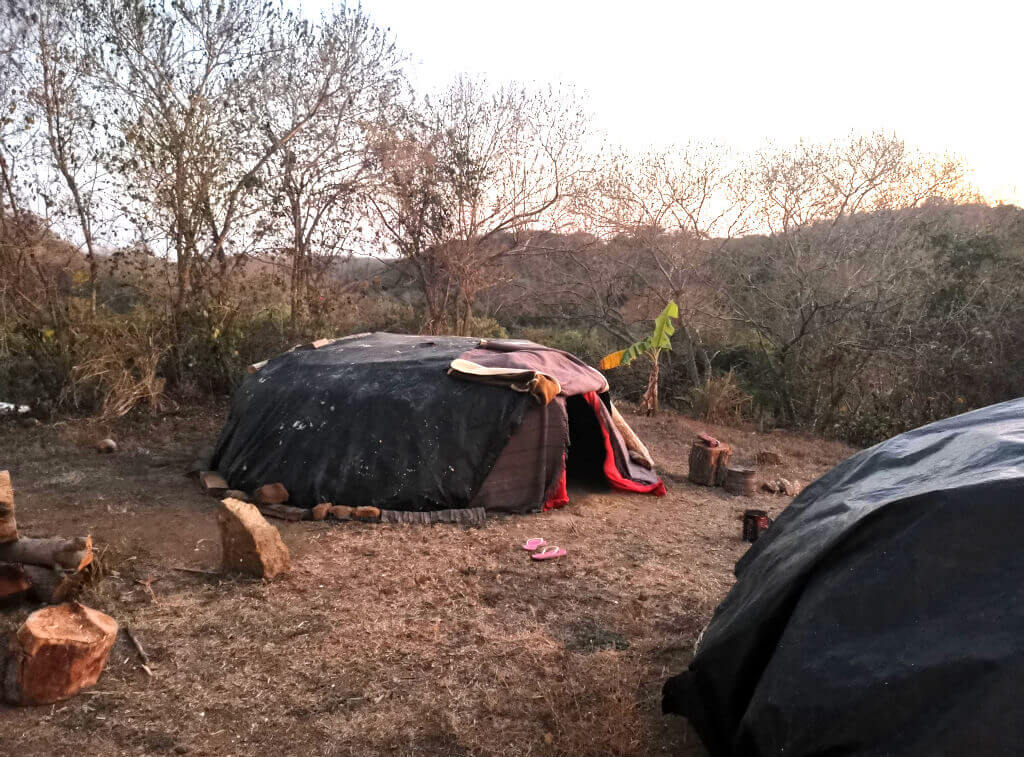
Temezcal in Mexico

Memorable Temezcal experience

After a while, kids in the families started crying, saying they wanted to leave in Spanish. We were both thinking, can we go with the kids too? But the chanting and heat continued, so we had to stay inside a little longer. After what felt like an eternity, the “doors” opened, and desperately needed fresh air rushed into the tent.

We both jumped at the chance to escape the oven we were trapped in. After leaving the tent, we felt reborn in the cool air. Juan happily stayed inside the tent, but Katharina decided she had had enough after we discovered that the Temazcal session would last three times longer than we had just endured. I returned and finished the whole session, which I was pretty proud of.

The Temazcal was super uncomfortable then, but it is an experience we will never forget. It is the type of thing we would have never done without getting to know a local like Juan.

During our stay with Juan, we had many other incredible experiences. We volunteered with him for five weeks, one of the most memorable weeks during our two years in Mexico. We became friends with him and will always be grateful for all the experiences he introduced us to. We are planning another trip to Mexico and will stop by at Juan’s.


Author Bio

We are Allan and Katharina, a travel and fitness-loving couple from New Zealand and Austria. We write budget travel guides on our blog happyhealthynomads.com with mindful travel tips for backpackers and digital nomads. If you want to read more of our Mexican adventures and get some ideas for your next trip, you can check out our blog Happy Healthy Nomads, or follow us on Instagram, Facebook, Twitter, or Pinterest.


Epic Southern Tuscany Road Trip Itinerary (From a Local!)

Plan your epic Southern Tuscany road trip with this itinerary from a local! Our guest author, Lisa, is an Italian mom with a passion for travel and writing. You can read more from her on her blog Rome Travelogues.


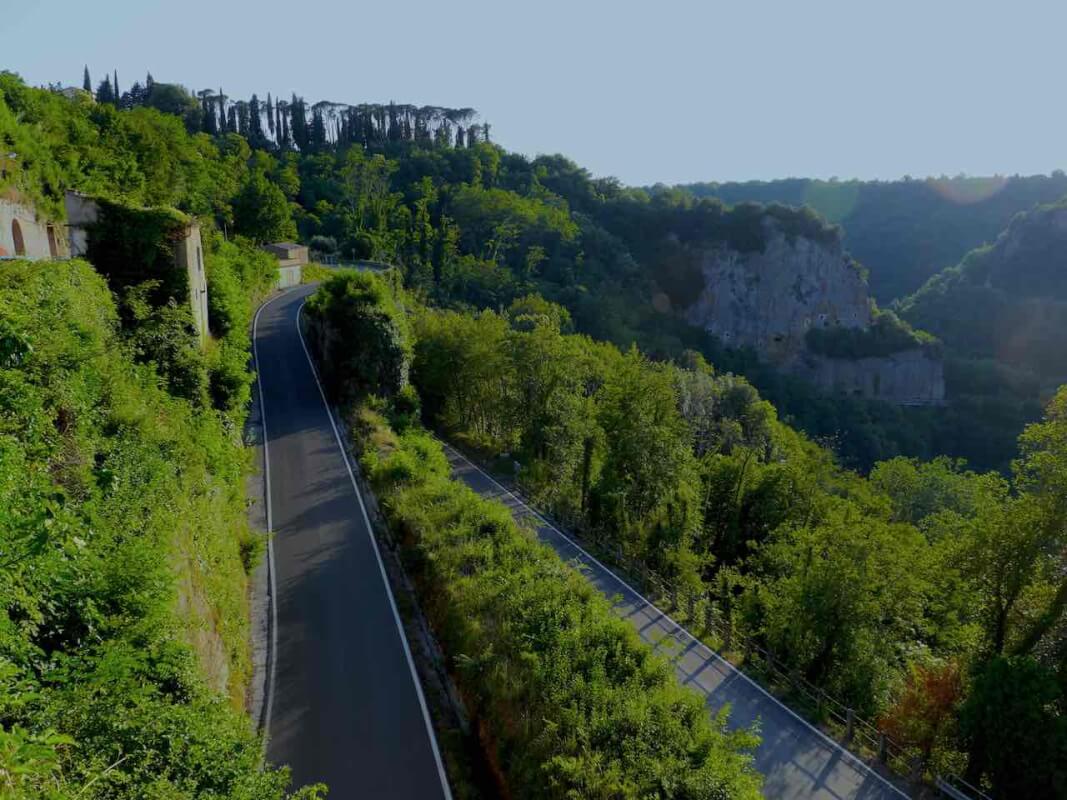
Whenever I feel the need to get away, I flee to Southern Tuscany, which is about 200 km from where I live. When I talk about Southern Tuscany, I refer to the area just beyond the border with Lazio (the region with Rome). This Southern Tuscany road trip itinerary includes pretty villages and natural and archeological sites that are just incredible, and that pulls me back there over and over again. This Tuscany road trip covers some must-see places that are fantastically off the beaten path in Tuscany. You will drive across the classic Tuscan countryside with olive fields and vineyards, of course, but also discover different places and secret spots that only the locals know, like mysterious archeological sites, gorges, and bays.

Southern Tuscany is also known as “Maremma” or “Tuscan Maremma”, and it’s part of the Tuscia region (the area of influence of ancient Etruscans.), which includes areas of northern Lazio and Umbria as well. This itinerary will take you to 15 incredible places, some of Tuscany’s hidden gems only locals know. I’m also offering advice on where to eat and accommodation.

WHERE TO START THIS EPIC SOUTHERN TUSCANY ROAD TRIP

Ideally, you will leave from Siena or Rome. Florence is handy as well, but farther. I started driving from Lake Bracciano, the lovely area north of Rome I’m staying in now. This itinerary in Tuscany unfolds in 5 to 7 days, depending on your pace. 

I invite you to travel as slowly as possible because Southern Tuscany deserves careful exploration, and it will only reveal its secrets to those who dare to travel slowly.

THE CAR YOU NEED FOR THIS TUSCANY ROAD TRIP

I traveled on a sub-compact car with a/c and wheels in perfect condition. You won’t necessarily drive on countryside tracks, but it may definitely happen by chance. 

You need a good GPS. Google Maps’  “shortest way” is deceiving or inexact sometimes.

Try and keep on “SP” (provincial road, “strada provinciale” in Italian) as much as you can. We got lost while going for the agriturismo we had booked our stay at because it was surrounded by countryside. We drove along endless vineyards and got to see a lot of lovely country houses; it was worth the time anyway.

The aircon is a must-have in the car: during late spring or summer, when Southern Tuscany’s nature is in full bloom, you don’t want to mess with flying insects (including huge wasps and horseflies) that might get inside your car and distract you from driving safely.

BEST SEASON TO TAKE A ROAD TRIP IN SOUTHERN TUSCANY

April to June and September to November. The Tuscan summer can be really hot, and I’d recommend it only if you stay by the coast. If you visit in July or August, stick to the coastal locations I address in the last part of this article.
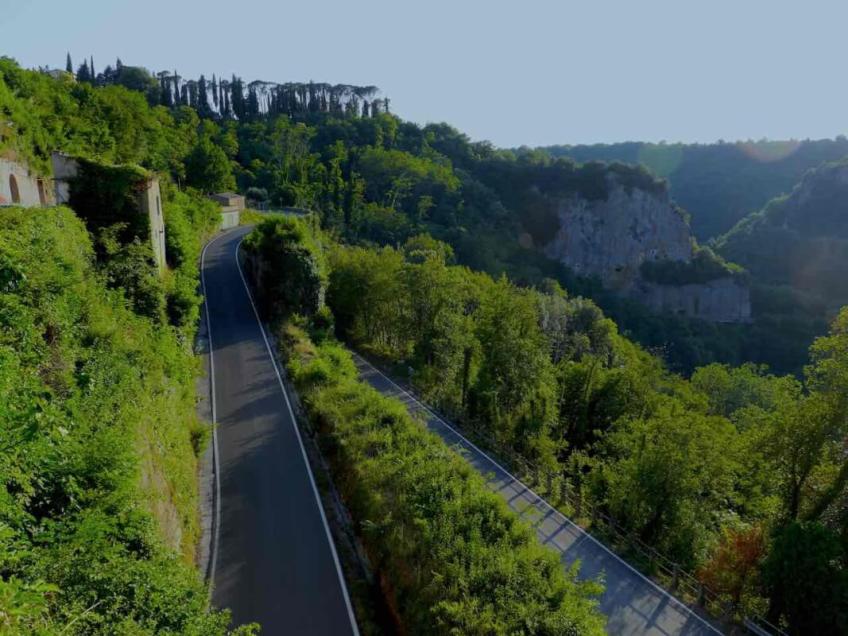
Plan your Italian road trip: outhern Tuscany

15 PLACES YOU MUST ADD TO YOUR SOUTHERN TUSCANY ROAD TRIP ITINERARY

I’m not sure if you drive to Southern Tuscany from north or south, so feel free to visit these places in the order which is the most to you. They are all close to each other anyway, this region is dense of attractions.

VILLAGES IN THE “ARCHEOLOGICAL PARK OF TUFF”

One of the highlights of Southern Tuscany is the “Archeological Park of Tuff”. The park includes villages, archeological sites, and scenic areas in between Mount Amiata, the border with Lazio, and the River Fiora. 

This region’s charm and beauty will leave you speechless and thinking that you’re exploring some authentic secret spots in Italy. Here are some villages and sites you must add to your first Southern Tuscany road trip itinerary. They are all only 5 to 10 km away from each other, so you could find accommodation in any of them.

1 Sovana

Sovana is the smallest village in the region, “Archeological Park of Tuff.” It is also the quietest and the most beautiful. If the towns of Sorano and Pitigliano have dramatic scenery, rising on huge flat rocks, Sovana is more intimate, one of the most relaxing villages in central Italy.

Every corner of this village deserves a photo. The village has two small pedestrian streets, a main piazza with the watchtower and shops, and a few incredible historical landmarks.

If you love meditative silence, make Sovana your base for exploring Southern Tuscany.

Things to see in Sovana:

1.Ruins of the Aldobrandesca Fortress

2. Church of Santa Maria Maggiore

3.Palazzo Pretorio

4. Duomo di Sovana. The main building inside the village is the “Duomo Di Sovana”, one of the most important examples of Romanesque art and architecture in central Italy. The bas-relieves on the ancient gate of the cathedral and on the columns inside it are worthy of slow observation: enigmatic figures and symbols, which transmit the influence received from other parts of the Mediterranean. 


Just outside the village, immersed in the thick nature and vegetation of the gorges that are typical of this area, three important archeological sites are dating back to the Etruscans:

1. The tomb of Ildebranda

2. The tomb of the siren

3. The tomb of the winged demons


2 Sorano

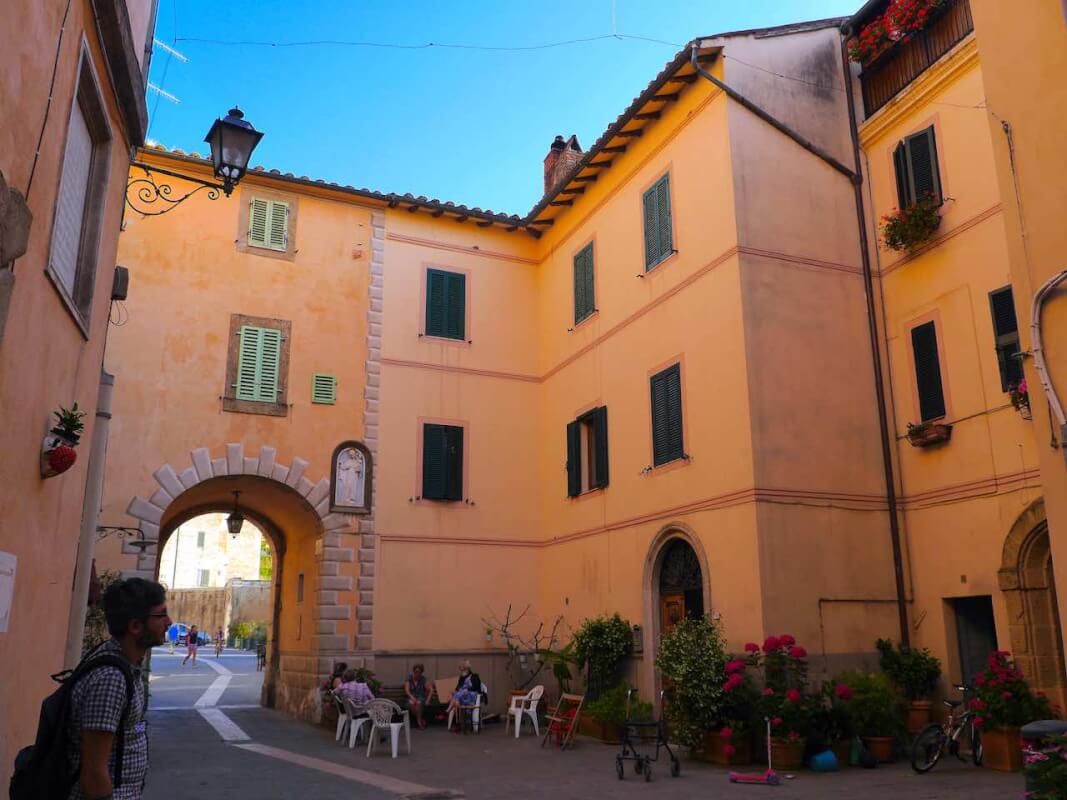
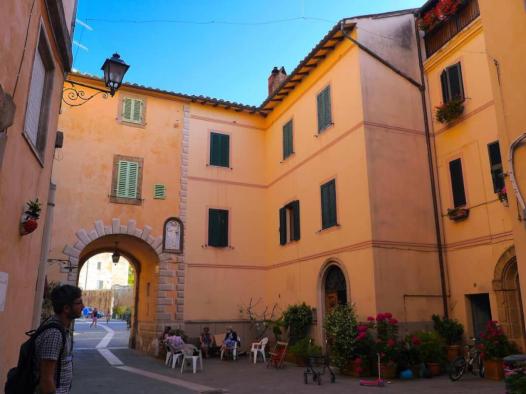
This medieval village is built from the tuff stone that shapes the region. Sorano is located on a dramatic tuff cliff surrounded by the River Lente. The village is similar to Pitigliano, which is another stop on this Southern Tuscany road trip, but even more secluded and smaller. Most of this village you can only explore on foot. We parked our car on the side of the road “strada provinciale Pitigliano-Sorano,” where we saw other cars parked, and entered the village from the neighborhood called “the ghetto of Sorano.” The alleys were silent and picturesque, a series of houses made with ancient stones, and every few of the small terraces offered views of the green valley below. We arrived at the heart of the historic center by walking through arches and alleys. A few people were hanging out there: the old ladies sat quietly chatting in circles in front of their doorsteps; children were playing with their mothers, a very laid-back village.

WHAT ELSE CAN YOU DO IN SORANO?

  1. Visit the “Orsini Fortress” This is the most outstanding building in town, medieval, erected during the XII Century. It hosts the “Medieval and Renaissance Museum”, a hotel, and the “Enoristrò”, a bistro and restaurant where you can get breakfast, lunch, aperitivo, and dinner in the local style.
  2. Sit and sip a glass of local wine at a café in the Piazza del Municipio. We did that at “La Cantina Dei Sapori”.


RESTAURANTS IN SORANO

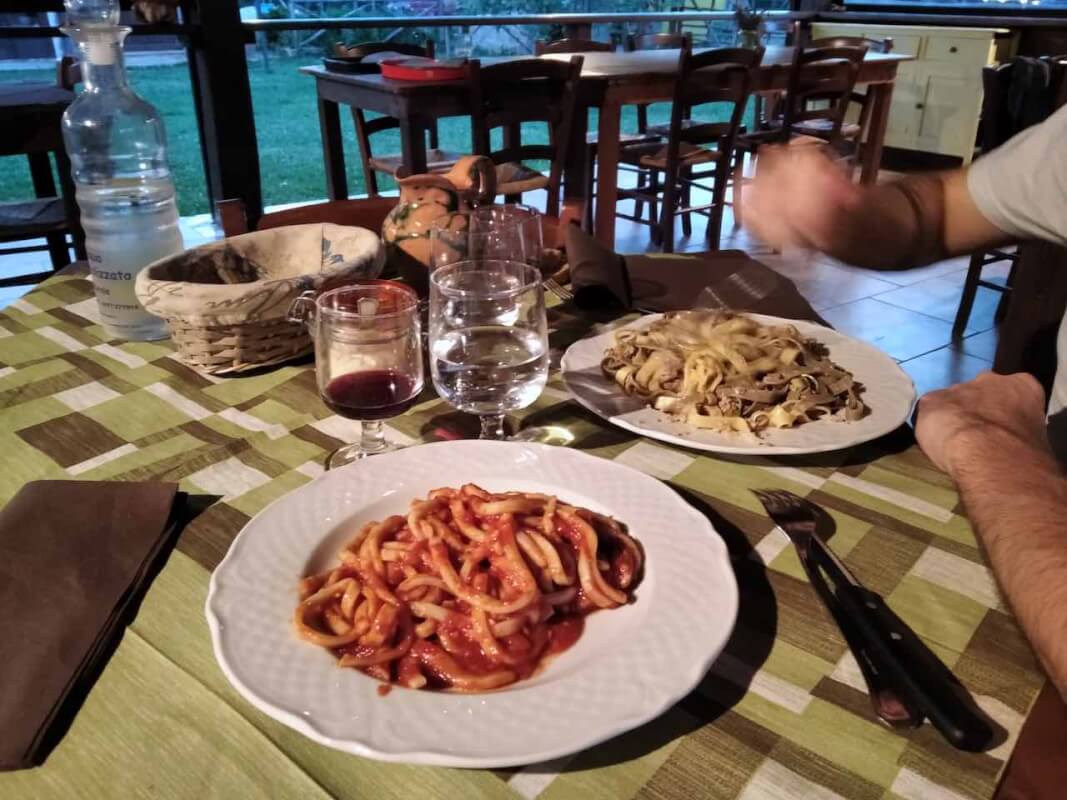
Enjoy a true, organic local meal at the “Agriturismo Aia del Tufo,” which only serves its own products and has excellent prices. This is the best place we ate during the entire Southern Tuscany road trip.
 

3 PITIGLIANO

Pitigliano is the biggest and most famous of the three main villages in the “Archeological Park of Tuff”. The sight of the town from the provincial road will be one of the most exciting moments of your Southern Tuscany road trip: it stands out from a very steep cliff, the houses are the continuation of the rock, and it’s impossible not to stop during by day and night to take pictures of the landscape. I bet Pitigliano was unassailable in ancient times!

Now, it’s a village waiting to be explored. Your task here is to walk through the tight and intricate alleys and discover the hidden panoramic spots overlooking the gorge; there are many of them.

ATTRACTIONS YOU’LL WANT TO STOP BY IN PITIGLIANO:

Medicean aqueduct

Fountain of the Sette Cannelle

Archeological Museum of Pitigliano to admire stunning Etruscan artifacts from the region.

Workshops and shops in Via Roma and Via Zuccarelli

The piazza with the Cathedral of Santi Pietro and Paolo

The area around “Little Jerusalem.”

GET YOUR SOUVENIRS IN PITIGLIANO

Pitigliano is the perfect place to buy food souvenirs and a few bottles of local wine. I stopped at a shop just outside the main historical center, and it proved the right choice: “Narciso e Bussi.”

RESTAURANTS IN PITIGLIANO

1. Ristorante la bontà di Claudia Cucina Tipica

2. Pizzeria Trattoria La Terrazza

WHERE TO STAY: ACCOMMODATION IN SORANO, SOVANA, AND PITIGLIANO (AGRITURISMO, B&B, HOTEL)

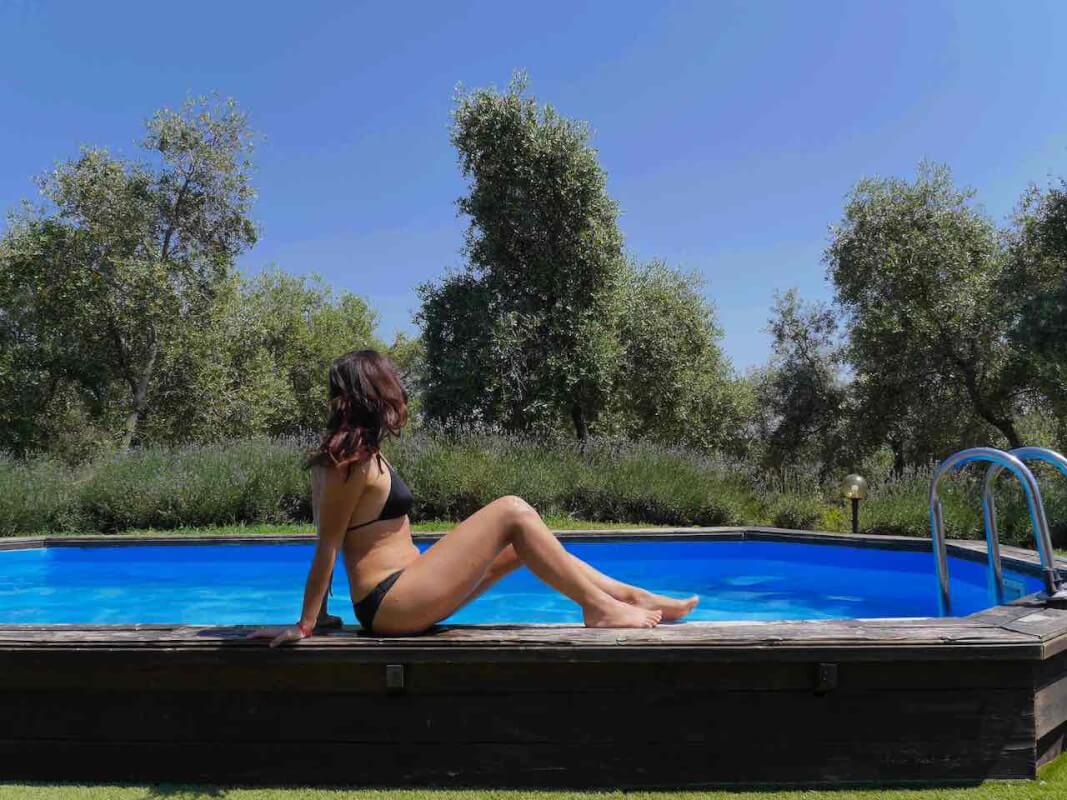
Farm House “Tenuta Roccaccia” | There are many B&Bs inside the villages, but we wanted more privacy, so we rented an apartment at a farmhouse a few km from Pitigliano. The “Tenuta Roccaccia” has a kitchen and a swimming pool, and vineyards and olive fields surround it… Their apartments can host up to 5 people. I sincerely recommend it if you want to cook your own meals.

Agriturismo Sovanella | Cozy rooms in a farmhouse surrounded by nature. The cook is excellent, and we probably ate too much here. The common stay here includes dinner and breakfast, but you can also have a simple B&B.

Agriturismo “L’aia del Tufo” | Certified organic food (also some of the best food we’ve had in the region)


Booking.com
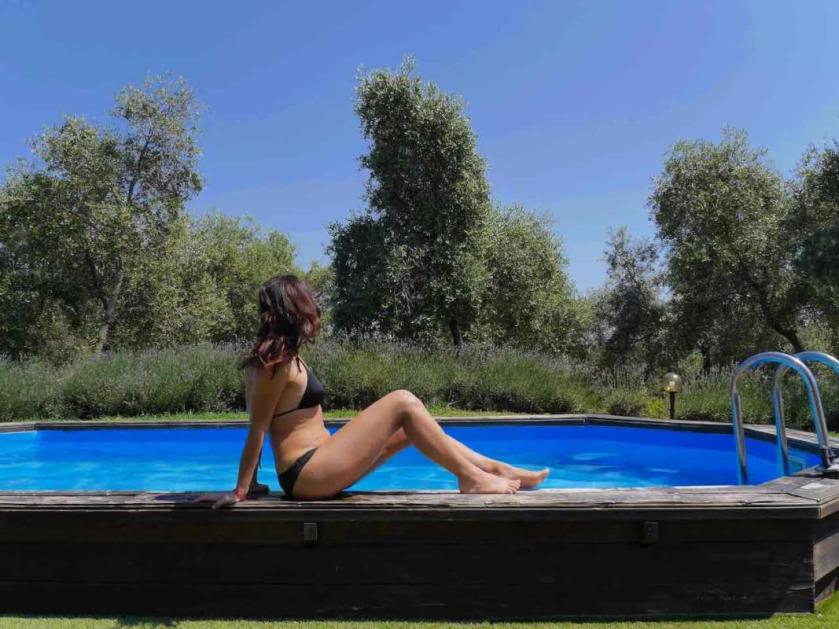
Enjoy a stay at Farm House “Tenuta Roccaccia


4 ETRUSCAN CUTS TRAILS (ARCHEOTREKKERS’ FAVORITE!)

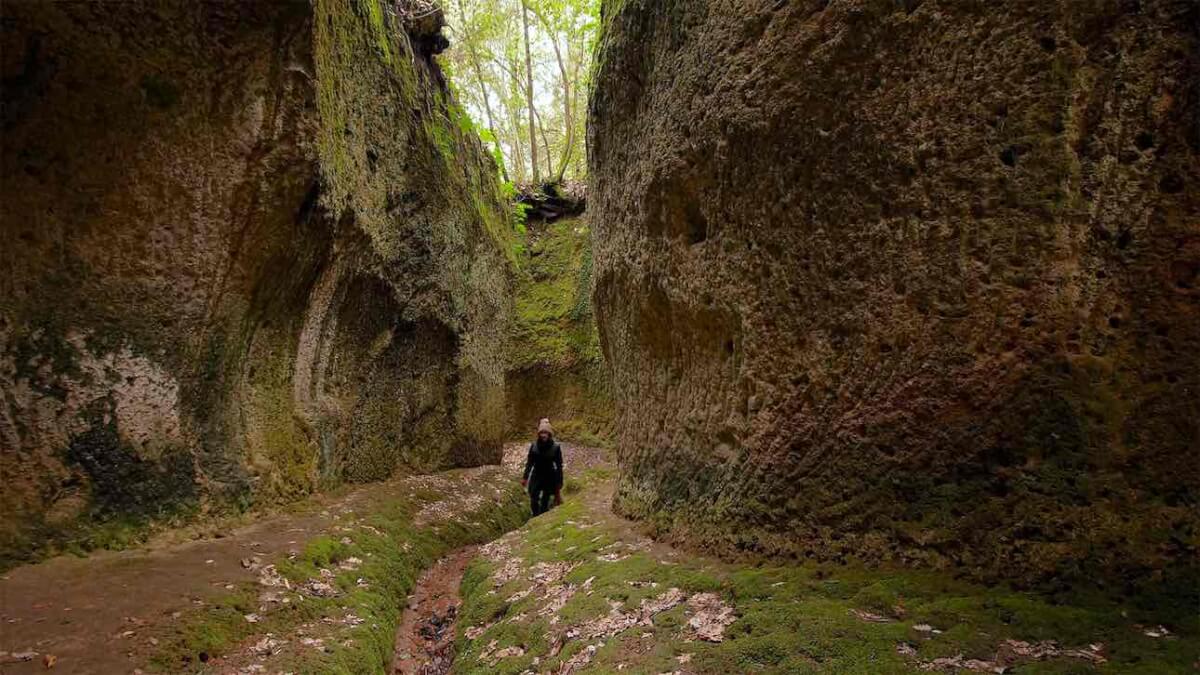
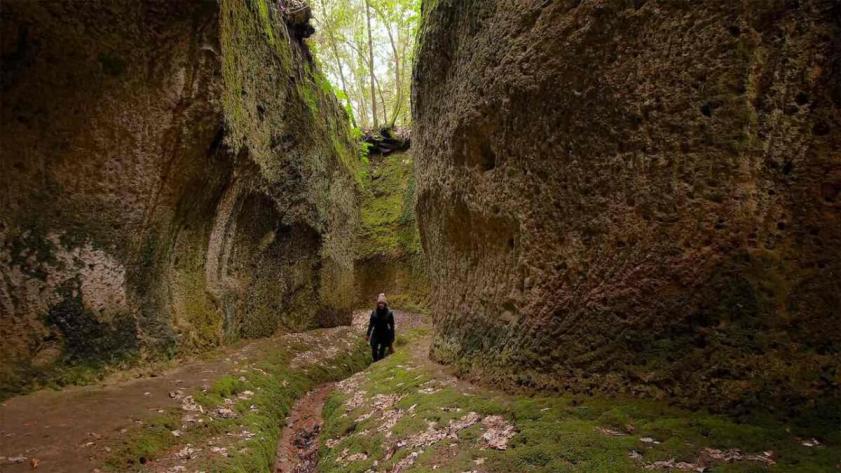
The “Etruscan cuts” (also known as “vie cave etrusche” in Italian) are monumental paths caved in the tuff stone that naturally shapes the land in Southern Tuscany and northern Lazio by the Etruscan civilization. The concentration of these “archeological paths” around the villages of Sorano, Sovana, and Pitigliano is massive and unrepeated in other parts of Italy. These are the archeological and natural highlights of the area. There are more than 20 of these “particular” routes.

WHAT’S SO SPECIAL ABOUT THESE PATHS?

They were caved with picks; they followed along with extended necropolises, crossed each other, and reached up to 20 mt. deep and a few mt. wide. The Etruscans (1000 B.C. – 1st Century B.C.) created them, and researchers aren’t able to understand clearly how these trails were used. During the Middle Ages, hermitages and Christian votive niches appeared within the Etruscan paths. On the massive walls of these man-made canyons, you can see the work of the picks, inscriptions from all ages, symbols, and of course, you can access the burial caves.

Tips for visiting the Etruscan cuts

All of these trails are interesting to walk through. You can start your exploration descending from Pitigliano village to the valley. Take the path through “Porta Sovana” and follow the directions to “via Cava di Poggio Cane”, then to the “Via Cava San Giuseppe”. The Etruscan cuts around Sovana instead have direct access to the archeological sites Tomb of the Siren and Tomb of Ildebranda.

Even if the hiking difficulty for these trails is just easy-moderate, it’s best for you to wear hiking shoes. The path is mostly shaded, but during the summer a hat is highly recommended. Bring a torch with you if you want to explore the interior of the many caves along the way. The path becomes very slippery when it rains.
5 SAN QUIRICO – WALK AROUND THE PREHISTORIC SETTLEMENT OF VITOZZA

The village of San Quirico (not to be mistaken with San Quirico D’Orcia) is a fraction of Sorano. I visited there to have dinner at the popular restaurant “Il Tagliere Etrusco”, which is now open only during weekends, Friday to Sunday.

Since I found the place shut, I strolled around the village and found out about the abandoned settlement of Vitozza, which seemed worthy of further exploration. The next day, I left my car in San Quirico and walked for 1 km to access the archeological park. This is the easiest nature walk in the area, and it’s shaded because it goes through a forest.

The trail develops across prehistoric and medieval settlements. There are dozens of caves facing the trail, the ruins of two castles. These ruins are easier to visit than the necropolis in the Etruscan cuts. I really enjoyed this walk. The entrance is free.

6  THE SATURNIA HOT SPRINGS

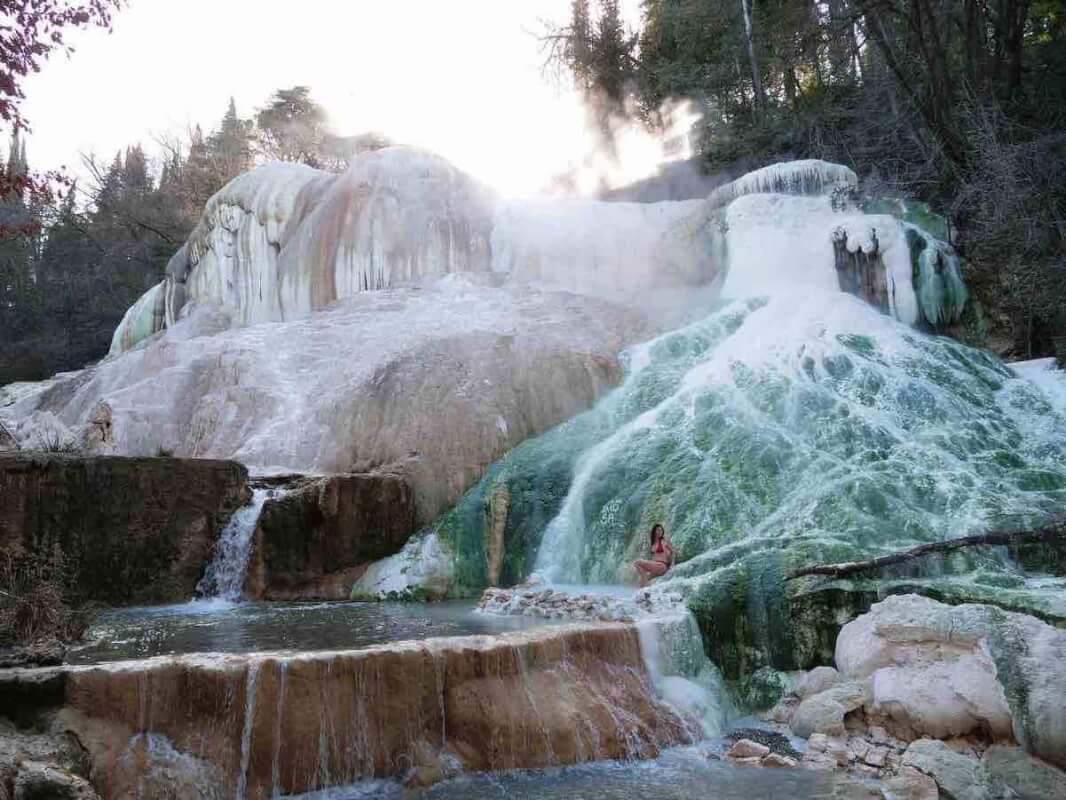
The “Mulino Waterfalls” of the Saturnia hot springs are famous worldwide. They look like the spectacular pools of Pamukkale in Turkey. These natural thermal pools have a constant temperature of 25 °, access is public, and so they are open 24h a day. 

The sight of the pools is delightful. If this is your first time in Saturnia, try to get here when there is still light, even if you can also enjoy bathing at night. There are many pools, but the visitors are too. There is also an equipped thermal resort nearby. 

The water temperature of all pools in Saturnia is perfect for bathing in spring, summer, and fall.
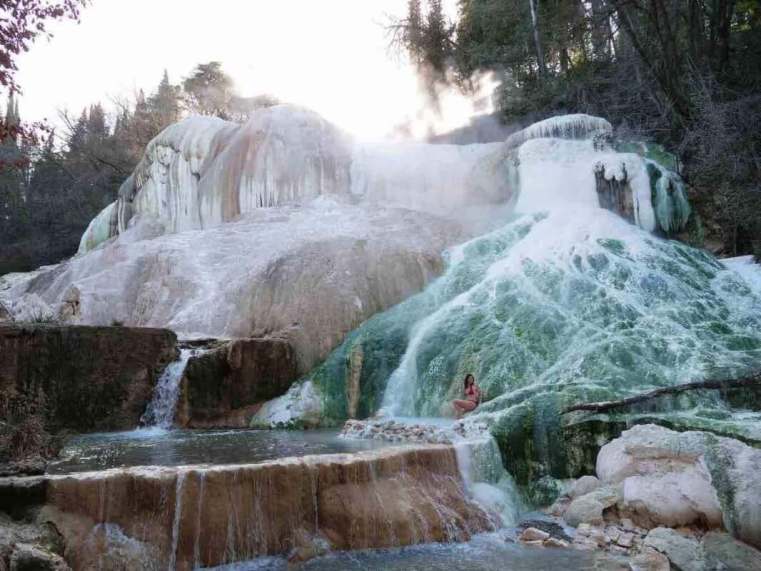
 

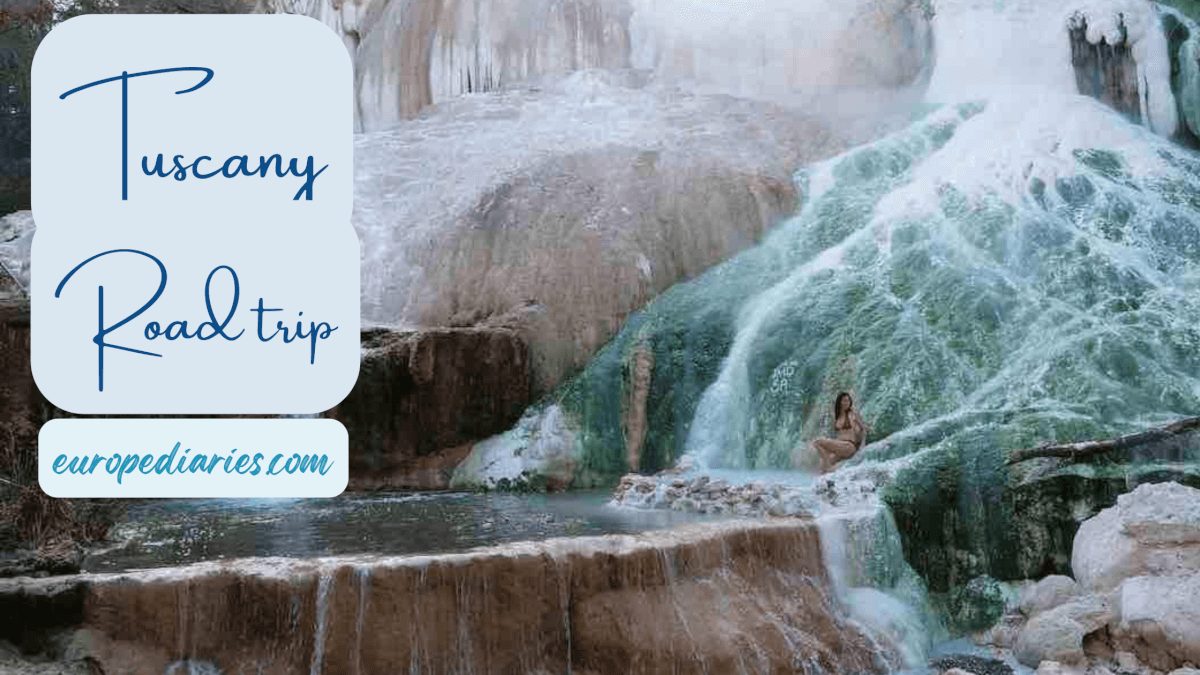
Saturnia thermal pool- Stop by dring your tuscany road trip here

Rejuvenate in the thermal pools


7. TERMAL RESORT “TERME DI SORANO”

An awesome compromise, in terms of money, between the natural thermal pools of Saturnia and the Terme di Saturnia Resort is the complex “Terme di Sorano”.

Southern Tuscany is rich in natural hot springs. The Terme di Sorano is a recent creation, it features three big pools with different depths and temperatures, thermal massaging flows, and a lawn with beach beds and umbrellas. 

Prices are accessible. These are some of the best thermal baths near Rome. You may also stay at the Terme di Sorano Hotel.

In some periods of the year, they are open only at weekends, so I advise you to contact them before dropping by.


8 MANCIANO, AN OFF-THE-BEATEN-PATH VILLAGE IN SOUTHERN TUSCANY

The villages and historical landmarks I’ve added to this itinerary for a perfect road trip in Southern Tuscany attract many local travelers, many more than the neighboring Manciano, which doesn’t deserve at all being overshadowed instead.

My fellow road-tripper and I visited Manciano to haunt for a good trattoria. What we found is a surprisingly off-the-beaten-path Tuscan town with an intact fortress (Rocca Aldobrandesca) and a splendid panoramic view on the surrounding countryside. We spent a couple of hours strolling around the historic center and visiting the Museum of History and Prehistory of the Valley of the River Fiora, which is free.

DINING IN MANCIANO

Il Covo dei Briganti Biobar | Breakfast, wines, aperitivo, and to get local food souvenirs

9 TAROT GARDEN – UNIQUE ART GARDEN IN ITALY

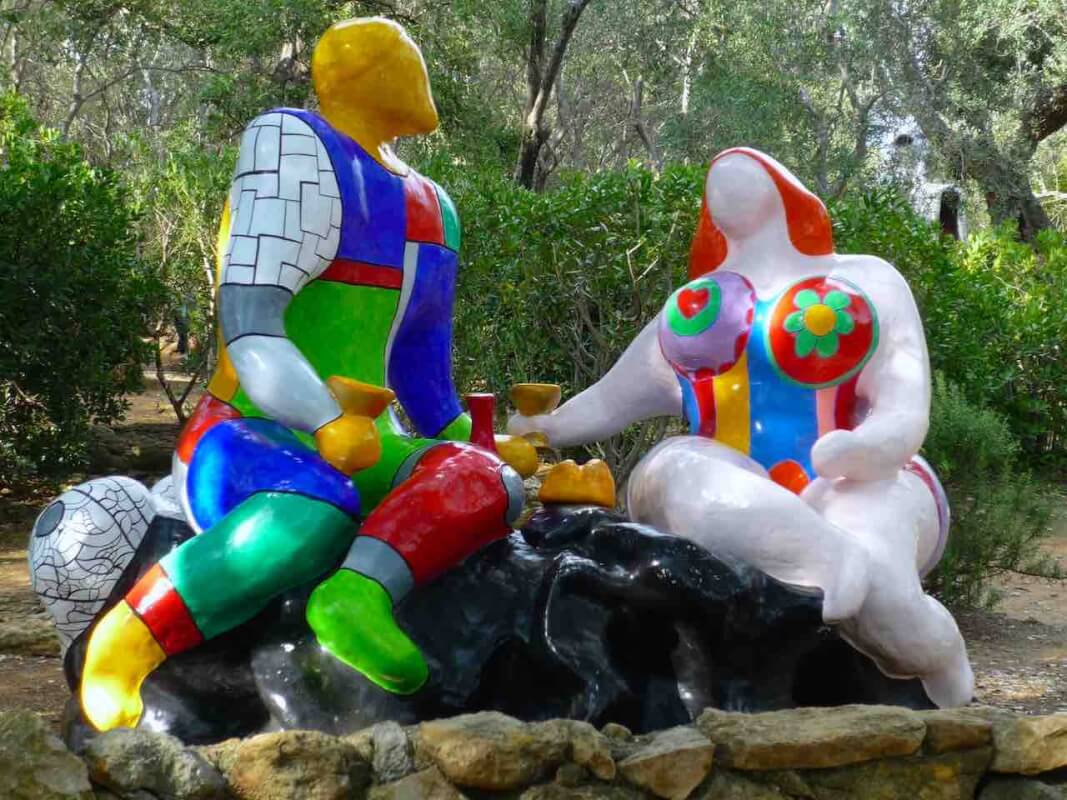
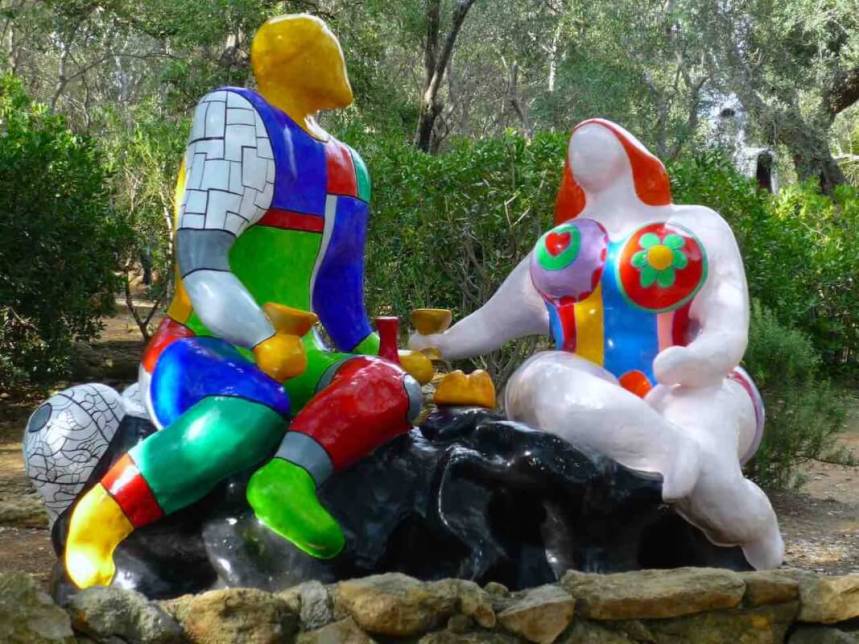
Italy has plenty of secret spots and off-the-beaten-path destinations that foreign and local travelers overlook. The Tarot Garden in Southern Tuscany is one of them. About half an hour’s drive from Manciano and a few km from the coast stands a green hill home to 22 contemporary sculptures and artistic installations. The American-French artist Niki De Saint Phalle dedicated ten years of her life to the creation of this sculpture garden, the most important artistic project of her life. Once you are inside, you start walking through colorful, giant figures. The 22 major arcana of the tarots are realized using steel, cement, glasses, and colorful ceramics. The artist said she drew inspiration from the Bomarzo Monster Park in northern Lazio and the sculptures in Barcelona’s Park Guell. You need a couple of hours to enjoy visiting the Tarot Garden. Kids will love it, too. What a unique thing to do on your Southern Tuscany road trip!

Booking your entrance ticket to the park is mandatory; you can do that on the official website.
 

AND NOW HEAD TO THE COAST 

On your Tuscany road trip, you can get to know a few of the best beaches near Rome like Capalbio and Ansedonia, and even discover some of Italy’s most beautiful and secret beaches. I’m talking about the Argentario Peninsula.


FALL IN LOVE WITH THE ARGENTARIO PENINSULA

Beach lovers will love the Argentario Peninsula. Three strips of land connect this rounded promontory to mainland Italy. 

If you have followed my suggested Southern Tuscany road trip itinerary, you get here from the South, so the first place you’ll reach is the town of Orbetello. 

12 La Feniglia Beach | the longest beach in Southern Tuscany

La Feniglia Beach is 14km long and surrounded on its whole length by untouched pinewoods. The beach is so big you won’t have trouble getting all the space you need to relax and sunbathe. 

The view is beautiful: on one side, the promontory of the Argentario, with a glimpse of the cute dock of Porto Ercole town; on the other side, kilometers of sand and trees up to the mainland.

You can access the beach from the car park at the end of the road coming from Orbetello, where you’ll find also the campsite “Camping La Feniglia”, where we stayed. If you want to save money, I recommend staying at this campground but protect yourself from mosquitoes.

13 Porto Ercole | must add to your Tuscany road trip

There are two main towns on the Argentario Peninsula. The smallest, Porto Ercole, is the one that deserves a visit for sure. Have your dinner here, a beer, or a gelato, and enjoy walking along the dock up to the ancient citadel on a refreshing summer evening. Porto Ercole is also the best town to stay in the area.

14 Secret beaches of the Argentario

We explored a few of the little bays and beaches hidden in the Argentario peninsula’s lush vegetation. Our favorite is the tiny “Cala Gesso”. The water of the Argentario’s small bays is emerald-green and crystal clear mind.

You might need to hike down for half an hour to get to the bays: bring your sneakers, plenty of water, food, and your own beach umbrella.

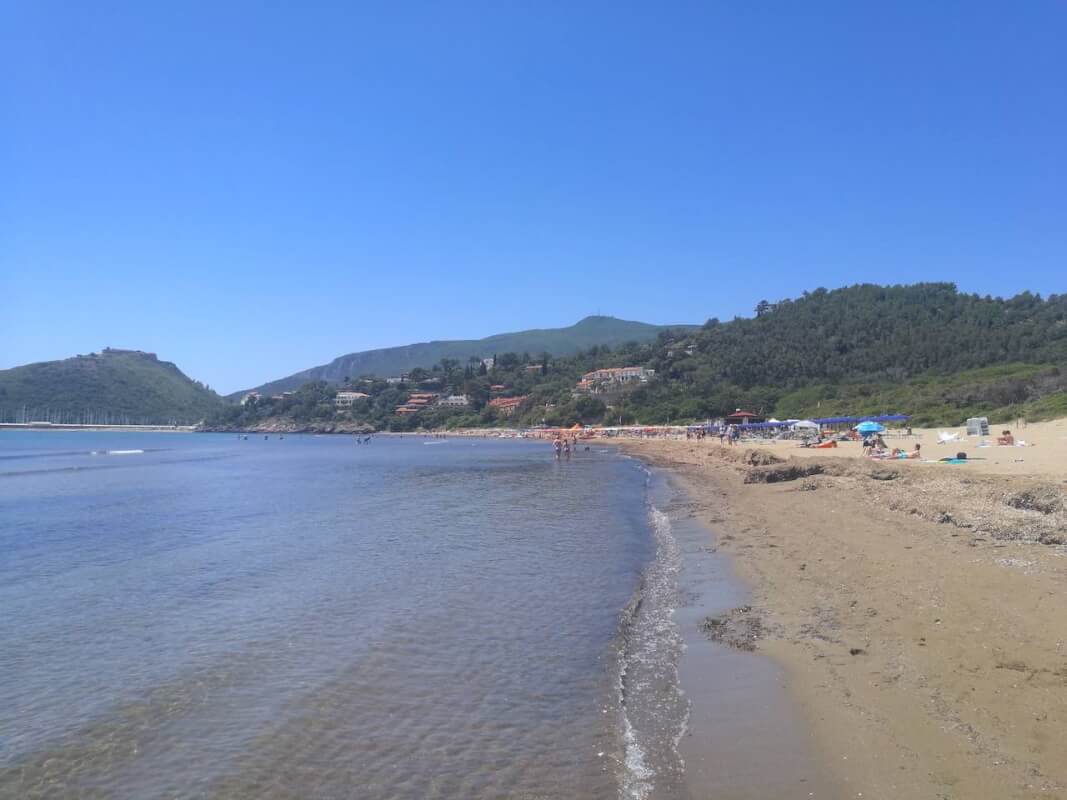
15 Beaches in the Park of the Tuscan Maremma
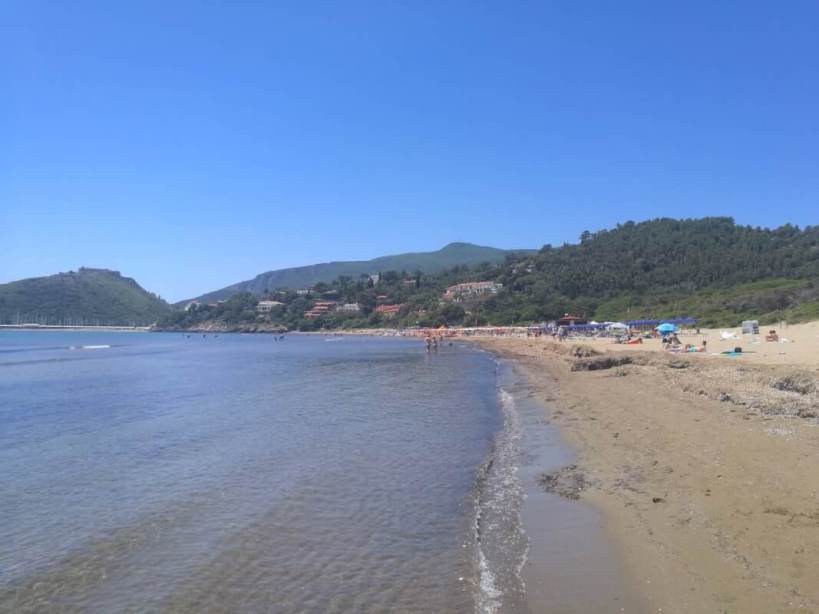
From the Argentario Peninsula, traveling about 40 km north along the Tuscan coast, you will encounter more beautiful beaches and clean sea.

Here you are in the Tuscan Maremma Regional Park, famous precisely for its beaches and extensive pine forests that reach almost to the sea.

Our favorite beaches are two. The first one I want to tell you about is Alberese Beach, which is easily accessible even with small children. Like Feniglia Beach, it is also long and spacious. To access the beach by car, you pay about €2 per hour, and parking is close to the beach. Bring your own lunch; the luiogo is wild and protected nature reserve.

Another wonderful but smaller beach is Cala Violina Beach.

You must walk about 1.5 km in the woods to get there. The path is almost all in the shade, and there are some uphill sections – I recommend it only to those who are fit and have shoes for walking. To access this beach in the months from May to October you must necessarily book through the official website of the nature reserve, access has a minimum cost: €1 per person plus €1 for the car.


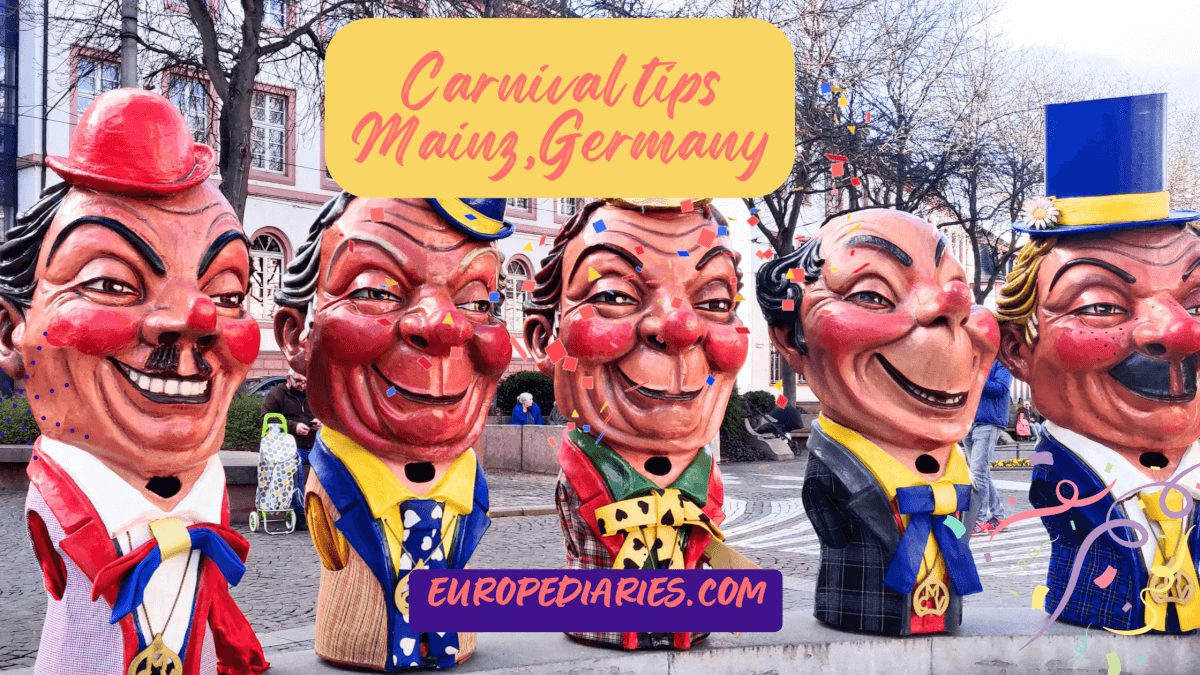
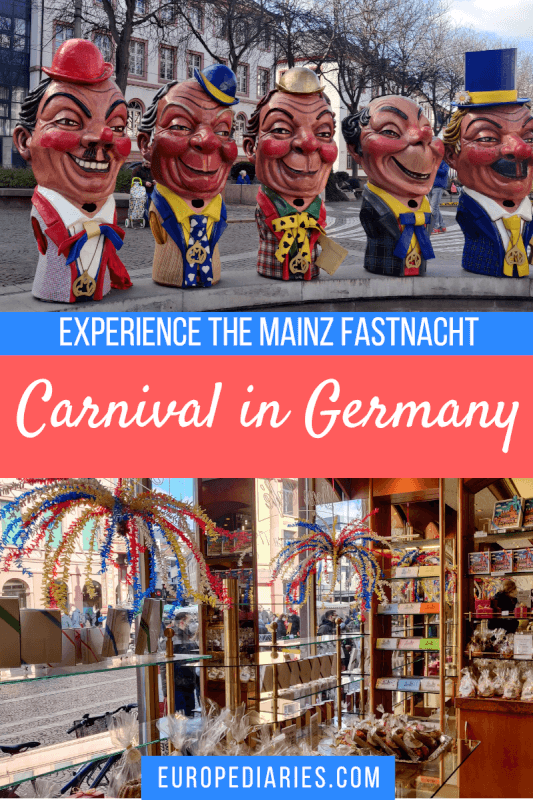
Experience Germany's second biggest carnival in Mainz in February 2024

5 ways to experience the Mainz Fastnacht: the best time to make friends in Germany

Never had I ever seen such super friendly, social, and hospitable Germans as on a Saturday night during the Mainz Fastnacht, one of Germany’s oldest and largest Carnival celebrations. Was I really in Germany, though? The Germany where I had moved back to after seven years and put in a lot of effort to make new friends in a new city?


I know stereotypes shouldn’t be taken seriously..and it is good to see them broken. But wow, wasn’t there a huge difference between what I and the new expats around me had been observing ALL year and the sudden openness and love that came pouring out during the Carnival weekend?


As I woke up on Carnival Sunday with messages and pictures from the right before in the new WhatsApp group I had been added to, I recalled the night with the Mainz locals.


The streets were full of revelry. People in soldier costumes were more than happy to break into conversations in the middle of the streets amidst greetings of Helau , and explain the whole point of making fun of France and Napoleon’s French soldiers due to the political history. Stepping into Weinhaus Michel was a vibe in itself. We could hear music, singing, and cheering from outside. Everything was full inside- my friend and I were probably two of the few people who decided to show up without a reservation. We were asked to share a table with five strangers. Initially, we were skeptical and asked them repeatedly if they would be okay with us sitting there. We were only immediately met with smiles, positivity, and great conversation starters.


After some non-stop chattering, we realized that those five people were also strangers to one another! They had also just met exactly like we met them..being seated at the same table and instantly becoming friends.


At some point in the night, the regular dinnergoers seemed to be all standing up, singing and dancing along to the tunes; some would spontaneously start dancing with the servers, some with each other in the middle of the floor. Digestifs (shots after food) were served on the house, with Mano Habanero and others doing the rounds as orders from Reisling Schorle kept mounting up.


Everyone knew all the lyrics to every song played, dance trains went around the whole restaurant, everyone seemed to be friends with each other, and the revelry didn’t stop. At one point, strangers were starting to play cards together..and before you knew it, plans were made to book the same place for the same time in. a year for the next Carnival…..
 

So, how can one make the most of this festive atmosphere and make friends?

While the concept of the Fastnacht is the same throughout the region and in many Christian countries, the ‘Fifth Season’ in Mainz officially begins at 11:11 am on Nov 11 (like Cologne) with a massive inaugural event, and the main festivities take place through a Thursday to Wednesday in February. 
I asked some Mainz locals, and here are their top tips for enjoying the Mainz Fastnacht or Carnival, which this year is from February 8 to 14th, 2024.


1. Go out to celebrate the Altweiber Fastnacht on the Thursday the Carnival begins

The festivities begin with the Women’s Carnival at 11:11 am on the Altweiber Fastnacht Thursday. Mass energy is at the highest and people are prepared with their days off from work or school to focus on only one agenda (apart from partying and cutting men’s ties symbolically)…


Gear up for Mainz Fastnacht with your costumes, energy and fervour. Tips for enjoying the carnival in Germany

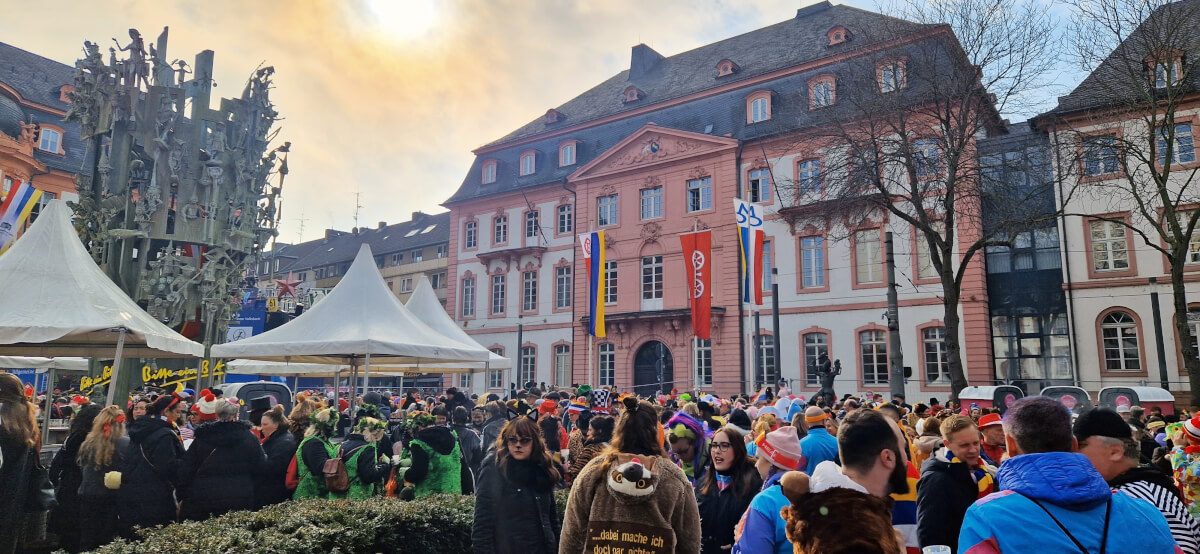
A glimpse of Schillerplatz, Mainz, during the Altweiber Fastnacht or Carnival Thursday


2. Don’t be sober

             ..but watch your limit so you are not completely exhausted until RosenMontag

Long-term residents have mentioned that to enjoy the vibe of the Fastnacht and all the party people around you everywhere on the streets, it may be best not to be completely sober. Although- watch your intake so you don’t feel sick or exhausted by the time you get to weekend parties like the Prinzengerade Ball or Monday’s street parade. To feel a part of the carnival, don’t forget to…


3. Get a costume!  

Yes! Costumes are an essential part of the Mainz Carnival- similar to the Cologne Carnival. Whether you choose to go for a comfy onesie to stay warm or something more creative from the costume shop in the city, you will likely remember the carnival as more fun and connect with more people if you have one on!


Here are some costume ideas for you!


3. Greet people with a Helau

Another fun tip – a little greeting hurts nobody. So, feel free to greet people with a Helau anywhere you may be – streets, parties, restaurants, cafes- you name it.


ia GIPHY


5. Go with the flow- Be open to strangers becoming friends!

Don’t be hesitant to start talking to people in restaurants, parades or on the streets. Everyone is in a cheerful mood and WAY more open than usual. So make the most of this festive week and get to experience Mainz the local way:)


If you plan to visit the city and stay here during the Carnival week, make sure you book your accommodation well in advance. Check out some options here to book your stay.

Have more Carnival tips or experiences to add? Comment below and share the story with someone who would love to partake in the fastnacht celebration!


Tips to enjoy the mainz Fastnacht: Carnival in germany

Make the most of local traditions and events during the Mainz Fastnacht in February 2024


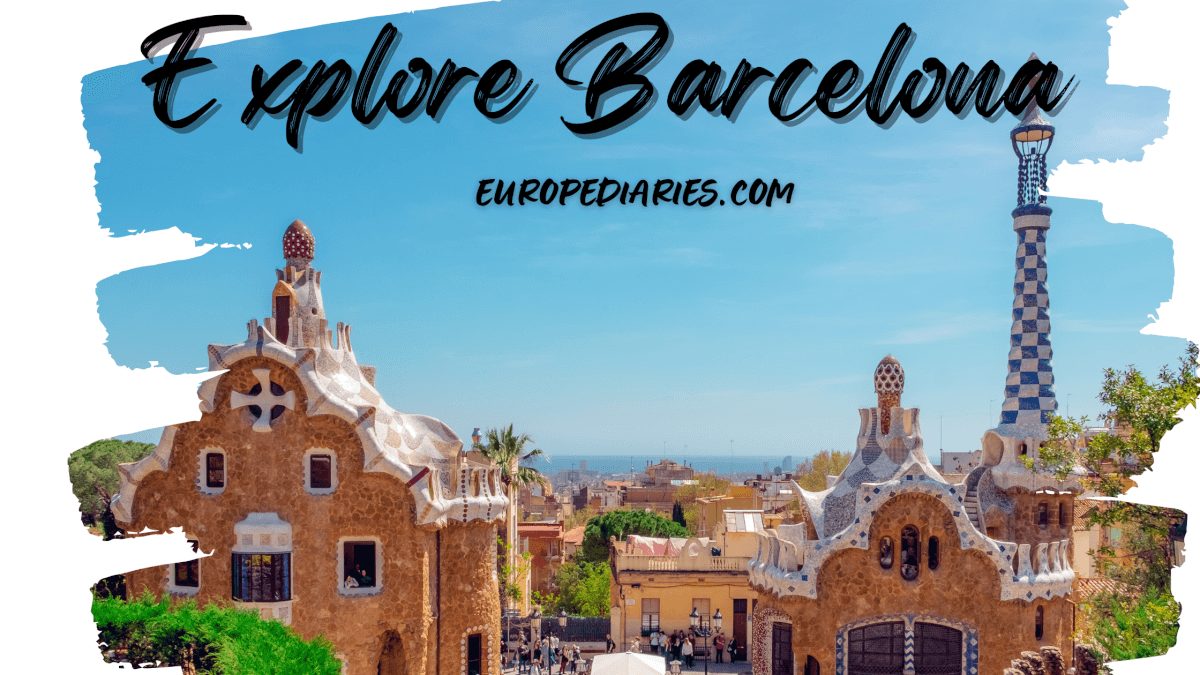
Barcelona trip planning what to do in Barcelona for 3 days

Everything You Need To Know Before Visiting Barcelona

Coined as the capital of Catalonia, Barcelona is a buzzing metropolis that melds modern and old. Set on Spain’s northeast coast, this vibrant, culturally rich city boasts a bounty of history, art, architecture, and cuisine. Plus, it’s perched on the picturesque Mediterranean coastline, making it one of Europe’s most spectacular sojourns. Woven with its wealth of modernist and Gothic architecture, sprawling street markets, and renowned restaurants, Barcelona (fondly called Barna) boasts something to offer every type of traveller: whether you are a beach lover or prefer sailing and water sports, a foodie or wine connoisseur , a shopaholic, or a culture lover. This in-depth guide will uncover everything you need to know about visiting Barcelona. Having lived in the city for over half a decade, Iour guest author Jessica has compiled this list to help you make the most of your trip. With everything from the best time to visit must-see attractions, local customs, and practical travel tips. Vamanos! 

Best Time to Visit Barcelona 

The best time to visit Barcelona depends on your personal preferences, budget, travel style, and what you want to experience. Barcelona boasts a Mediterranean climate with mild, wet winters and hot, dry summers. Whether planning a week-long trip or a 3-day itinerary, it’s important to consider the weather in Barcelona. Here’s a basic breakdown of what you can expect in each season: 

Spring (March to May)

Sprightly spring is a delightful time to dabble in the city’s highlights. This is ideally the best time to visit if you want to see the city’s gardens and parks burst into bloom. The weather is pleasant, and crowds are thinner than in the summertime. During the off-season, you can expect to find slightly more affordable prices on accommodation and airfares. 

Summer (June to August)

As you’d expect, summer is the peak tourist season in Barcelona. The city is bustling with veritable visitors, and temperatures can soar up to scorching hot heights. The summer season is ideal for beachgoers. If you choose to travel to Barcelona during this time, you’ll need to book accommodations and tickets well in advance. Expect to find higher prices and battle bigger crowds. 

Autumn (September to November)

This is another great time to visit Barcelona, especially if you want to see the big attractions with fewer crowds. The autumn weather is quite pleasant, and the summer crowds tend to thin out towards October and November. Just remember that this city is always busy, and even in the off-season, there will be lots of people. Autumn is an excellent season for outdoor activities and cultural events. Whether you want to head out hiking in Garraf or visit the beachside towns in the Costa Brava, autumn offers plenty of colorful experiences. 

Winter (December to February)

While Barcelona’s winters are relatively mild compared to many other European cities, it’s generally the least popular time for tourists. This is the ideal time to visit if you prefer a quieter experience and lower prices. Be prepared for occasional rain and cooler temperatures, and don’t forget to bring a jacket! As a local, I can honestly say that winter is one of my favorite times in the city. I love strolling through the streets without the hustle and bustle of the big crowds. 


What to do in Barcelona- plan a 3 day trip with europediaries.com

Tips for planning a trip to Barcelona

Getting Around

Barcelona is a very pedestrian-friendly city, and there’s an array of well-connected transportation options to help you navigate the city. Whether you want to head outside to the coastal hot spots or jump aboard a train on a day trip, you can enjoy a hassle-free experience. Here’s a breakdown of what you need to know about getting around Barcelona: 

Metro

Barcelona’s metro system is one of the most convenient and cost-effective ways to get around the city. It connects all major neighborhoods, the suburbs, and big attractions too. It’s quick, affordable, and easy to access. 

Buses and Trams

Barcelona’s inner and outer city has an extensive bus and tram network that combines well with the metro. These two options are ideal for reaching places not directly accessible by the metro. I find these options particularly useful when traveling to places like Park Guell or Bunkers del Carmel, which are located in the upper neighborhoods. 

Biking

Straddling many options, Barcelona is a bike-friendly city with a bounty of bike lanes and rental services. Exploring the city by bike is a fantastic way to see the sights, enjoy the weather, and discover hidden gems. I love using the city’s shared bicycle system, Smou. If you’re not an exercise fan, you could opt for electric bikes. 

Walking

There’s nothing like some good, old-fashioned walking! Especially if you’re in the city center! Barcelona is a city that’s arguably best explored on foot. Many of its most famous attractions, like Las Ramblas and the Gothic Quarter, are best seen on foot. Navigate the cobblestone street network, sit in a terrace-lined plaza, and soak up all the Spanish vibes! 

Taxis and Ride-Sharing

Taxis and ride-sharing services are available all throughout the city. Not only are they convenient, but they are a quick way of zipping around. Just keep in mind that the inner city experiences a lot of traffic, so be sure to factor in extra time. As this option is more expensive than public transportation, it’s probably not ideal for budget travelers and backpackers. Another thing to note is that Uber is illegal, so you’ll have to opt for a traditional cab or a Cabify, 

Must-See Attractions

It’s no secret that Barcelona is brimming with awe-worthy attractions. There’s a reason why this Spanish gem draws in millions of tourists every year! Carved with captivating sights that reflect its rich history and vibrant culture, Barcelona is a sightseer’s oasis! 


Even after living here for more than five years, I still stumble upon new sights almost every day. Before diving into the must-see myriad attractions, I want to be transparent. 


Barcelona can be an expensive city for travelers, and the bills for tapas, fiestas, and sightseeing can add up quickly. If there’s one thing I’ve learned while living here, it’s not to underestimate the value of a tourist pass. Whether you’re a backpacker or budget traveler, you can save money and see more for less with a decent pass. For everything you need to know, see this article on the Best Barcelona Pass Comparisons. 


So, if it’s your first time visiting the city, here’s a handful of the things that you can’t miss: 


La Sagrada Família

There’s no doubt you’ve seen an image of this soaring site. The famous Antoni Gaudí designed this iconic basilica and is an absolute masterpiece of modernist architecture. It’s still under construction but is open to the public. When people visit the city, I often get asked if this is worth it. My answer is always a yes! If you only have time for one attraction in Barcelona, make it this one! Get your ticket to the La Sagrada Familia here,


Park Güell

Another one of Gaudí gifts, Park Güell, is a whimsical, colorful park that’s not what you’d typically expect. Woven with a wealth of stunning mosaics, eye-catching sculptures, and panoramic city views, this picturesque park is a must-see. My top tip is to book your tickets early and arrive as soon as possible. Once inside Park Guell, go straight to the top to see the Trancadis. If you head here later, you’ll have to hustle and bustle through the crowds. And personally, I think that puts a dent in the experience. 


Casa Batlló and La Pedrera

Antoni Gaudí also designed these two modernist buildings. Magnified as marvels of architecture, both buildings are nothing short of mind-boggling. If you’re an art fan who wants to mix things up, you could consider substituting these two gems for a day trip outside the city. I’d recommend heading to the art town of Figueres to see the Salvador Dali Theatre and Museum. You can plan your visit to Casa Batllo and La Pedrera in advance.


The Gothic Quarter

Who says you have to spend lots of money to have fun?! Strut your stuff through the streets and explore the narrow streets and historic buildings of the medieval quarter. Home to the Barcelona Cathedral and the Plaça Sant Jaume, there’s also a hefty handful of hidden gems. 


Montjuïc 

Visit the heaving hilltops of Montjuic for more awe-worthy attractions, including the ancient Montjuïc Castle, the grandiose Olympic Stadium, and the artsy Joan Miró Foundation. Stop by the Magic Fountain Show to mix things up! This nightly light and music show is a spectacular sight, especially if you’re looking for things to do in Barcelona at night. 


Beaches

Barcelona’s beaches boast the ideal escape from the city’s hustle and bustle. The most popular beaches are located on the cusp of the city and are Barceloneta Beach and Mar Bella. As a local, I honestly wouldn’t recommend coming to these beaches. During the summer season, they get packed and polluted. If you have the time, head to beaches outside the city like Sitges, Garraf, or Gava. These are all easily accessible by train too! 


How to spend 3 days in bARCELONA

Save on Pinterest and find this post easily later to plan your trip

Cuisine and Dining

Barcelona is a food lover’s oasis that boasts a vibrant culinary scene. With palatable plates rich in vegetables, seafood, and flavors, there’s something that caters to all tastes and budgets. Be sure to sample some of these local delicacies when visiting Barcelona or joining a food tour:

Tapas

I’d be lying if I said Barcelona wasn’t famous for its teeming tapas culture. Try a variety of small plates, like patatas bravas (fried potatoes), pimientos del padron (green salty peppers), and jamón ibérico (Spanish ham). For a local’s tip, ditch the sangria and pair your meal with a glass of vermut rojo or cava.  

Paella

Paella is a traditional Spanish dish that actually originated in Valencia. If you want to find an authentic paella in the city, be sure to research ahead of time. Paella is a saffron-infused rice dish with various ingredients, often including seafood and vegetables.

Churros and Chocolate

Calling all sweet freaks! This classic, mouth-watering dessert can also be subbed as a breakfast option. Churros are deep-fried dough served with delectably thick, velvety hot chocolate for dipping. 


Visiting Barcelona is an unforgettable experience if you do it right. Woven with its unique blend of history, art, architecture, cuisine, and culture, this Mediterranean metropolis has something to offer every traveler. You can make the most of your trip by understanding the best times to visit, getting around, appreciating the local culture, and following practical tips. Barcelona is a city that truly lives up to all the hype, so add this hot spot to your bucket list! 


Author Bio: Jessica Bergin is a Barcelona-based Australian writer and photographer who has worked in the travel industry for half a decade. Her passion for adventure, travel, culture, and lifestyle has helped her navigate a successful career in the writing, photography, and videography industry.